Azerbaijan is strengthening its role as an important energy and transit partner for international markets by developing supply routes that do not depend on Russian infrastructure.
The Ministry of Economy of Azerbaijan reported the signing of a package of agreements with companies from the United States, Turkey, Serbia, France, and San Marino worth approximately $7.5 billion.
The documents cover the areas of energy, investment, digital technologies, artificial intelligence, and critical mineral resources.
International partners involved in the new agreements include leading global companies and financial institutions such as Shell, Chevron, Oracle, JP Morgan, Apollo Global Management, and Comstock Resources.
Expanding cooperation with the United States, the European Union, and Turkey strengthens Azerbaijan’s position as an independent energy hub and creates additional opportunities for diversifying global supply chains.
Within the framework of Baku Energy Week and the first Azerbaijan–US Economic Dialogue, a framework agreement was signed between Azerbaijan and the United States on cooperation in the extraction and processing of critical minerals and rare earth elements.
The State Oil Company of Azerbaijan (SOCAR) has signed an agreement with TotalEnergies, XRG, and BOTAŞ regarding long-term gas supplies to Turkey.
The agreements provide for the delivery of 50% of the gas produced at the Absheron field over a period of 15 years.
In addition, terms were agreed with the Serbian company EPS to establish a joint venture for the construction of a gas-fired power plant.
Technological partnerships with Western companies
The financial dimension of cooperation is also expanding. SOCAR has signed a memorandum with JP Morgan to develop a long-term partnership in financing strategic projects and expanding access to international capital.
Separate agreements with Apollo Global Management and Apollo Capital Management provide investment support for the development of the TANAP gas pipeline and increase project financing to $300 million.
At the same time, Azerbaijan is developing technological partnerships with Western companies.
The Azerbaijani government and SOCAR have also signed agreements on cooperation in oil refining, petrochemicals, and the digital transformation of industry
Agreements with Shell include cooperation in improving production efficiency, exploring new fields, developing the LNG sector, and applying artificial intelligence technologies.
Chevron is participating in a technical assessment of the oil and gas potential of Azerbaijan’s Middle Caspian sector, while Comstock Resources is considering investment opportunities in gas projects.
The Azerbaijani government and SOCAR have also signed agreements with Oracle and Lummus Technology on cooperation in oil refining, petrochemicals, and the digital transformation of industry.
A separate agreement with Haimaker focuses on developing cloud infrastructure for artificial intelligence technologies.
Additional alternative routes for global markets
This package of agreements demonstrates Azerbaijan’s gradual integration into Western and regional economic infrastructure.
Amid changes in the geopolitical balance of the South Caucasus, Baku is pursuing a multi-vector policy aimed at attracting investment, developing technological sectors, and strengthening its economic autonomy.
Expanding contracts with Turkey, EU countries, and international companies are creating additional alternative routes to global markets
The energy sector is of particular importance. Against the backdrop of growing distrust among European partners towards Russian energy supplies, Azerbaijan has strengthened its position as a reliable supplier of oil and gas.
Expanding contracts with Turkey, EU countries, and international companies are creating additional alternative routes to global markets.
Trans-Caspian transport and energy corridors
An important element of this strategy is the development of Trans-Caspian transport and energy corridors.
BP’s transfer of the Western Route Export Pipeline (WREP, Baku–Supsa) facilities to state structures in Azerbaijan and Georgia strengthens the role of regional operators in controlling critical infrastructure.
WREP transports Caspian oil to Georgia’s Black Sea coast, from where the crude can be shipped by tankers through the Bosphorus to European markets.
The pipeline runs through Azerbaijan and Georgia, is approximately 829 km long, and has a capacity of around 5.2 million tonnes of oil per year.
Astana’s interest in developing alternative export routes further increases Azerbaijan’s importance as a transit state
For Azerbaijan, transferring operational control over such assets is an important step towards strengthening SOCAR’s role not only in energy production and trade but also in the development of export infrastructure.
Similar processes are expected regarding other strategic energy assets, including the Azerbaijani section of the Baku–Tbilisi–Ceyhan oil pipeline.
In addition, the Baku–Supsa route is being considered as a potential channel for transporting additional volumes of oil from Kazakhstan across the Caspian Sea.
Astana’s interest in developing alternative export routes further increases Azerbaijan’s importance as a transit state.
Excluding political influence from Moscow
Under current conditions, when global energy markets are undergoing major transformation, Trans-Caspian routes are becoming an important factor in diversifying supplies for Europe and regional countries.
Azerbaijan is gradually transforming from a traditional hydrocarbon producer into a multifunctional energy, logistics, and technology centre, actively expanding cooperation with Western partners.
The direct agreement between Azerbaijan and Georgia on managing the Baku–Supsa oil pipeline demonstrates the ability of regional countries to independently establish effective mechanisms for cooperation and management of strategic infrastructure without the involvement of external operators or political influence from Moscow.
This approach helps strengthen the economic independence of the South Caucasus and increases the region’s resilience to external crises.
Amid sanctions policies and declining trust in Russian energy supplies, Baku is strengthening its position as a stable and predictable supplier
The European Union increasingly recognises the strategic importance of alternative energy routes that reduce dependence on Russian resources.
Azerbaijani oil and gas corridors that bypass Russia play an important role in ensuring the energy security of European partners.
Amid sanctions policies and declining trust in Russian energy supplies, Baku is strengthening its position as a stable and predictable supplier.
The transfer of management of the Baku–Supsa oil pipeline to the state company SOCAR, as well as changes in the operator of the Baku–Tbilisi–Ceyhan pipeline, demonstrate Azerbaijan’s intention to increase control over its strategic infrastructure.
Faster responses to global market changes
Baku is gradually developing a model in which the country’s key energy routes are managed nationally, enabling faster responses to global market changes and expanding transit capabilities.
Azerbaijan is actively transforming into one of the main transport hubs of the Caspian region and Central Asia.
Control over major energy and logistics routes creates additional economic opportunities for the country, particularly in transit, investment, and infrastructure development.
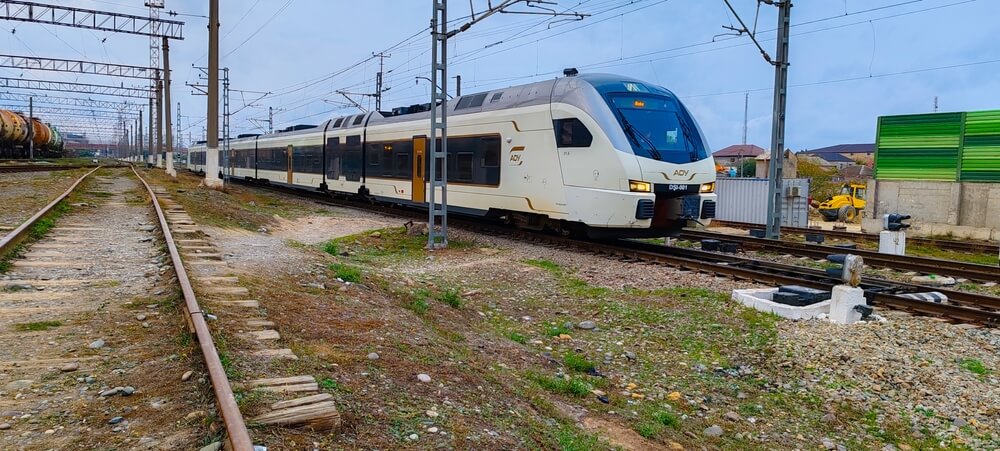 Azerbaijan offers an alternative transport corridor designed to reduce political and logistical risks for international business
The development of the Middle Corridor is especially important – a transport route connecting China, Central Asia, the South Caucasus, and Europe while bypassing Russian territory.
This route is gradually transforming from a separate transport direction into a broader geo-economic system that could become one of the key elements of the new architecture of global trade.
In the context of instability in traditional routes through Russia and the Middle East, Azerbaijan offers an alternative transport corridor designed to reduce political and logistical risks for international business.
The diminishing role of Russia in regional logistics creates new opportunities for other players.
Azerbaijan is actively using this moment to expand its economic role, demonstrating the ability to independently manage strategic flows of energy and goods between East and West.
In this context, Baku is gradually strengthening its status as a key Eurasian transit hub. The development of energy routes, the Middle Corridor, and transport infrastructure enables Azerbaijan to reinforce its position as one of the main economic partners for Europe and Central Asia.
Oleksandr Levchenko, a former Ukrainian diplomat, is a professor at the State University (Kyiv) and a member of the Academy of Geopolitics and Geostrategy (Kyiv).
