A recent conversation about creativity and innovation made me question whether we are heading in the right direction from a creative point of view.
You know when you are thinking of buying a specific item, then you see it everywhere? The same has happened this week about this topic.
Even yesterday, as I was finalising this piece, a friend on LinkedIn shared a post that confirmed my thinking.
As AI becomes more and more powerful, are we becoming less creative? Technology has transformed society countless times throughout history. Every major technological change has disrupted industries, replaced jobs, created new opportunities, and forced people to adapt. As mentioned in previous articles, artificial intelligence follows the same pattern.
More people treat AI as a substitute for thinking instead of a tool that enhances thinking. A few individuals I used to look up to have lost their identities.
I no longer recognise their online voices because some of them have become too reliant on AI. There is a big difference between evolving and embracing the new era and new tools and getting lost and losing the essence of who we are.
Most troubling of all, more people struggle to distinguish between what comes from a human mind and what comes from a machine.
Creativity has always driven human progress. AI should strengthen it
Last year, I explored a similar theme in my article "Is AI Enhancing Art or Erasing the Artist?" The central question remains as relevant today as AI continues to advance at extraordinary speed.
We often focus on whether AI can create art, music, writing, film, or design – which it can, very masterfully. But we miss the larger challenge by doing that.
We need to question whether people will continue developing their own creative abilities if AI performs those tasks faster and cheaper.
Creativity never begins with a finished product. Creativity begins with curiosity. It begins with experimentation, failure, observation, and imagination.
Every artist, writer, filmmaker, designer, inventor, entrepreneur, and innovator develops creative skill through repetition and experience.
It is obvious that AI is capable of producing a stunning painting in a matter of seconds, and we can all enjoy that work of art. However, AI is incapable of feeling the emotions associated with childhood memories. AI is incapable of experiencing love, grief, or gaining life lessons.
When we use AI to avoid thinking altogether, we weaken the very skill that makes creativity valuable
Living emotion, context, struggle, perspective, and time are the sources of human creativity. I'm worried that too many individuals these days only pay attention to results, ignoring the process that leads to worthwhile work.
To put it in very bold terms, it's the same as saying that we are born and then we die. The process of living life in between does not matter, even though that is what gives life its meaning.
Technology has and always will continue to improve the productivity of artists. Think about the times when digital tools revolutionised graphic design, cameras revolutionised photography, and editing software revolutionised filmmaking.
Without doing away with the necessity for human imagination, those breakthroughs opened new creative possibilities.
When we use AI to accelerate research, improve productivity, explore ideas, or remove repetitive tasks, we create more space for higher-level thinking. This leads to the right balance between using AI and our own minds.
When we use AI to avoid thinking altogether, we weaken the very skill that makes creativity valuable.
The workforce transition has created opportunity and anxiety at the same time
Several industries are now undergoing major transitions driven by artificial intelligence. Media companies, technology firms, entertainment organisations, marketing agencies, and creative businesses continue reevaluating how they structure teams and allocate resources.
Anxiety regarding the future of work has increased as a result of recent labour reductions in creative industries. Disney's most recent restructuring initiatives have garnered considerable attention since they bring to light an issue that many experts were already aware of.
I understand people's feelings of uncertainty, because nobody has a comprehensive plan for the next ten years.
Technology changes always cause disruptions before stability is established, as history has shown. We discussed how the ups and downs of this new age are a typical part of the growing pains, even yesterday, as I was recording a podcast.
Companies see that AI still struggles to produce truly distinctive ideas without human guidance
The Industrial Revolution transformed labour. The internet transformed communication. Mobile technology transformed business. Artificial intelligence is transforming knowledge work.
Do I believe creativity will disappear? No. But creative professionals are part of a very new era, and they cannot lose the essence of what made them great.
The highest-value creators should bring something AI cannot replicate. That is, original perspective, critical thinking, emotional intelligence, authenticity, strategic judgement, and human connection. These qualities should become more important, not less.
Companies see that AI still struggles to produce truly distinctive ideas without human guidance. Originality is what creates a competitive advantage. This transition we are going through challenges professionals to strengthen uniquely human skills rather than compete directly with machines.
The greatest risk isn't artificial intelligence. The greatest risk is intellectual complacency
The challenge that concerns me most has little to do with technology companies. It has everything to do with human behaviour. Social media offers a perfect example. Every day, millions of people consume AI-generated images, videos, voices, articles, and conversations.
Many users cannot identify what is real, and many no longer trust what they see. That loss of trust is one of the most paramount societal consequences of the AI era. When authenticity becomes difficult to verify, scepticism becomes the default response.
I see this myself when I do research and read comments, and even when I 100% know the content is real, people still question whether AI created it. Some comments show healthy critical thinking; others reveal complete distrust. People question photographs, interviews, artwork, and even reality itself.
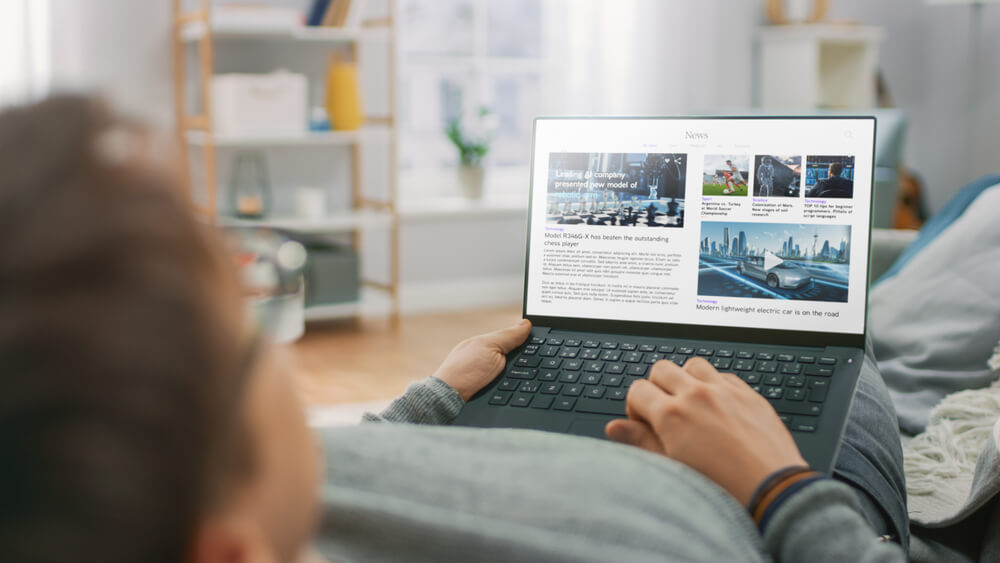 When authenticity becomes difficult to verify, scepticism becomes the default response
I feel lucky to have grown up in an era when sincerity hardly required confirmation, and people trusted their senses, although they would still challenge information. Today's new reality involves a higher degree of digital literacy.
Critical thinkers, questioners, information verifiers, and those who keep using their minds are what we need. I wrote about this topic earlier this year in "Integrating AI Without Surrendering Humanity." Instead of diminishing human curiosity, technology should increase human capability.
Let's embrace innovation without abandoning imagination, without sacrificing originality, and use AI without allowing AI to use us. Get it?
Creativity has survived every technological revolution throughout history.
Human beings continue creating because creativity reflects something fundamental about who we are.
Let's remember that stories connect us, art inspires us, and ideas move society forward. Innovation itself begins with imagination, and artificial intelligence can help us build extraordinary futures.
Those futures will only exist if people continue thinking, questioning, exploring, and creating for themselves.
The goal should never be to compete with machines. The goal should be to become more human in a world increasingly shaped by machines. There is space for both of us, humans and machines.
P.S. This piece today is just a reminder to us all not to lose the essence of who we are. Embrace new tools, but do not lose what makes you authentic. No one has all the answers yet, but we need to cherish and value our human minds more.
