When I wrote about Artemis II earlier this year, I focused on what the mission represented: humanity taking another step towards returning to the Moon and developing the capabilities required for deeper space exploration. Since then, the Artemis programme has continued to evolve.
New nations have joined the Artemis Accords, commercial companies have moved further into NASA's lunar architecture, new communications technologies are being tested, and Artemis III itself has taken on a different role. Artemis III is becoming a critical technology showcase for what comes next.
NASA currently plans to launch Artemis III in 2027, sending four astronauts aboard Orion into low Earth orbit.
There, the mission will test rendezvous and docking capabilities with test versions of the commercial human landing systems that SpaceX and Blue Origin are developing.
The lessons from this mission are intended to support Artemis IV, currently planned as the first crewed lunar landing of this phase of the programme in 2028.
For me, this change in mission profile is a reminder that exploration at this scale is a long sequence of technology demonstrations, engineering decisions, commercial partnerships, and international cooperation.
The scale is greater than a Moon landing
It is easy to view Artemis through the lens of the next astronaut who walks on the Moon. Let's focus on what needs to exist around that astronaut.
Spacecraft need reliable communications. Crews need life-support systems that can sustain longer missions. Landers need to operate safely. Navigation systems need to work far from Earth.
Robotics will become even more important, and surface infrastructure will eventually need power, mobility, communications, and resource utilisation. Each of these challenges creates a research and development requirement.
NASA has selected SpaceX's Starlink laser communication technology to provide high-bandwidth links from Orion
NASA is already testing technologies that demonstrate how interconnected this architecture is.
For Artemis III, NASA has selected SpaceX's Starlink laser communication technology to provide high-bandwidth links from Orion, including 4K imagery and video transmission back to Earth. NASA will install two Starlink mini laser terminals on the spacecraft.
It is a relatively small detail within a huge mission, but it illustrates the point. Technology developed for one part of the commercial space economy can become an enabling technology for another.
Artemis is becoming a commercial ecosystem
One of the most important changes in space exploration over the past decade has been the growing role of commercial companies.
NASA is not developing every element of the lunar architecture in-house. SpaceX and Blue Origin are developing human landing systems.
Commercial communications technology is being integrated into missions, and private companies are providing launch, spacecraft, communications, and other capabilities.
This creates a model that differs from twentieth-century space programmes.
Government remains a major customer and strategic coordinator, but commercial companies are becoming part of the underlying infrastructure
Government remains a major customer and strategic coordinator, but commercial companies are becoming part of the underlying infrastructure.
The long-term opportunity in space will come from the technologies and services needed to support many missions.
We are talking about launch infrastructure, communications, navigation, robotics, energy, materials, computing, sensors, life support, and data. The lunar economy, if it develops as planned, will need an ecosystem.
The international dimension is expanding
The other development worth mentioning is the growth of the Artemis Accords. Türkiye signed the Artemis Accords on 31 August, becoming the 71st signatory.
In September, NASA announced that Albania, Croatia, Côte d'Ivoire and San Marino had also joined, bringing total participation to 76 countries. That is a substantial international network.
The Artemis Accords are not a replacement for international space law
The Artemis Accords establish principles covering peaceful exploration, transparency, interoperability, scientific data sharing, emergency assistance, protection of space heritage, responsible use of space resources and mitigation of orbital debris.
These principles will matter more as more countries and private companies become active around the Moon. Space is becoming more accessible, but accessibility also creates complexity.
More spacecraft mean more coordination, more missions mean greater interoperability requirements, and more activity around the Moon means a greater need for agreed approaches to safety, communications, scientific data, and resource use.
The Artemis Accords are not a replacement for international space law. They are a framework for cooperation among participating nations.
R&D is not optional
People tend to view space exploration through the lens of spectacular milestones. Think of a launch, a landing, or an astronaut stepping onto another world. But the less visible work is often more important.
Every successful mission is built on years of research, testing, and failure.
The technology needed to operate safely beyond Earth is fundamentally different from much of the infrastructure we take for granted on our own planet.
Systems need to operate in extreme environments, often with limited opportunities for maintenance or intervention.
The Artemis programme should be viewed as much an R&D programme as a space programme
This makes research and development a long-term strategic investment. And the benefits don't necessarily stay in space.
Space programmes have historically accelerated advances in materials, communications, computing, sensing, robotics, and other technologies. Commercialising these technologies can create value far beyond the original mission.
From my point of view, the Artemis programme should be viewed as much an R&D programme as a space programme.
The Moon is the destination, but the technology developed to reach it and operate there is what is truly fascinating.
What happens after the first return?
The real test of Artemis will be whether humanity can establish a sustainable capability to keep going.
NASA's current architecture points towards repeated lunar missions, with Artemis IV targeted for 2028 and Artemis V currently planned for late 2028, followed by subsequent missions roughly annually.
The objective gradually moves from exploration towards operations
That changes the economics. Because a one-off mission requires extraordinary engineering, but a sustained programme needs infrastructure.
The difference is enormous. As missions become more frequent, technologies will need to become more reliable, reusable, and commercially viable. Communications networks will need to scale, and lunar systems will need to become more capable.
The objective gradually moves from exploration towards operations. And once operations become possible, the range of potential applications expands.
Beyond space
Another reason I find this journey fascinating is that humanity has always expanded its technological capabilities by moving into environments where existing solutions are no longer sufficient.
The ocean presented one set of challenges, the atmosphere another, and space an entirely different set.
The technologies developed to overcome those constraints can also change how we think about engineering on Earth.
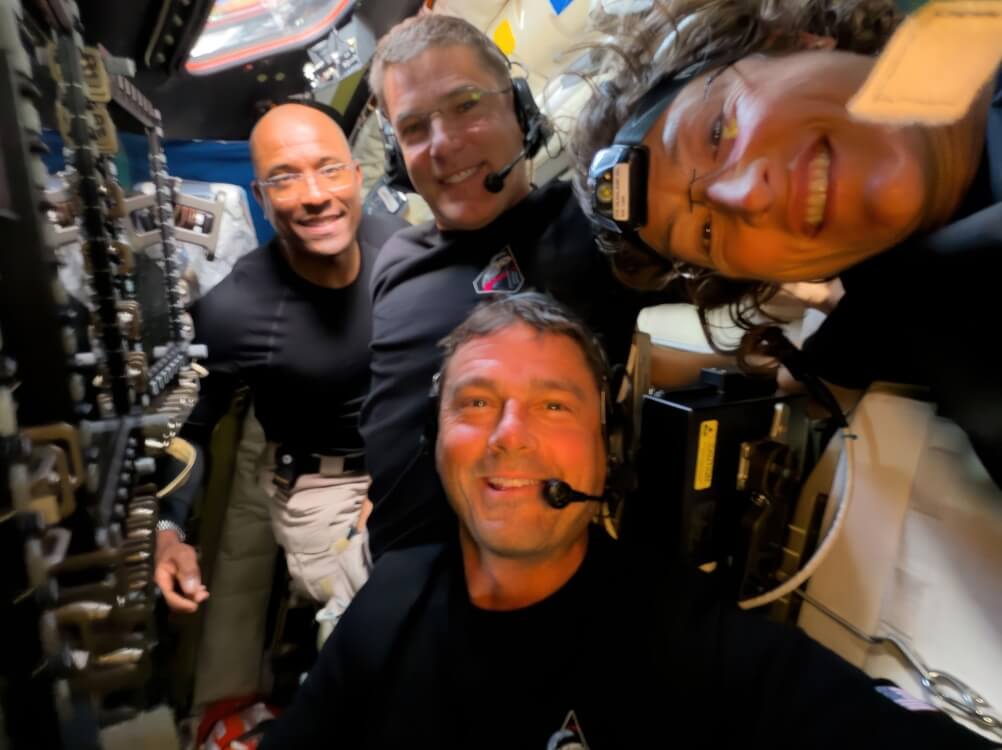 We are still at the beginning of humanity's journey beyond Earth. The Moon is the next destination, but it is not the final objective - Artemis II crew
Consider where advanced robotics, communications, energy systems, high-performance computing, autonomous systems, and materials science fit into this larger R&D ecosystem.
For this reason, space exploration should not be seen only as a national competition or a government expense.
It is also a technology development programme operating at an extraordinary scale.
From my point of view, the most fascinating aspect of Artemis III is whether we can develop the technology, infrastructure, and international cooperation needed to make exploration beyond Earth sustainable.
That will take patience and R&D investment when the commercial return isn't immediately obvious.
It needs governments, universities, research institutions, and private companies to work together.
And we need to accept that some experiments will fail. I think that is a worthwhile investment in our future.
We are still at the beginning of humanity's journey beyond Earth. The Moon is the next destination, but it is not the final objective.
Artemis III is worth watching closely.
