I have stayed awake longer than usual the past few days, watching more history unfold. Since Wednesday, April 1st, I have been streaming the Artemis II launch and journey live through NASA feeds.
Fifty-eight years after Apollo reshaped exploration, Artemis II pushes humanity forward again, and technology enables millions of us to participate in real time.
We all experienced the same countdown and held our breath during the two-hour launch window. It is what modern connectivity delivers. Let's look at the journey so far.
Live access changes everything
Technology is transforming how we experience discovery. With analysts decoding trajectory data, engineers describing spacecraft systems, and social media amplifying responses in real time, NASA offers constant coverage.
As we watch events unfold second by second, this amount of access alters engagement. The coverage for the Artemis II mission runs around the clock. Orion's progress, orbital manoeuvres, and mission milestones are all accessible to the public.
Operational complexity is highlighted by the Artemis II mission. Each movement is influenced by orbital mechanics, weather, and system readiness. We observed teams assessing parameters in real time during the stream. Decades of engineering discipline and risk management are reflected in that decision-making process.
Artemis II carries four astronauts who represent experience, diversity, and international collaboration
And as I finish writing this piece, I am listening live to the Q&A with the Artemis II crew, who are now closer to the Moon than they are to Earth.
Orion represents a new generation of deep space vehicles. It supports extended missions beyond low Earth orbit, it integrates advanced avionics, life support systems, and navigation capabilities designed for lunar travel and future Mars missions. This spacecraft is an operational infrastructure for sustained exploration.
Artemis II carries four astronauts who represent experience, diversity, and international collaboration. Each individual brings a unique background in engineering, aviation, and science.
Together, they form a team built for long-duration exploration. They are shaping the roadmap for future crews.
Hello Artemis II. The maiden voyage begins
The first few days of Artemis II have already delivered critical milestones. After launch, the Orion spacecraft entered a high Earth orbit, where the crew conducted system checks and evaluated life support, navigation, and communications systems. This phase confirmed Orion could safely support astronauts beyond low Earth orbit.
Roughly twenty-six hours after liftoff, the mission reached one of its most important moments. The crew executed the translunar injection burn. This engine firing pushed Orion out of Earth orbit and set the spacecraft on its trajectory towards the Moon.
This manoeuvre committed the mission to deep-space travel and marked the first time humans had left Earth orbit since the Apollo era.
During these early hours, the astronauts also conducted manual flight-handling tests. These evaluations allow engineers to assess how Orion behaves under human control in space. The crew documented views of Earth and conducted operational rehearsals for the mission's later phases.
The mission will reach more than 250,000 miles from Earth, potentially setting a new record for the farthest distance humans have travelled
The spacecraft is now travelling towards the Moon on a free-return trajectory. This path uses lunar gravity to send Orion around the Moon and back to Earth without requiring major propulsion corrections.
It is astonishing to think that the mission will reach more than 250,000 miles from Earth, potentially setting a new record for the farthest distance humans have travelled.
The early days also demonstrated the reality of human spaceflight. The crew addressed minor technical issues and resolved them quickly with mission control.
These operational learnings are what testing is for. Every adjustment strengthens confidence for future missions.
Artemis III pivots as Artemis IV sets sights on the Moon
The NASA roadmap has changed over time. Artemis III will no longer make an attempt to land on the moon. To practise crucial docking procedures with a lunar lander, the mission will remain in lunar orbit.
NASA is putting accuracy ahead of speed. Crews need to manage orbital mechanics and communications delays while coordinating Orion, the lunar lander, and auxiliary systems.
The task of bringing people back to the Moon's surface is intended to be handled by Artemis IV
Before committing astronauts to a surface descent, practising these techniques during Artemis III lowers the risk.
The task of bringing people back to the Moon's surface is intended to be handled by Artemis IV. NASA will have more time to expand international contributions, improve processes, and validate hardware.
In order to build a more sustainable infrastructure around the Moon, Artemis IV will also incorporate early components of the Lunar Gateway.
A mission rooted in global unity
One of the mission's most powerful messages is the importance of international cooperation. Scientists shared data, engineers worked across time zones, and governments coordinated strategic agendas. When we cooperate, humanity progresses, and one of my favourite proverbs is "Together we are stronger."
The Artemis programme reflects historical examples in which development was shaped by alliances. The thirteen colonies came together to support independence more than 250 years ago. The globe was impacted by that collaboration. And now, technological innovation is fuelled by international space alliances.
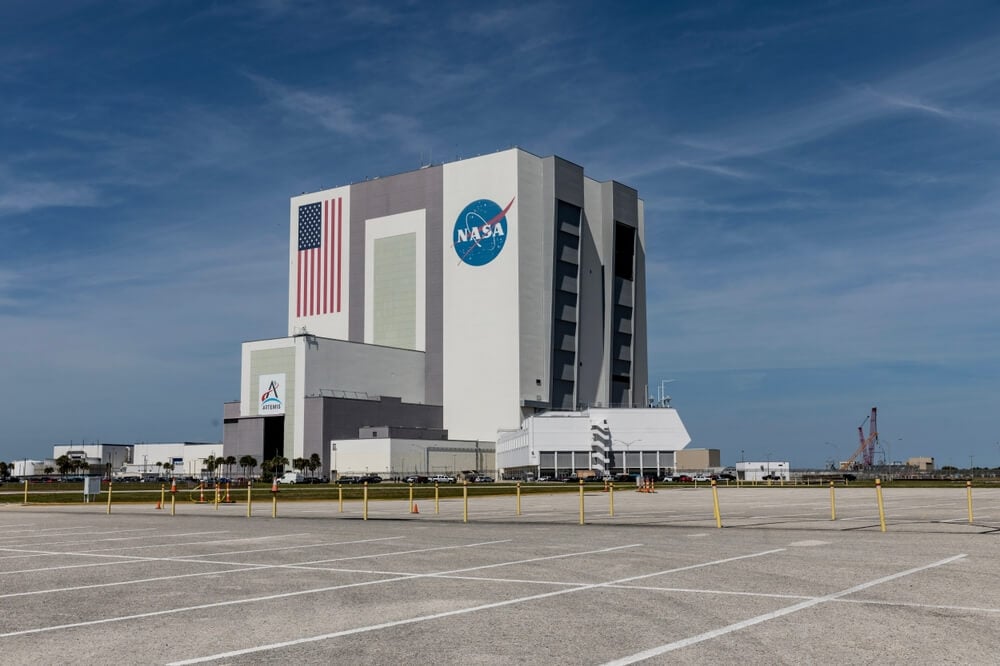 Space exploration requires thousands of coordinated efforts, as no single organisation can accomplish it alone
The Artemis programme propels scientific and economic ecosystems. Universities develop study materials and life-support systems, software companies provide mission-planning tools, aerospace companies develop new propulsion systems, and startups investigate lunar infrastructure. A complete cycle of invention is sparked by Artemis II.
The public response also reinforces that impact. I noticed children dressing up as astronauts across social media posts. Inspiration fuels the next generation of engineers and scientists, and when young people see astronauts returning to the Moon, they imagine themselves participating in future missions.
Space exploration requires thousands of coordinated efforts, as no single organisation can accomplish it alone. Artemis II opens the door to a new chapter, Artemis III will refine orbital operations, and Artemis IV aims to return humans to the lunar surface. Future missions will push deeper into the solar system.
If this week so far proved anything, it is that the desire to explore remains strong. As humans, we are curious. We continue to look beyond Earth. We continue to invest in discovery. We continue to inspire new generations.
What civilisation will we build once we establish a sustained presence beyond Earth? Wishing all the best to the Artemis II crew, Reid Wiseman, Victor Glover, Christina Koch, and Jeremy Hansen.
