This year’s International Monetary Fund Spring Meetings come at a time of heightened economic uncertainty and intense scrutiny of the institution’s capabilities and approach.
Critics on the left argue that the IMF imposes regressive austerity measures on borrowers, exacerbating poverty, hampering economic growth, and undermining their ability to achieve debt sustainability.
On the right, US President Donald Trump’s administration has accused the IMF of “mission creep,” claiming that it has strayed from its core mandate of maintaining macroeconomic stability.
While not all these criticisms are valid, the IMF itself recognizes that reform is essential. Its researchers have already identified crucial changes, and its leadership has acknowledged them. But the Fund has been slow to put them into practice.
The Fund’s 2016 findings on austerity are a case in point. A decade ago, IMF economists showed that cutting public spending during a crisis exacerbates inequality, harming both the “level and sustainability of growth.”
A key reason has to do with “fiscal multipliers”: the impact of changes in government spending on GDP.
As the World Bank has shown, spending on social-protection programs, such as cash assistance to the poor, can deliver enormous returns, with every dollar spent adding $2.50 to the local economy.
The dynamic is clear: low-income households spend the money they receive on goods and services, prompting businesses to expand and hire more workers, who then increase their own spending.
But the inverse is also true, as every dollar cut from social spending removes $2.50 from the economy.
Austerity remains central to IMF programs
Yet austerity remains central to IMF programs. As a result, growth consistently falls short of the Fund’s forecasts—in other words, the stricter the austerity, the wider the gap.
The debt sustainability assessments on which IMF programs rely thus often prove to be inaccurate, leaving countries that comply with the Fund’s demands in need of additional emergency financing.
Much of the IMF’s official policy advice still promotes regressive tax measures for low- and middle-income countries
Similarly, IMF Managing Director Kristalina Georgieva has called for higher taxes on the rich, explaining that progressive taxation is governments’ most effective tool for financing state budgets and reducing inequality without hurting growth.
By contrast, regressive taxes like value-added taxes (VAT) undermine growth by increasing inequality, weakening consumption, and discouraging investment and job creation.
Despite these findings, much of the IMF’s official policy advice still promotes regressive tax measures for low- and middle-income countries.
Limited understanding of politics and political economy
This gap between principle and practice is also evident in the IMF’s limited understanding of politics and political economy.
A whopping 85% of the Fund’s mission chiefs report that political issues are the “principal barrier” to implementing IMF policy advice, yet the institution continues to hire only economists.
Its lack of political expertise and country-specific knowledge is therefore a matter of policy, not an oversight.
To see the IMF’s failures in action, one need look no further than Egypt
To see the IMF’s failures in action, one need look no further than Egypt. After entering four successive IMF programs over the past decade, the country is now the Fund’s third-largest debtor in absolute terms, with $9.4 billion in outstanding debt.
In exchange for these loans, the government cut universal social-protection systems, reduced social spending, and raised regressive taxes such as VAT and customs duties.
What Egypt did not do—at least initially—was tackle the massive network of military-owned enterprises that deters private investment and drains public resources.
The IMF did not know enough about Egypt’s political economy to incorporate this issue into its early lending programs.
It was only in 2022, after lending Egypt $20 billion over six years, that the Fund finally began to impose conditions on military-owned companies.
Country-specific, politically sensitive programs
For the most part, the IMF stuck to its traditional approach, with predictable results.
Austerity and tax measures increased poverty, depressed domestic demand, and caused the private sector to shrink in 106 of the past 120 months.
Egypt’s GDP shrank from $351 billion in 2016 to $349 billion in 2025, even as the population grew by 30%.
Meanwhile, external debt tripled. Last year, Egyptians were the second-largest group of undocumented migrants arriving in Europe, a reflection of rising poverty and the country’s lack of job opportunities.
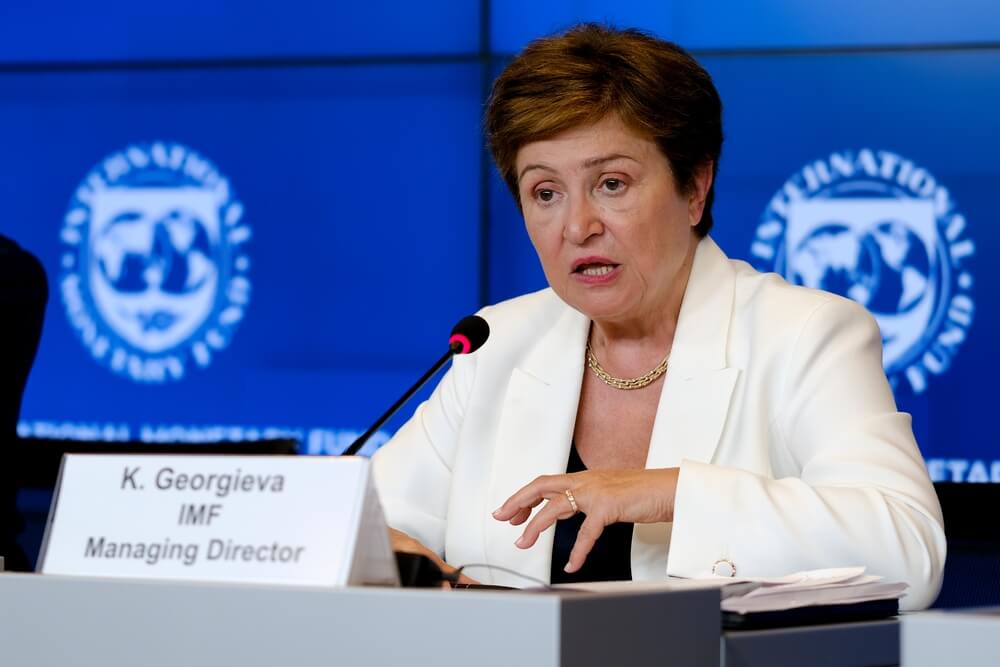 To fulfill its mandate, the IMF must design country-specific, politically sensitive programs - Kristalina Georgieva
Macroeconomic stability depends on debt sustainability, which in turn requires robust, inclusive, and sustainable growth.
To fulfill its mandate, the IMF must therefore design country-specific, politically sensitive programs that incorporate its own findings about what drives—and undermines—growth.
Rather than imposing austerity, such programs should seek to leverage public investments in social protection and essential services.
They should also include progressive taxes, along with measures to strengthen governments’ tax-collection capacity.
The decennial Review of IMF Program Design and Conditionality, which is now underway, presents an opportunity for the Fund to abandon outdated and counterproductive policy prescriptions and put its money where its research is, adopting the evidence-based approach that its own staff and leadership acknowledge is needed.
Amid rising economic volatility, the timing could hardly be more critical. The IMF and its shareholders must not let it pass.
Timothy Kaldas is Deputy Director of the Tahrir Institute for Middle East Policy.
