The US airstrikes in north-western Nigeria, carried out on Christmas Day, mark the return of the United States of America to active military engagement on the African continent, in a region that has long been the scene of complex conflicts between jihadist groups, local militias, and state forces.
This operation, which President Donald Trump personally announced on his Truth Social platform, is not only a response to current security threats but also a signal of a broader geopolitical shift in which Washington is reasserting its role in the fight against terrorism, with an emphasis on strategic interests that extend beyond purely humanitarian motives.
While major media outlets have concentrated on the religious aspect of the attacks, emphasising the protection of Christian communities, this article will delve into the deeper implications: how these strikes pave the way for an increased American presence in the resource-rich Sahel region, and how they could ignite a new era of rivalry with China and Russia, potentially leading to detrimental effects on local stability.
US-Nigerian operation targets ISIS-linked groups
The operation was precisely planned and executed in cooperation with the Nigerian government, which is key to understanding its context.
US forces, under AFRICOM (US Africa Command, the military structure responsible for operations on the continent), used drones and missiles.
The targets were camps of ISIS-linked militants, specifically the Lakurawa group, which operates in north-western Nigeria and neighbouring Sahel countries.
This group, known for attacks on civilians and security forces, is linked to the wider networks of the Islamic State West Africa Province (ISWAP, the branch of ISIS in West Africa) and the Islamic State in the Greater Sahara (ISGS, a similar structure in the Saharan region).
AFRICOM reports indicate that the attacks claimed the lives of dozens of fighters, destroyed weapons depots and vehicles, and did not result in any civilian casualties
The strikes took place in the area around Jabo village in Nigerian state of Sokoto, a rural area close to the border with Niger, where the militants allegedly used forests and remote settlements to hide and plan operations.
AFRICOM reports indicate that the attacks claimed the lives of dozens of fighters, destroyed weapons depots and vehicles, and did not result in any civilian casualties.
However, residents in Jabo describe a scene of fear: a loud crash, a bright red sky, and smoke billowing for hours after the attack, with fragments of ammunition falling close to houses.
One state official from Sokoto pointed out that Jabo is a "peaceful community with no known history of terrorist groups," raising questions about the accuracy of the intelligence and possible collateral effects.
US and Nigeria present joint strikes as counterterrorism success
The official rationale from the White House and the Pentagon focused on counterterrorism: the strikes prevented planned attacks on Christian communities during the holiday, in line with Trump's earlier warnings of a "genocide against Christians" in Nigeria.
The president wrote on Truth Social that the attacks were "powerful and deadly" against "ISIS terrorist scum," emphasising the protection of innocent lives and thanking the Nigerian government for its cooperation.
US Defence Secretary Pete Hegseth warned that “more will come” in order to counter the threat
Nigerian Foreign Minister Yusuf Tuggar confirmed that the operation was joint, with Nigeria providing key intelligence, and indicated that further strikes were expected as part of “ongoing operations” against the extremists.
This was presented as a success in the fight against global terrorism, with US Defence Secretary Pete Hegseth warning that “more will come” to counter the threat.
The Nigerian side emphasises that the attack was carried out at the request of Abuja (the capital of Nigeria), which avoids accusations of unilateralism and upholds the country's sovereignty.
The broader context behind US strikes
To understand why this has happened now, it is necessary to consider the broader context of the crisis in Nigeria.
The country, the most populous in Africa with over 200 million inhabitants, has faced multifaceted security challenges for decades. In the Muslim-majority north and northwest, conflicts between Fulani (nomadic herders) and farmers, combined with banditry and jihadism, result in thousands of deaths annually.
ISIS and its branches, such as ISWAP, have exploited this chaos to entrench themselves, recruiting from poor communities and attacking both civilians and the military.
According to organisations such as Amnesty International, violence escalated in 2025, with over 200 recorded attacks on Christians in the central and northern states and an equal number of Muslim victims.
President Bola Tinubu’s government has been accused of downplaying the religious aspect of the conflict, insisting it is a “complex security crisis” linked to climate change, poverty, and access to resources, not solely jihad.
A Catholic bishop in Nigeria, for example, has previously denied “genocide,”, stressing that victims come from all ethnic and religious groups. However, the Trump administration viewed it differently, using the attacks as a platform for domestic politics, while mobilising a conservative base focused on protecting Christianity.
This is not just about ISIS; it is about controlling supply chains for electric vehicles and renewable energy
Yet the real motives go beyond this rhetoric. The strikes represent a strategic manoeuvre in African geopolitics, where the US is competing for influence against China and Russia.
Nigeria is Africa’s largest oil producer, with vast reserves of rare earths and minerals critical to the global transition to green energy.
China has invested billions in infrastructure and mining, while Russia, through private military companies such as the Wagner Group (now Africa Corps), supports regimes in neighbouring countries like Niger and Mali, offering protection in exchange for resources.
America’s increased presence, under the pretext of counterterrorism, allows Washington to secure access to these resources and prevent Africa from becoming the exclusive “backyard” of Beijing and Moscow.
Contrary to media analysis that frames this as “Trump’s Christmas gift to Christians”, this marks the beginning of a new phase of the cold war in the Sahel: the US is using military force to counter Chinese investments in lithium and uranium mines in Sokoto, where Chinese companies are already present.
This is not just about ISIS; it is about controlling supply chains for electric vehicles and renewable energy, with Africa holding 30 per cent of global reserves of critical minerals.
The risks ahead in Nigeria
The outlook for the future is not optimistic, but it is firmly grounded in reality.
If these strikes continue, as Hegseth has indicated, there may be an escalation of US involvement in the Sahel, potentially with bases or advisers on the ground, similar to operations in Somalia.
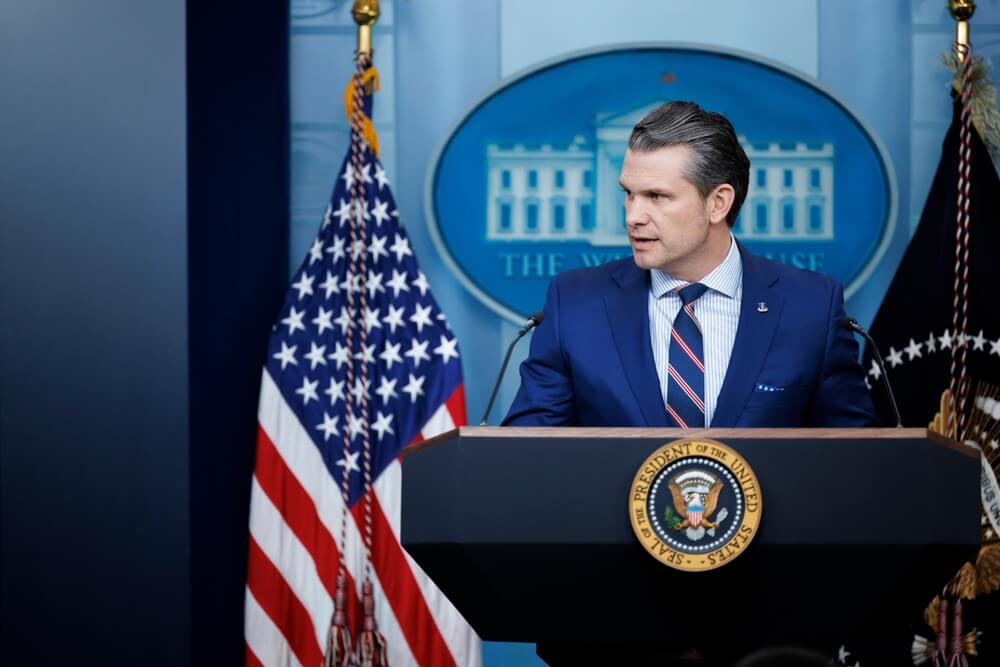 If these strikes continue, as Pete Hegseth has indicated, there may be an escalation of US involvement in the Sahel
This could temporarily weaken ISIS, reducing attacks for a short period, as AFRICOM has reported in similar regions.
However, the risks are significant: history shows that this type of foreign intervention often encourages the recruitment of extremists, creating a vacuum that new groups can fill.
In Nigeria, where poverty is widespread, the strikes could fuel anti-Western sentiment, worsening conflicts with Fulani militias and bandits.
Furthermore, if Russia or China perceive this as a direct threat to their interests, we could see hybrid responses – such as increased military aid to local forces or cyber-attacks on US installations.
Unlike the media outlets, which predict "quick success", we foresee long-term instability: Nigeria could become the new Afghanistan, with the US trapped in an endless cycle of interventions, while China uses economic diplomacy to strengthen its position.
Ultimately, this could affect global markets, raising oil prices if violence disrupts production in the Niger Delta.
The US strikes on Nigeria are not merely a military operation against terrorism; they are a catalyst for reshaping African geopolitics.
While the Trump administration presents these strikes as a major victory in the fight against terrorism, the real consequences extend further and affect the global balance of power, with Africa becoming a key area of conflict for the interests of major powers such as the US, China, and Russia.
This is not just about the short-term suppression of ISIS; historical examples from the region, such as US interventions in Somalia and Mali, show that such actions often lead to temporary stability but then intensify local divisions by encouraging recruitment into extremist groups and strengthening anti-Western sentiment among the population.
