More bad news for Benjamin Netanyahu, and perhaps for Mohammed bin Zayed, arrived not from Tehran, Riyadh or Washington, but from the oil market itself.
The UAE announced it was leaving OPEC, and the market scarcely reacted. At most, there was a brief twelve-hour disturbance, more noise than repricing.
Traders immediately understood the decision. It changed Abu Dhabi’s posture, not the structure of the oil market.
Nobody was trading institutional symbolism; they were trading barrels, spare capacity, export routes, storage capacity, and the ability to keep oil moving under pressure.
On every one of those measures, the centre of gravity remained where it has always been: Saudi Arabia.
That reaction pointed to something larger than oil. For years, the UAE has operated beyond the limits usually imposed by its size and perhaps did so successfully enough to draw the wrong conclusions from Saudi restraint.
Abu Dhabi interpreted Saudi silence as acquiescence and gradually began confusing tolerance with deference.
More patient brother
In Yemen, Sudan, Libya, Somalia, the Horn of Africa, the Red Sea and beyond, the UAE behaved less like a vulnerable federation managing challenging geography and more like a compact power determined to shape the regional order.
The same instinct emerged in Syria after Assad’s collapse. Abu Dhabi’s manoeuvring, including its accommodations with remnants of the old regime, looked less like an attempt to stabilise the country than an effort to preserve influence in a process it could no longer fully control.
Saudi Arabia had every reason to resent this, yet for a long time Riyadh chose not to escalate every disagreement into confrontation.
It acted like the older and more patient brother, wary of the younger one’s ambitions but unwilling to turn family rivalry into an open rupture.
Yemen, before the most recent war in Iran, was where restraint gave way to action
That patience, however, had limits. Yemen, before the most recent war in Iran, was where restraint gave way to action.
When UAE-backed Southern Transitional Council forces pushed deeper into southern Yemen, particularly in Hadramout and Mahra, Riyadh no longer saw an Emirati adventure unfolding at a comfortable distance.
It saw a direct challenge close to its own border and to Yemen’s territorial integrity.
Saudi-led forces reportedly struck UAE-linked arms shipments at the port of Mukalla, with weapons and combat vehicles traced back to Fujairah and reportedly destined for the STC.
Later strikes targeted UAE-backed separatist forces directly. Saudi Arabia drew the line. Abu Dhabi could compete for influence in distant theatres but not reshape Yemen in ways that threatened Saudi security from the south.
Doubling down on the same strategic logic
That episode shattered the myth that Riyadh’s earlier restraint reflected hesitation or weakness.
Saudi Arabia was fully aware of Abu Dhabi’s regional activism. It simply chose, for a long time, not to dignify every Emirati manoeuvre with confrontation.
But when the UAE’s proxy network began extending into the Saudi borderlands and reshaping Yemen’s map, Riyadh acted decisively.
The older brother did not merely complain. He intervened. That should have forced a reassessment in Abu Dhabi.
Abu Dhabi attempted to sabotage, Riyadh absorbed the shock, and the region adjusted accordingly
Instead, MBZ appears to have doubled down on the same strategic logic: leave OPEC, deepen alignment with Israel, lean further into Washington, cultivate Donald Trump, and behave as though wealth, ports, technology, financial reach, intelligence cooperation and elite access can compensate for the absence of demographic depth, territorial scale and military mass.
Pakistan revealed the same pattern. When Islamabad aligned closely with Riyadh around the ceasefire initiative, Abu Dhabi moved to recover roughly $3.5 billion deposited with Pakistan’s central bank.
Officially, the matter was presented as a routine financial issue. The timing was widely understood as political pressure, particularly after Saudi Arabia stepped in to help stabilise Pakistan’s reserves.
The sequence mattered more than the transaction itself. Abu Dhabi attempted to sabotage, Riyadh absorbed the shock, and the region adjusted accordingly.
The Israeli bet on the UAE
This is where the Israeli bet on the UAE begins to look less like strategy than projection.
Netanyahu’s regional approach has long sought to transform the Abraham Accords into something far more aggressive than normalisation: an anti-Iranian, anti-Palestinian and anti-Arab-consensus alignment, with the UAE as its most dependable Arab pillar.
For Israel, Abu Dhabi became proof that Palestine could be bypassed, Saudi Arabia pressured, and the Arab political order reorganised through technology partnerships, intelligence coordination, finance, ports, cyber cooperation and military alignment.
But the OPEC episode exposed the limits of that assumption. If the market barely reacted to the UAE leaving OPEC, there is little reason to believe Abu Dhabi can reorganise the strategic destiny of the Gulf.
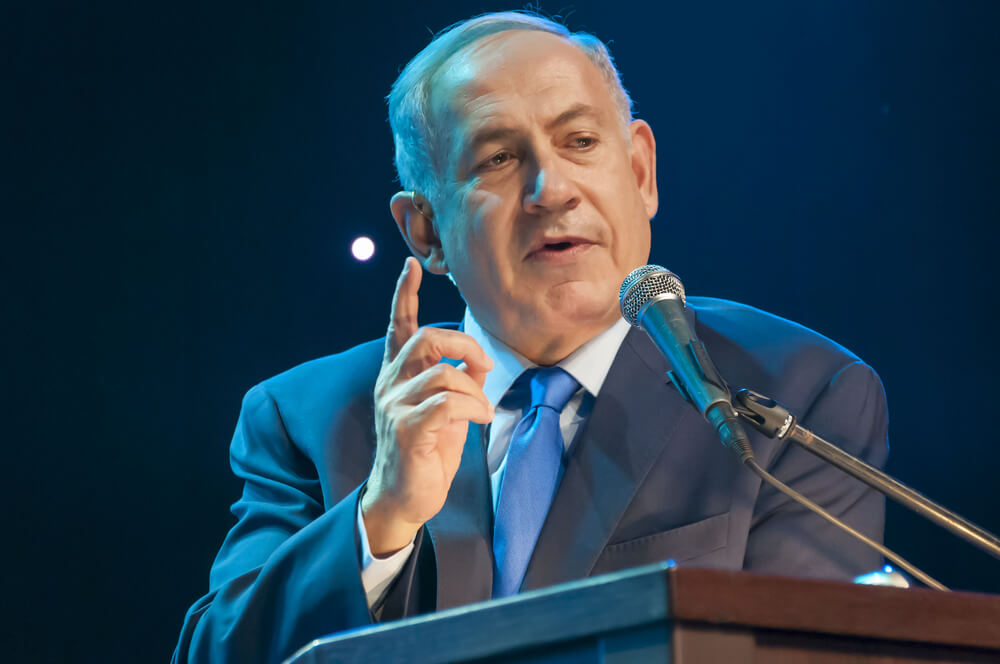 Both Israel and the UAE failed to recognise that the Abraham Accords, in their original form, had become politically impossible for Saudi Arabia - Benjamin Netanyahu
The deeper miscalculation came after Gaza. Both Israel and the UAE failed to recognise that the Abraham Accords, in their original form, had become politically impossible for Saudi Arabia.
Riyadh understood perfectly well that Netanyahu had no intention – neither before Gaza, nor after it, nor now – of accepting any serious path towards Palestinian statehood.
What Israel continued to offer was the same formula Arab governments have observed for decades: negotiations without resolution, symbolism without sovereignty, and normalisation without settlement.
Arab states that still wanted a political solution were effectively being asked to pretend that Israel remained committed to an outcome it had already abandoned strategically and domestically. Gaza ended that ambiguity.
Competence is not the same as enduring power
None of this makes the UAE insignificant. It has built impressive logistics infrastructure, a global financial centre, a diversified economy and a diplomatic network with enormous reach, particularly in Washington.
But competence is not the same as enduring power. Expatriate-heavy economies can build ports, towers, airlines, banks and sophisticated service sectors.
They do not create the permanent manpower base required to sustain armies, intelligence services, bureaucracies and political systems capable of absorbing prolonged crises.
Saudi Arabia possesses the native population, territorial scale, military depth and logistical capacity that the rest of the GCC cannot collectively replicate
When pressure intensifies, demographics matter again. Saudi Arabia, beyond its religious significance to the Muslim world, possesses the native population, territorial scale, military depth and logistical capacity that the rest of the GCC cannot collectively replicate.
The Strait of Hormuz crisis made that reality impossible to ignore. Once shipping lanes, energy flows, food imports and maritime access came under genuine threat, the smaller Gulf states were reminded how dependent their prosperity is on uninterrupted movement and how vulnerable that movement can be.
Saudi Arabia’s geography changed the equation. Its Red Sea access, east-west pipeline infrastructure, storage capacity and territorial depth became the region’s real insurance policy.
The UAE’s Habshan-Fujairah pipeline offers some flexibility, but not enough to alter the strategic balance fundamentally. Saudi Arabia remains the only Gulf state capable of rerouting exports at scale while maintaining broader regional stability under pressure.
Dubai’s commercial priorities and Abu Dhabi’s security doctrine
There is also a quieter question inside the UAE itself. Abu Dhabi and Dubai do not always operate from identical strategic instincts.
Dubai’s commercial priorities are not necessarily the same as Abu Dhabi’s security doctrine.
 Dubai’s commercial priorities are not necessarily the same as Abu Dhabi’s security doctrine
It is difficult to believe that parts of Dubai’s business establishment are not already trying, quietly, to shield trade, tourism, shipping, finance and international investment from the consequences of Abu Dhabi’s harder alignment with Netanyahu and Trump. That conversation may never surface publicly.
The federation is not structured to encourage visible dissent from Abu Dhabi’s strategic direction. But the costs of this wager are not distributed evenly.
The conclusion is not that the UAE is irrelevant. It plainly is not. In many situations, it exerts influence far beyond what its size would ordinarily permit.
But the OPEC episode clarified the limits of Emirati leverage with unusual precision. Abu Dhabi can move aggressively, unsettle assumptions and force reactions.
What it cannot do is replace Saudi Arabia, redefine the oil market independently, anchor the GCC alone, or sustain Netanyahu’s regional ambitions.
The UAE demonstrated initiative, but the balance of the region still moved around Saudi Arabia.
Ahmad El Husseini is a political analyst and essayist who writes on Middle Eastern geopolitics, US foreign policy, and the evolving structure of regional power, with particular focus on Lebanon, Iran, Saudi Arabia, the Arab Gulf, and the future of American influence in a region.
