When Amazon makes a large investment announcement in satellite infrastructure, we pay attention. Last year, Goldman Sachs projected the global satellite market would exceed $100 billion by 2035. The same forecast placed the current market at roughly $15 billion.
That gap reflects the structural change happening across communications, earth observation, and navigation. When Amazon invests at this stage, we take notice. There is a demand for ubiquitous connectivity and resilient infrastructure.
I relate research and development to this jump. I made the case that consistent investment propels scientific advancements in my most recent article on R&D. That thesis is now embodied in the satellite industry.
Highlights include reduced launch costs, increased flexibility, and smaller chipsets thanks to software-defined payloads. Each development builds on the one before it. The domino effect is what we call it.
Government initiatives used to control the satellite market. But now, businesses seek better connectivity in remote areas, consumers expect flawless service everywhere, and defence agencies need more resiliency. Our needs are changing.
The engines driving the satellite boom
Three technologies are now driving the satellite market. I focus on software-defined satellites, direct-to-device connectivity, and low Earth orbit constellations. These areas influence the competitive environment.
First, constellations in low Earth orbit (LEO). Thousands of satellites are now used by businesses to boost bandwidth and reduce latency. Broadband, IoT, and edge computing are made possible by this design.
The second is direct-to-device connectivity. There is no need for a terrestrial tower because mobile phones can link directly to satellites. It makes emergency communications and remote access possible. This trend is further supported by Amazon's interest in Globalstar.
Research needs to continue if satellite technologies are to advance
I expect satellite capacity to be integrated into standard gear. These developments will modify user expectations because connectivity will no longer depend on geography.
Software-defined satellites come in third. Operators employ software to improve capabilities. They maximise coverage in real time, dynamically transfer capacity, and reorganise beams.
Even if it seems like a sentence from a science fiction film, we are discussing the cloudification of space infrastructure today. By lowering capital risk and increasing return on investment, flexibility can become a competitive advantage.
I also connect these technologies to R&D investment. My opinion is consistent with the R&D analysis from last week. Research needs to continue if satellite technologies are to advance.
Long development cycles are necessary for advanced propulsion, AI-driven traffic management, and smaller payloads; investors who recognise this dynamic make early commitments. This pattern is consistent with Amazon's action.
The Artemis II effect
It was a successful decision for NASA to start crewed lunar exploration again. It showed the government's renewed dedication to deep space, and private companies are anticipating downstream demand as agencies build lunar infrastructure. The Artemis II mission essentially changed corporate strategy.
A catalyst was the Artemis II. Businesses are now assessing supply lines outside of the Earth's orbit. Lunar networks require relay satellites, navigation systems require redundancy, and data transmission requires additional capacity. It's no surprise that tech giants often react fast. To secure positions, they use their capital power.
Satellite integration improves edge computing performance and also strengthens resilience against terrestrial disruptions
Currently, satellite investments enable global IoT ecosystems, support cloud services, improve logistics tracking, and offer optionality. For example, Amazon's Globalstar news. As it gets ready for upcoming space-based services, the corporation fortifies its environment.
We are also seeing more competitive pressure. When one hyperscaler moves, others need to reassess their strategy. It's no news that cloud providers depend on connectivity. Satellite integration improves edge computing performance and also strengthens resilience against terrestrial disruptions.
Three key players in the LEO sector
We start with the most talked-about dominant force, which is SpaceX's Starlink. It controls launch capacity, combines hardware and services, and has over 10,000 Starlink satellites in orbit. Starlink sets performance criteria. It also encourages cost savings across the sector.
OneWeb comes in second. Its constellation focuses on communications security and dependability. OneWeb increases its reach through strategic telecom providers. OneWeb markets itself as a high-end connectivity provider and has been granted priority rights to use Ku- and Ka-band spectrum in accordance with International Telecommunication Union (ITU) regulations.
These companies stimulate innovation because each deployment improves technology, and each partnership expands use cases
Amazon's Project Kuiper comes in third. A latecomer with substantial resources. Amazon leverages its expertise in logistics and cloud integration. It organises a massive deployment. Kuiper wants to compete in both consumer and business areas.
These companies define the competitive structure. They also stimulate innovation because each deployment improves technology, and each partnership expands use cases.
The strategic Amazon–Globalstar alignment
The Amazon and Globalstar announcement is strategic layering because Amazon gains access to spectrum and satellite expertise, while Globalstar gains capital and ecosystem integration. This collaboration is a win-win for both parties.
There are also obvious implications for direct-to-device communication. While Amazon bases its distribution networks on its range of devices, Globalstar's network facilitates mobile integration.
This combination should speed up adoption. Additionally, it could alter emergency communications and IoT deployment.
Tracking the market evolution
The satellite market should evolve at a faster pace over the next decade as a new convergence between terrestrial and space networks emerges. Devices should switch seamlessly between them, and enterprises should deploy hybrid connectivity strategies.
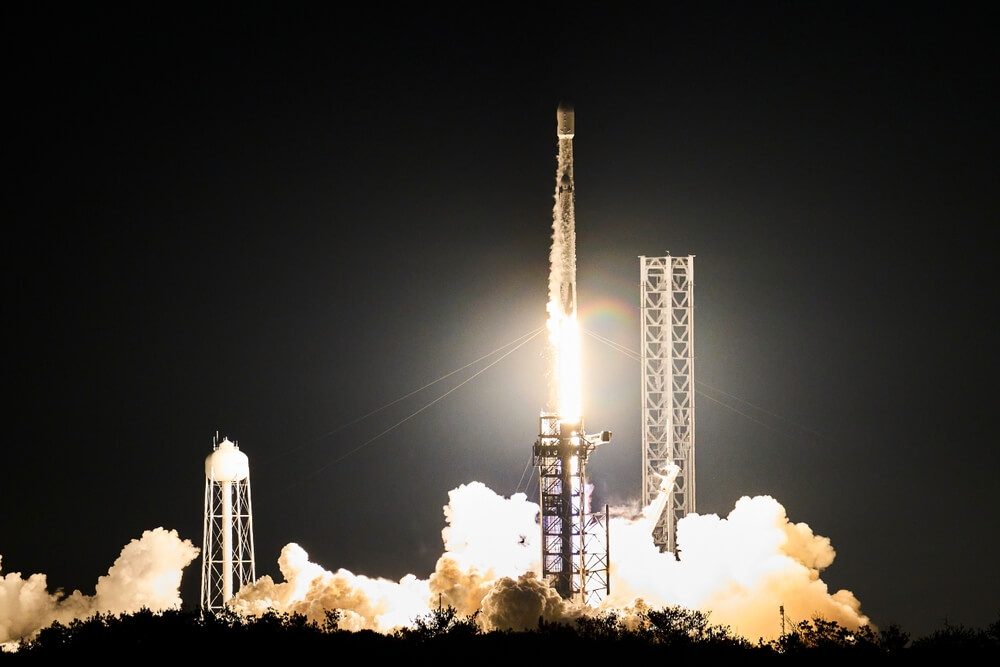 Launch economics should continue to improve. Reusable launchers could reduce costs, and smaller satellites could lower the entrance barriers
Launch economics should continue to improve. Reusable launchers could reduce costs, and smaller satellites could lower the entrance barriers. I would like to see new companies in niche areas like climate monitoring and maritime connectivity.
R&D investment should determine the winners and top leaders of the board. Companies that fund advanced propulsion, optical intersatellite links, and edge computing capabilities will gain an advantage.
The Amazon Globalstar alignment is a marker. It shows confidence in the satellite economy, and it confirms that connectivity extends beyond Earth’s surface. It also highlights competition among technology giants. And we all like to see healthy competition.
We stand at the beginning of a new era of infrastructure. Satellite networks will connect remote communities. They should support disaster response and enable exploration beyond Earth. Which companies will build the backbone of humanity’s off-world communications layer, and how fast will they get there?
In the words of good old Buzz Lightyear, to infinity and beyond!
