Europe’s shift to the right has become undeniable. Over the past decade, far-right and populist parties that preach sovereignty, national identity, and anti-globalization have attracted millions of voters in the United Kingdom, France, Germany, Italy, the Netherlands, and other European countries, with some even riding popular support into government.
But while the martial rhetoric these parties favor has increasingly set the tone for political debate and seeped into mainstream discourse, it also masks a disconcerting contradiction.
Far-right politicians’ messaging is consistent across Europe. They want to defend their countries from perceived threats, including uncontrolled migration, global elites, European Union encroachment, other supranational institutions, cultural erosion, and demographic dilution.
Their language is urgent, crass, and uncompromising. Offensive AI-generated videos often accompany the tough talk.
As a result, people across the West have adopted a warlike approach to migrants, foreign foes, and certain allies.
Some segments of society are even agitating for direct confrontation, as opposed to seeking legal and institutional solutions – a sentiment fueling the rise of mask-wearing Immigration and Customs Enforcement officers in the United States and anti-migrant vigilante groups in Spain.
Uncomfortable fact
But beneath this apparent resurgence of nationalism lies a striking and uncomfortable fact: While support for far-right parties and anti-immigration policies is seemingly on the rise, citizens’ willingness to fight for their countries appears to be falling or stagnating in much of Europe.
According to a 2024 Gallup poll, four of the five countries where people were least willing to go to war for their country are in Europe – Italy (78%), Austria (62%), Germany (57%), and Spain (53%).
If Europeans are so reluctant to fight for their own country, support for fighting to defend a distant NATO or EU ally would probably be even lower.
Militaries across the continent have struggled to attract talent
Not surprisingly, militaries across the continent have struggled to attract talent.
The countries that could field Europe’s largest armed forces – the UK, Germany, Italy, and Spain – regularly fall short of their recruitment targets by 20-30%. Support for higher defense spending remains politically uneven.
This suggests that personal military service, which demands an even greater sacrifice, is equally unappealing, if not more so.
Far-right nationalists portray themselves as peacemakers
Right-wing nationalism thrives in warped online worlds and at the ballot box.
But talk is cheap, and grievance is intoxicating when removed from the hard realities of a more dangerous world.
Several far-right leaders and parties across Europe have, to varying degrees, resisted efforts to increase defense investments at the national and EU levels, even though such funding would strengthen European security, bolster its global leadership position, and prevent geopolitical bullying from other great powers.
Far-right nationalists portray themselves as peacemakers, while establishment leaders sound militant in comparison
While mainstream politicians in the West speak anxiously of the need to defend the “rules-based international order” and international law from bad actors, populists have enjoyed a near-monopoly on the word “peace.”
The latter is less abstract and has clearly resonated with many people, enabling far-right nationalists to portray themselves as peacemakers, while establishment leaders sound militant in comparison.
Peace through weakness is no peace at all
In short, the parties that talk endlessly about defending European countries are also the least willing to do precisely that when it comes to defending Europeans from hostile foreign governments.
This paradox has serious policy implications as Europe confronts the twin problems of a belligerent Russia and an unreliable US.
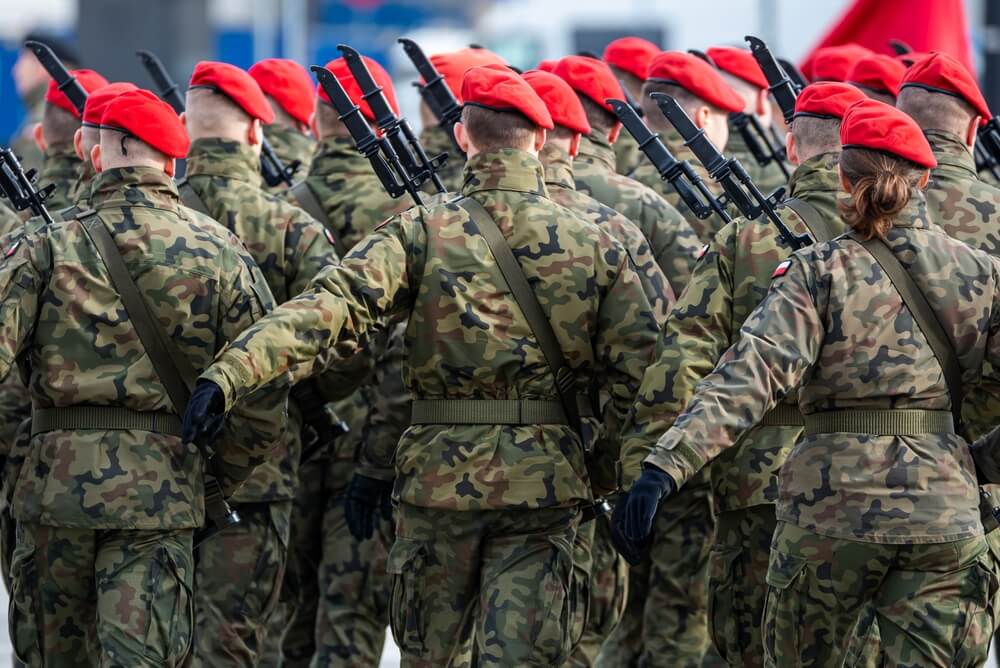 In the face of multiple threats, larger defense budgets are needed to protect European societies, including the critical infrastructure on which Europeans depend
In the face of multiple threats, from war and energy blackmail to sabotage – like the spate of drone incursions last year that disrupted air travel across the continent – larger defense budgets are needed to protect European societies, including the critical infrastructure on which Europeans depend.
The far right’s polarizing domestic policies, frequent contempt for higher defense spending, aggressive stance toward allies, and delusional hope of appeasing potential bullies without a credible deterrent amount to a security posture that would leave Europe more vulnerable than at any time since the end of the Cold War.
Peace through weakness is no peace at all. It is an invitation for other countries to escalate their threats to Europe’s way of life – what far-right parties claim to want to defend more than other political players.
Nicu Popescu, a former deputy prime minister and minister of foreign affairs of the Republic of Moldova, is a distinguished fellow at the European Council on Foreign Relations.
