The 2026 FIFA World Cup will be the largest sporting event ever organised in North America. The United States will host most matches, including the final, at a time when the Donald Trump administration is implementing one of the most restrictive immigration policies in modern US history.
The case of the Iranian national team illustrates how difficult it is to reconcile these two ambitions.
On one hand, the US seeks to host a global event that symbolises openness and international cooperation. On the other, it shows no willingness to change the rules it applies to countries it considers adversaries for the sake of sport.
This is precisely why the issue of visas for the Iranian delegation has gone beyond football. It has become a test of the United States' approach to global leadership.
How far do the host's obligations extend?
FIFA rules require the host country to ensure entry for national teams, professional staff, and official delegations of tournament participants.
The United States has formally fulfilled this obligation. Iranian football players have received visas and will be able to participate in the championship.
However, the manner in which the process was conducted raises the question of how broadly the host may interpret its international obligations.
The US State Department insists that all visas necessary for the competition have been issued
According to several US media outlets, some members of the Iranian professional and administrative staff were not granted permission to enter the country. Among those refused entry were members of the medical and analytical teams, as well as the president of Iran’s Football Federation, Mehdi Taj.
The US State Department insists that all visas necessary for the competition have been issued and that each individual decision is based on security assessments and existing sanctions regimes.
Tehran, however, claims that this is not about individual security assessments, but about a politically motivated limitation of the Iranian delegation's presence.
National team without a camp in the host country
The most notable consequence of the US approach is evident in logistics. Iran will not have a camp on United States territory; instead, the national team will stay in Tijuana, Mexico, and travel from there to matches held in the United States.
In practice, one of the participating national teams will operate without a permanent presence in the host country.
The movement of the Iranian team will take place under significantly different conditions compared to the other participants in the championship
The delegation that has been granted entry will be permitted to remain in the US only for activities directly related to the matches.
This means the movement of the Iranian team will take place under significantly different conditions compared to the other participants in the championship.
For Iranian officials, such an arrangement represents humiliating treatment and a departure from the principle of equality among participants. For Washington, it is a compromise that allows the sporting competition to proceed without deviating from its security policy.
FIFA between principles and reality
The Iran case puts FIFA in an uncomfortable position. For years, it has insisted that sport must remain separate from political disputes.
However, the organisation must now consider whether the formal fulfilment of the host's obligations is sufficient, or whether participants must have equal conditions for preparation and accommodation during the tournament.
This case could encourage other host countries to adapt international sporting events to their foreign policy priorities
If FIFA accepts a situation where one national team effectively operates outside the host country, it will set a precedent for future competitions.
This could encourage other host countries to adapt international sporting events to their foreign policy priorities.
FIFA Pass and selective openness
At the same time, the Trump administration is developing mechanisms to facilitate the arrival of hundreds of thousands of fans.
The programme known as FIFA Pass provides accelerated procedures for holders of tickets purchased through official FIFA channels. US consular services have already announced increased capacity for processing requests from specific countries.
Programmes such as FIFA Pass show that Washington is attempting to reconcile two apparently conflicting interests.
The Trump administration shows no willingness to ease visa restrictions for countries and individuals it considers problematic for political or security reasons
The World Cup is an event of enormous economic importance, and US authorities have no interest in making it difficult for the hundreds of thousands of fans who will spend money and contribute to local economies during the tournament.
At the same time, the administration of Donald Trump shows no willingness to ease visa restrictions for countries and individuals it considers problematic for political or security reasons.
The result is a system in which entry conditions depend largely on the country of origin and the circumstances of travel.
Tehran is seeking to internationalise the dispute
Iran does not view this case solely from a sporting perspective.
Tehran aims to present the visa issue as evidence that the United States is using its host status selectively and in line with its own political interests.
The 2026 World Cup will also serve as a stage for political competition
Even during preparations for the tournament, disputes arose over the issuance of visas to members of the Iranian delegation. Following diplomatic contacts and pressure from FIFA, some restrictions were eased. Now, a similar pattern is emerging.
Iranian officials accuse Washington of restricting the presence of the national team's professional and managerial staff and have announced the possibility of appealing to international sports institutions.
Regardless of whether such actions have a tangible effect, they show that the 2026 World Cup will also serve as a stage for political competition.
Security as a US priority
The US administration bases its position on a clear argument. The United States does not object to athletes coming to compete but will not make exceptions for individuals under US sanctions or those considered associated with entities posing a security risk. This policy enjoys broad support among the US public and political establishment.
Especially after years of tensions with Iran, it is unlikely that any US administration would agree to suspend existing restrictions solely for a sporting event.
The dispute over the Iranian delegation is not a temporary anomaly
This is why the dispute over the Iranian delegation is not a temporary anomaly; it reflects the clash of two principles.
One is the universality of sport. The other is the right of the state to determine who may enter its territory.
Test for the US model of leadership
The 2026 World Cup will be much more than a competition between the best football teams.
For the United States, it is an opportunity to demonstrate its organisational capacity, economic strength, and ability to host an event of global significance.
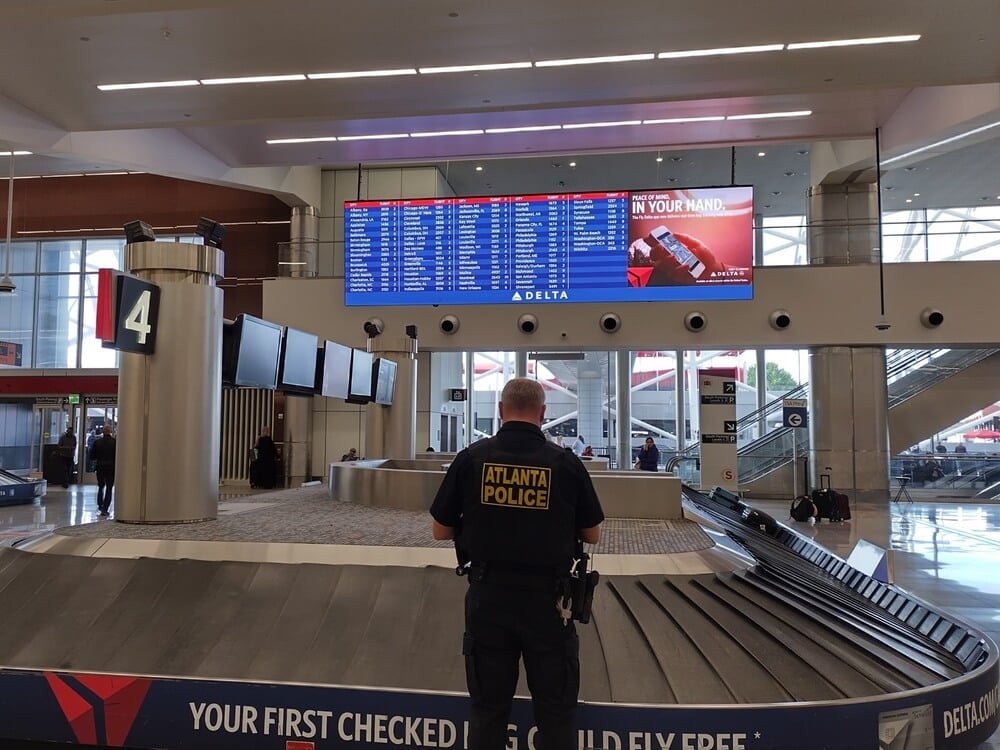 The host's formal obligations will be met, but anything beyond this minimum remains at the discretion of US authorities
At the same time, the championship will test the limits of the US management model in an era of increased security concerns and more restrictive migration policies.
The case of Iran shows that the United States is not prepared to alter the rules it applies to countries with which it has serious political disputes, even for the World Cup.
The host's formal obligations will be met, but anything beyond this minimum remains at the discretion of US authorities.
This is why the 2026 World Cup will not only be an organisational challenge for Washington; it will also indicate how the US perceives its role in the world today.
As host, it seeks to attract a global audience. As a nation, it reserves the right to decide where hospitality ends and politics begins.
The Iranian national team may be only the first such case. If similar situations recur, the question will no longer be whether the formal requirements for holding the tournament have been met.
It will become far more important to consider whether the largest international sporting events can operate under the same rules for all participants when hosted by states with clearly defined foreign policy interests.
