If there is one song that captures President Donald Trump’s vision for the US economy in 2026, it is Buster Poindexter’s 1987 cover of Montserratian musician Arrow’s “Hot Hot Hot,” with its line about “party people all around me.”
That, at least, was the unmistakable vibe emanating from Trump’s entourage at the World Economic Forum’s annual meeting this month.
Trump and his team arrived in Davos with a bullish message. Massive fiscal stimulus – both continuing and newly promised under the administration’s One Big Beautiful Bill Act – will soon be reinforced by a sharp increase in defense spending and possibly even a fresh round of COVID-19-style $2,000 checks for most Americans.
Biden-era regulations will be rolled back aggressively, and a new Federal Reserve chair, chosen for his willingness to deliver multiple interest-rate cuts, will be installed.
Taken together, we were told, these policies will push US GDP growth to 4-5%, perhaps even 6%.
Better still, inflation will continue to fall, mortgage rates will decline, and everyone will live happily ever after.
A highly unlikely scenario
While this scenario is not impossible, it is highly unlikely. AI may boost US productivity, though only at the modest annual rate of around 0.5%.
Similarly, deregulation can generate meaningful short-term gains, and Europe could certainly benefit from more of it, as Trump emphasized repeatedly at Davos, when he wasn’t hurling personal insults at European leaders.
But these supply-side effects fall well short of what would be needed to raise near-term growth by several percentage points.
Unleashing massive fiscal stimulus on an economy is inevitably going to push demand beyond supply, stoking inflation
Conversely, unleashing massive fiscal stimulus on an economy, especially one in which labor-force growth has been curtailed by restrictive immigration policies, is inevitably going to push demand beyond supply, stoking inflation.
In such an environment, long-term interest rates are more likely to rise than fall as investors seek compensation for inflation risks.
Barring a major negative shock, the surge in demand will boost short-term growth, but inflation is notoriously “sticky.”
Firms and households revise their inflation expectations slowly, and because prices are not adjusted simultaneously, competitive pressures limit how quickly any one business can respond.
Contrary to popular belief, even hyperinflation typically takes years, not months, to develop.
Why is Trump willing to take this risk?
That said, if Trump and his new Fed chair prioritize rapid growth over price stability, inflation is likely to linger near 3% and drift toward 4% by late 2027 rather than fall to 2%, as the International Monetary Fund projected in the latest update to its World Economic Outlook.
Of course, a major negative shock – a new pandemic, a financial crisis, or more plausibly, a stock-market correction – could derail this high-growth, high-inflation scenario.
And a cyber conflict or full-scale war that leads to a surge in defense spending on top of an already overheated economy would be even more destabilizing.
Given how unpopular inflation is with voters, why is Trump willing to take this risk?
From Trump's perspective, inflation may be politically damaging, but an overwhelming Democratic victory that impedes his ability to impose his agenda would be far worse
Perhaps he genuinely believes that the supply-side gains from AI and deregulation will be enormous, while the supply-side costs of his tariffs will be minimal, allowing output to expand enough to meet higher demand.
If so, his more pragmatic economic advisers should have pushed back.
One suspects, however, that Trump understands perfectly well what happens when demand persistently outpaces supply and believes the prospect of a short-term economic boost ahead of November’s midterm elections is worth the risk.
From his perspective, inflation may be politically damaging, but an overwhelming Democratic victory that impedes his ability to impose his agenda would be far worse.
The kind of experiment now underway in the US rarely ends well
To be sure, the US economy performed very well during Trump’s first year in office, and he can hardly be faulted for boasting about it.
But his claims – most notably, his oft-repeated claim that he inherited a “terrible” economy from Joe Biden – are wildly exaggerated.
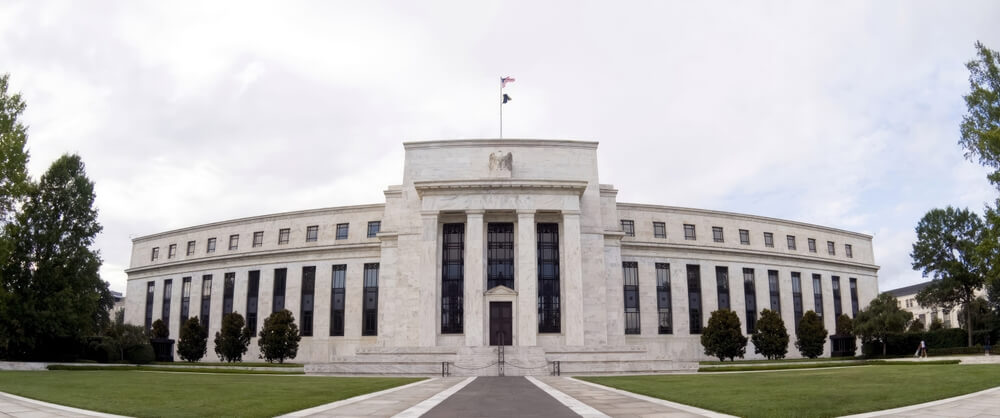 Over the medium term Trump’s decisions over the past year will expose the US to massive risks, including inflation, market volatility, and accelerating decline in dollar dominance
When he spoke at Davos last year, during the first week of his second presidency, America’s dynamism was already the envy of the world. That success did not materialize overnight.
Despite the US economy’s strong performance in 2025, which is likely to continue in 2026 (maybe even becoming red hot), it is hard to escape the conclusion that over the medium term Trump’s decisions over the past year will expose the US to massive risks, including inflation, market volatility, and accelerating decline in dollar dominance.
These include his expansionary fiscal policy, attempts to bully the Fed into cutting interest rates, and rapid financial deregulation – not to mention his blatant corruption and repeated abuses of executive power.
Centuries of experience across dozens of countries suggest that the kind of heterodox experiment now underway in the US rarely ends well in the long run.
To borrow once more from “Hot Hot Hot,” a “fundamental jam” is all but assured.
Kenneth Rogoff, a former chief economist of the International Monetary Fund, is Professor of Economics and Public Policy at Harvard University and the recipient of the 2011 Deutsche Bank Prize in Financial Economics.
