This week, Canadian Prime Minister Mark Carney delivered a near-flawless speech about the past, present, and future of the current world order. It is a text that will almost certainly be cited by future historians.
The only problem was the venue: the World Economic Forum’s annual gathering of the rich and powerful in Davos, Switzerland.
The WEF was founded in 1971 by Klaus Schwab, who wanted to change the world by bringing together business, political, academic, “and other leaders of society” – a mission statement embraced by countless nonprofit organizations.
But always absent from the list was society: all those who populate the countries, work in the companies, or sit in the classrooms of leaders who find it easier to talk to one another than to listen to ordinary people.
Attending the WEF is not cheap. In addition to annual membership and partnership fees of CHF60,000-600,000 ($62,000-622,000), members pay around $27,000 for every delegate they send to Davos.
Invited guests with less financial means – many of them drawn from academia – may get a free ride, but that is only because they are there to offer entertainment for the moments when the other attendees are not busy meeting in back offices away from the buzz. (I am speaking from experience as a one-time guest.)
Officially, the WEF is not about deal-making, but about sharing ideas and developing a dialogue among stakeholders to make the world a better place.
But where else can you find so many powerful people in one location for long enough to explore possible deals?
In fact, the WEF prides itself on having “helped ease tensions between Greece and Turkey in 1988,” for “supporting South Africa’s peaceful transition through meetings between Nelson Mandela and F.W. de Klerk,” and for “facilitating governments and industries working together in the shift to a green economy.”
Democracy has often been on the losing side at Davos
Missing from this list are other bargains that may never have been revealed.
Among those that have, an infamous example was the 1996 “loans-for-shares” scheme to support Russian President Boris Yeltsin’s re-election by extending short-term credit to his government in return for allowing a group of well-connected bankers to gain control over the country’s most valuable natural resources (oil, aluminum, nickel, and gas).
That deal may have briefly saved Russia’s nascent democracy, but it also created the oligarchy that helped pave Vladimir Putin’s path to restoring autocracy.
Democracy has often been on the losing side at Davos, and that should not come as a surprise
In fact, democracy has often been on the losing side at Davos, and that should not come as a surprise.
The entire event is designed to facilitate outcomes that avoid the deliberation and contestation one associates with properly functioning democracies.
A good example is the “structural adjustment programs” that the International Monetary Fund and the World Bank imposed on countries needing financial assistance in the 1990s and 2000s.
The conditionalities attached to these loans emphasized cuts to social spending, labor-market reforms, and painful austerity measures.
While the programs were not put in fine print at the WEF, it was the venue for aligning interests and impressing on borrowing countries that they had no alternative.
The 2008 financial crisis
Another anti-democratic measure was the investor-state-dispute-settlement (ISDS) clause in trade and investment agreements.
This boon to multinational corporations may not have been invented in Davos, but it was certainly nourished and fed there.
ISDS allows private corporations to sue sovereign states for lost profits due to “unfair and inequitable treatment,” with the rulings handed down by arbitral tribunals that lie outside those countries’ jurisdictions.
Since money talks, the threat of arbitration alone has stifled many domestic reforms that foreign investors disliked.
By the time finance ministers and bankers gathered in Davos in January 2009, the bailouts were over, the system was stabilizing
Or consider the WEF’s role in normalizing the financial architecture that caused the 2008 financial crisis.
By the time finance ministers and bankers gathered in Davos in January 2009, the bailouts were over, the system was stabilizing, and nobody wanted to act decisively to restructure the system.
Instead, we got bank stress tests. Some of the banks grew even larger and more influential than before, and “shadow-banking” practices largely escaped scrutiny.
Magic Mountain
Finally, there is the shift to a green economy, which the WEF lists as one of its success stories. The only problem is that it never happened, thanks at least in part to Davos.
Since corporate leaders staunchly opposed a carbon tax, carbon offsets became the new mantra – not because they are effective at mitigating climate change, but because they are cheaper for the biggest polluters, many of whom are WEF partners and regular attendees.
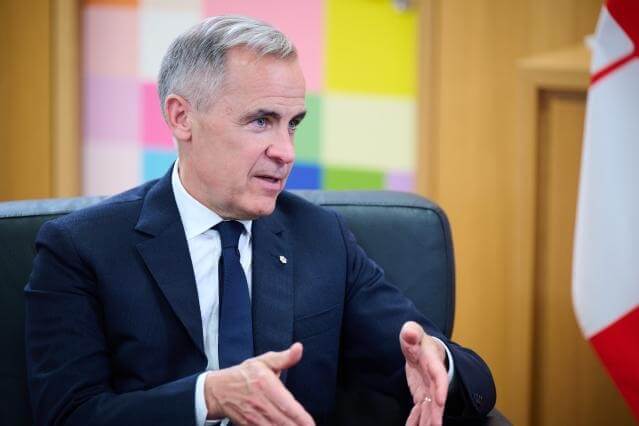 There has now been a rupture in this world order. Carney recognizes that, but he believes we should not mourn the loss
ESG (environmental, social, and governance) criteria, green labeling, stakeholder capitalism, and other ideas developed at Davos have wasted enormous time and resources that could and should have been spent on more effective interventions.
As a platform where political and business leaders can enjoy each other’s company, the WEF has been an incubator for standards that have shaped the global economy as we know it.
Yet there has now been a rupture in this world order. Carney recognizes that, but he believes we should not mourn the loss.
In order to build a new, values-based order, the leaders of the old one must descend from the “Magic Mountain” and re-engage with the flatlands.
That is what Hans Castorp, the protagonist in Thomas Mann’s novel, did after having spent too many years discussing big ideas in the thin air of Davos.
In his case, it was already too late. The old order had crumbled, and World War I had begun.
Katharina Pistor is a Professor of Comparative Law at Columbia Law School.
