Raising awareness about one of the leading causes of death is the uncontroversial aim of World Cancer Day on 4 February. But even though vaccines show the potential to avert and even eliminate some cancers, it is controversial to push for them in today’s science- and vaccine-sceptic climate fostered by the Trump administration.
To understand the backwards trend in terms of health and science, look at six countries - UK, Spain, Austria, Armenia, Azerbaijan and Uzbekistan - that on 26 January lost their World Health Organization status as measles-free.
All these countries experienced a rise in deaths from the preventable disease following a fall in the number of children having the measles, mumps, and rubella vaccine in recent years.
The US may also soon lose its measles-free status given its rising number of cases, although Washington is unlikely to care about how the WHO classifies it, especially after its departure from the UN health body became official in late January.
Washington quit after claiming it had been overly generous in funding the WHO and also accusing the body of botching the response to the COVID-19 pandemic.
Public health experts mourn the US departure from WHO, saying collaboration with US scientists had helped to save lives in, for example, the Ebola outbreaks, rising mpox cases, and the Marburg virus in Rwanda and Ethiopia.
“Public health and policy experts predict that China will use this opportunity to strengthen its position and its global influence, stepping into the power vacuum the US creates by withdrawing. China has pledged an additional US$500 million in support of the WHO over the next five years,” wrote Jordan Miller of Arizona State University.
Never let facts stand in the way
Vaccines can play a big role in preventing cancer. Two vaccines in particular, those against human papillomavirus (HPV) and hepatitis B virus (HBV), have been shown to reduce deaths caused by cervical cancer and liver cancer, respectively.
Rolling out the HPV vaccine is part of the WHO’s strategy to eliminate cervical cancer as a public health problem globally. HPV vaccination has also been shown to cut the risk of head and neck cancers among boys and men.
HBV infection is the most common risk factor for developing liver cancer. HBV vaccination will avert 38 million deaths among those born in 98 low- and middle-income countries between 2000 and 2030, according to a study.
WHO recommends all babies receive their first dose of HBV vaccine within 24 hours of birth, but cuts to foreign aid put such a goal at risk.
Robert F. Kennedy Jr, US health secretary, said without any irony last year that Gavi “ignores the science” in vaccine safety
In its latest salvo against vaccines, Washington is now demanding that Gavi, the Vaccine Alliance that helps provide jabs for children in poor countries, must remove the ingredient thimerosal from its vaccines or the US will “withhold new funding,” Reuters reported on 28 January.
According to an unsubstantiated theory, the mercury in the preservative thimerosal may be linked to autism. Last June, the Trump administration cut off more than a billion dollars previously promised to Gavi, which says it has provided vaccines for 1.1 billion children in lower-resource countries and prevented 18 million deaths.
In 2001, the US removed thimerosal from nearly all vaccines routinely given to children under six as a precautionary measure.
But the website of the US Centers for Disease Control and Prevention points out: “Even after thimerosal was removed from almost all childhood vaccines, autism rates continued to increase, which is the opposite of what would be expected if thimerosal caused autism.”
But Washington, and its many science-sceptical supporters around the world, never let facts stand in the way of their entrenched views. Robert F. Kennedy Jr, US health secretary, said without any irony last year that Gavi “ignores the science” in vaccine safety.
The war against vaccines marches on
The Trump administration - and other donors - are also playing deaf when it comes to the effects of aid cuts. The US slashed aid spending by more than half in 2025, while other countries, including the UK, Germany and Sweden, have also announced large cuts.
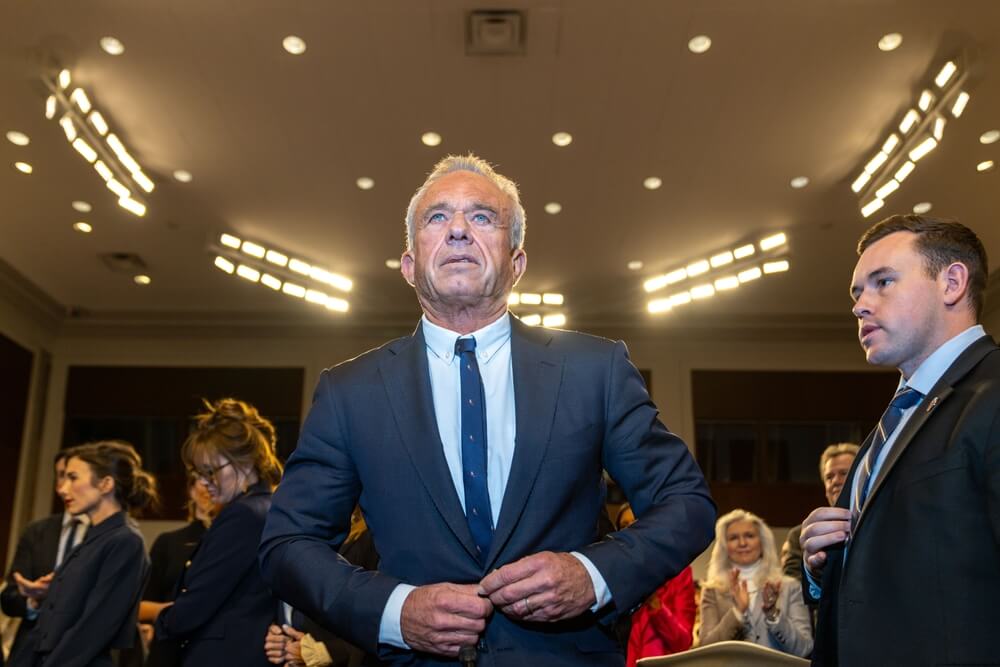 RFK Jr. has said little about cancer-causing infections that can be prevented by vaccines
A study in The Lancet Global Health on 2 February said the cuts may lead to more than 22 million avoidable deaths, including 5.4 million children, by 2030.
Many of these deaths will occur in far-off, poor countries, making it easier for Western politicians to ignore them. But cancer, unlike neglected tropical diseases, for example, causes many people to lose sleep in richer countries where there are the resources and technology to detect it earlier.
A WHO report released on 3 February listed more than 30 preventable causes of cancer, including tobacco, alcohol, high body mass index, physical inactivity, air pollution, ultraviolet radiation - and for the first time - nine cancer-causing infections.
Drawing on data from 185 countries and 36 cancer types, the study identifies tobacco as the leading preventable cause of cancer globally, responsible for 15% of all new cancer cases, followed by infections (10%) and alcohol consumption (3%).
But RFK Jr., for example, has been picky about which causes to vocalise, such as processed foods. He has said little about cancer-causing infections that can be prevented by vaccines.
At some point, it is possible that more voters change their minds to demand more vaccination as part of the arsenal of weapons against cancer. Until then, the war against vaccines marches on.
