The European Union is rapidly adopting the trend set by Washington in global relations, forming smaller, more functional alliances and arrangements to preserve its global role.
Among Europeans, the debate about the internal reorganisation of the EU – aimed at ensuring greater competitiveness, autonomy, and the ability to face global challenges – has never been more intense.
Europe is speeding up and seems unwilling to wait for more proof that its 80-year alliance with America is over.
Over the past year, Europe was confused, waiting in disbelief for assurances from the new Trump administration that they would remain the strongest allies and partners. However, the end of 2025 and the beginning of 2026 dashed such hopes.
First, in the US National Security Strategy, and then in the US National Defense Strategy, Europe was formally assigned second-class status and even described as a problem for the achievement of American foreign policy goals.
Donald Trump confirmed this in his speech at the World Economic Forum in Davos, undermining the European partnership and even insulting the role of Europeans in supporting the US after 9/11.
European adaptation to the new circumstances set by the Trump administration could proceed in two mutually coordinated directions during 2026.
How can full autonomy be achieved?
Firstly, it needs to achieve full autonomy, particularly in security and trade matters, to be able to respond to crises within its own borders, primarily in Ukraine and potentially in Greenland, using its own resources.
Additionally, autonomy in the global economy is essential for enhancing competitiveness, which has been pursued since Mario Draghi's report as a goal of existential importance for the European economy.
The path to full autonomy inevitably requires changes to the EU's current internal decision-making mechanisms. In recent days, Europeans have shown greater awareness of this need.
The European People's Party, the leading group in the EU, advocated at an informal summit in Zagreb, Croatia, for a broader application of qualified majority voting in decision-making, rather than the consensus principle embedded in the Union's founding documents.
The EU can still make qualified majority decisions on many issues, but consensus remains necessary for matters concerning common foreign and security policy
The EU can still make qualified majority decisions on many issues, but consensus remains necessary for matters concerning common foreign and security policy, as well as enlargement policy.
Russian aggression against Ukraine has demonstrated that these issues have become existentially important for the Union and that its foundations are being shaken by difficulties in reaching consensus.
Numerous vetoes by both Hungary and Slovakia on decisions regarding financial support for Ukraine, sanctions against Russia, or security plans for the post-conflict period have prevented the EU in the past four years from fully confronting a challenge it has not faced since its foundation.
More pragmatism and speed
It is significant that the EPP's plans to abolish the veto option within the EU originated from Manfred Weber, the leader of this centre-right group in the European Parliament and a member of the German Christian Social Union (CSU), a traditional partner of Chancellor Friedrich Merz’s CDU.
Although Chancellor Merz was not particularly enthusiastic about Weber's support for joint EU forces in a potential peacekeeping mission in Ukraine, their policies regarding the internal transformation of the EU are aligned towards the same objective.
Merz effectively seeks even greater pragmatism and speed in the EU’s actions
"We must focus on the tasks at hand right now," said Merz at the EPP summit, in response to Weber's initiatives, while also supporting his aim for a profound internal redefinition of the Union's decision-making process.
Chancellor Merz effectively seeks even greater pragmatism and speed in the EU’s actions, recognising that the process of amending internal European legislation (Lisbon Treaty) would take too long to deliver immediate results for Europeans.
His willingness to participate in joint European nuclear deterrence programmes should be viewed in this context. "These talks are taking place. They are also not in conflict with nuclear sharing with the United States of America," Merz said this week in Berlin.
E6
At the same time, another German, Finance Minister Lars Klingbeil, called this week for the five other largest European economies to form a bloc within the EU, which would drive efforts to strengthen the European economy’s resilience to new global challenges.
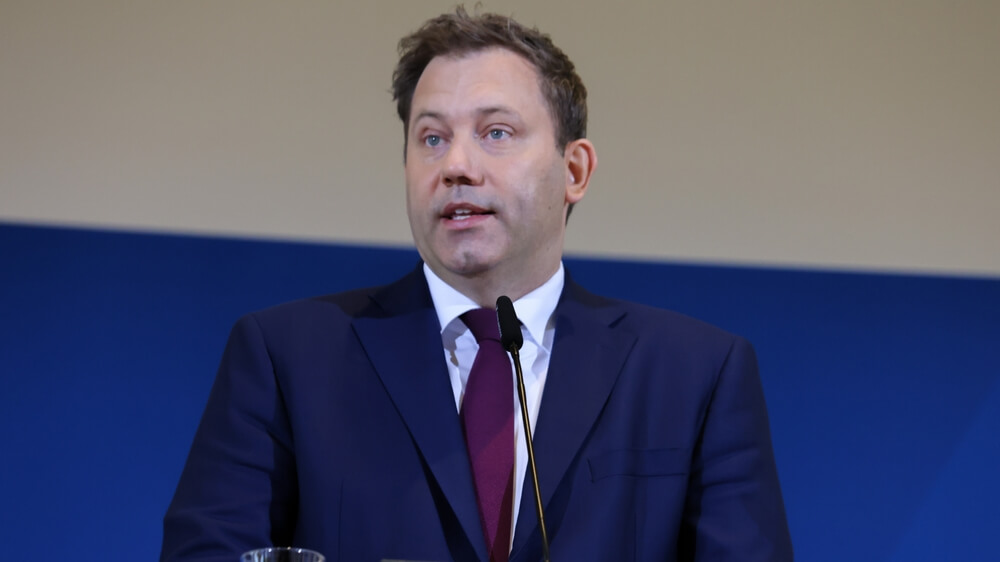 Continuing as before is not an option - Lars Klingbeil
"Continuing as before is not an option," Klingbeil wrote in a letter addressed to France, Italy, Spain, the Netherlands and Poland, the largest economies in the EU.
Together with French Finance Minister Roland Lescure, he will hold talks with this group, which appears to be the embryo of a "two-speed" EU. Its aim is to "set an ambitious and concrete agenda to strengthen the sovereignty, resilience and competitiveness of Europe."
Although the concept of transforming the EU into two or more zones or "speeds" is not new and originally came from French President Emmanuel Macron, the latest Germany-France initiative to unite six European economic heavyweights appears to be an effort that could succeed.
The language of power politics
It appears that Berlin is increasingly setting the tone for the broader European movement towards greater efficiency as a means of resisting the newly established rules of the global order.
Merz's government gave strong impetus to the recently concluded major European Free Trade Agreements with the Latin American economic bloc (Mercosur) and with India.
Additionally, Germany is one of the pillars of the E3 security coalition with the UK and France, created specifically in response to Trump's withdrawal of support for Ukraine and from the European security architecture in general.
Europe needs to learn the language of power politics, to assert itself in a changing world - Friedrich Merz
German leadership in transforming the EU into a more efficient and pragmatic union may also benefit from upcoming key dates in European politics.
First, in June, the Common European Asylum System (CEAS) will become mandatory for all 27 Union members, introducing stricter rules for migrants, asylum seekers, and border controls—all of which align with the policies of the conservative German chancellor.
Furthermore, the parliamentary elections in Hungary in April may result in the departure of the highly Eurosceptic government of Prime Minister Viktor Orbán, which would strongly advance German advocacy for the veto-free principle in EU decision-making.
In 2026, as France enters an election year and focuses more on domestic affairs, German leadership in shaping European policies will inevitably become more prominent.
"Europe needs to learn the language of power politics, to assert itself in a changing world," Chancellor Merz said this week in the Bundestag, in a speech dedicated to his government's foreign policy.
There is a strong possibility that this direction will become the course of the entire EU during 2026.
