The European Central Bank appears set to raise interest rates on June 11. Policymakers’ statements suggest this, markets expect it, and the ECB’s economic analysis provides a rationale for it, highlighting concerns that the energy-price shock caused by the Iran war will lead to a sustained rise in eurozone inflation.
The last thing the ECB wants is to repeat the mistakes of 2022, when it failed to keep a lid on prices after the COVID-19 pandemic and Ukraine war shocks.
But the ECB is at risk of fighting the last war. It should base its interest-rate decisions on facts, not fears.
To be sure, the ECB’s fears are not unfounded. The Iran war has triggered a spike in headline inflation in the eurozone.
With energy prices up 10.9% in the 12 months to May, annual inflation rose from 1.9% in February to an estimated 3.2% in May—well above the ECB’s 2% medium-term target.
Furthermore, the closure of the Strait of Hormuz is continuing to disrupt global supplies of oil, gas, fertilizer, and other important commodities.
If US President Donald Trump fails to reach a deal with Iran that gets trade flowing again soon, energy prices could rise further.
Since this energy shock is global, it could prove proportionally more inflationary than the 2022 Ukraine war shock, which disrupted Europe’s oil and gas supplies from Russia but did not have as big an impact outside the region.
Given that eurozone inflation reached 10.6% in late 2022—a humiliating failure for European central bankers—the ECB’s desire to take preemptive action this time is understandable.
Fear should not dictate policy
But fear should not dictate policy, and today’s economic context is very different from that of 2022.
When Russia launched its full-scale invasion of Ukraine, the eurozone was in the midst of a post-pandemic inflationary boom.
Supply chains were stretched, labor markets were tight, the economy was growing strongly, and inflation was 5.9% and rising. The Russian energy shock added fuel to an already raging fire.
Today’s eurozone economy is characterized by weak growth, subdued wages, and elevated market interest rates
By contrast, today’s eurozone economy is characterized by weak growth, subdued wages, and elevated market interest rates.
Eurozone GDP grew by a meager 0.1% in the first quarter of this year, and pre-war price pressures were limited.
Even in May, core inflation, which excludes volatile energy and food prices, amounted to an estimated 2.5%—only fractionally higher than in February.
Services inflation, a key measure of broader price pressures, reached an estimated 3.5%, but this represents only a marginal increase from February (3.4%). Medium-term inflation expectations remain contained, having edged down in April.
Higher energy prices
Indeed, wage growth is easing, and job vacancies are falling. Moreover, consumer and business confidence have plunged since the start of the Iran war, threatening a recession and lowering the likelihood that an energy-price spike will lead to persistently higher inflation.
Bond markets have also tightened financial conditions significantly: governments’ borrowing costs, and banks’ funding costs, have risen sharply.
With bank lending standards becoming stricter, so are credit conditions for businesses and households.
Were the ECB to raise its benchmark rate from its current 2%, it would compound the pain
Were the ECB to raise its benchmark rate from its current 2%, it would compound the pain.
As a rule, policymakers should look through a temporary rise in energy prices, especially when it is caused by a geopolitical shock that is likely to sap demand, thereby curbing wider inflationary pressures.
Because the eurozone is a major oil and gas importer, higher energy prices make businesses and households overall poorer, suppressing consumption and investment.
Geopolitical and economic uncertainty compound this effect—and the risk of recession.
Hold your fire
Against this backdrop, the ECB should act only when there is convincing evidence that higher inflation is becoming entrenched.
ECB President Christine Lagarde has pledged to take a “data-dependent,” “meeting-by-meeting approach” to interest-rate decisions. As it stands, the data provide grounds for vigilance, not an immediate rate hike.
This all the more true because oil and gas prices may have already peaked.
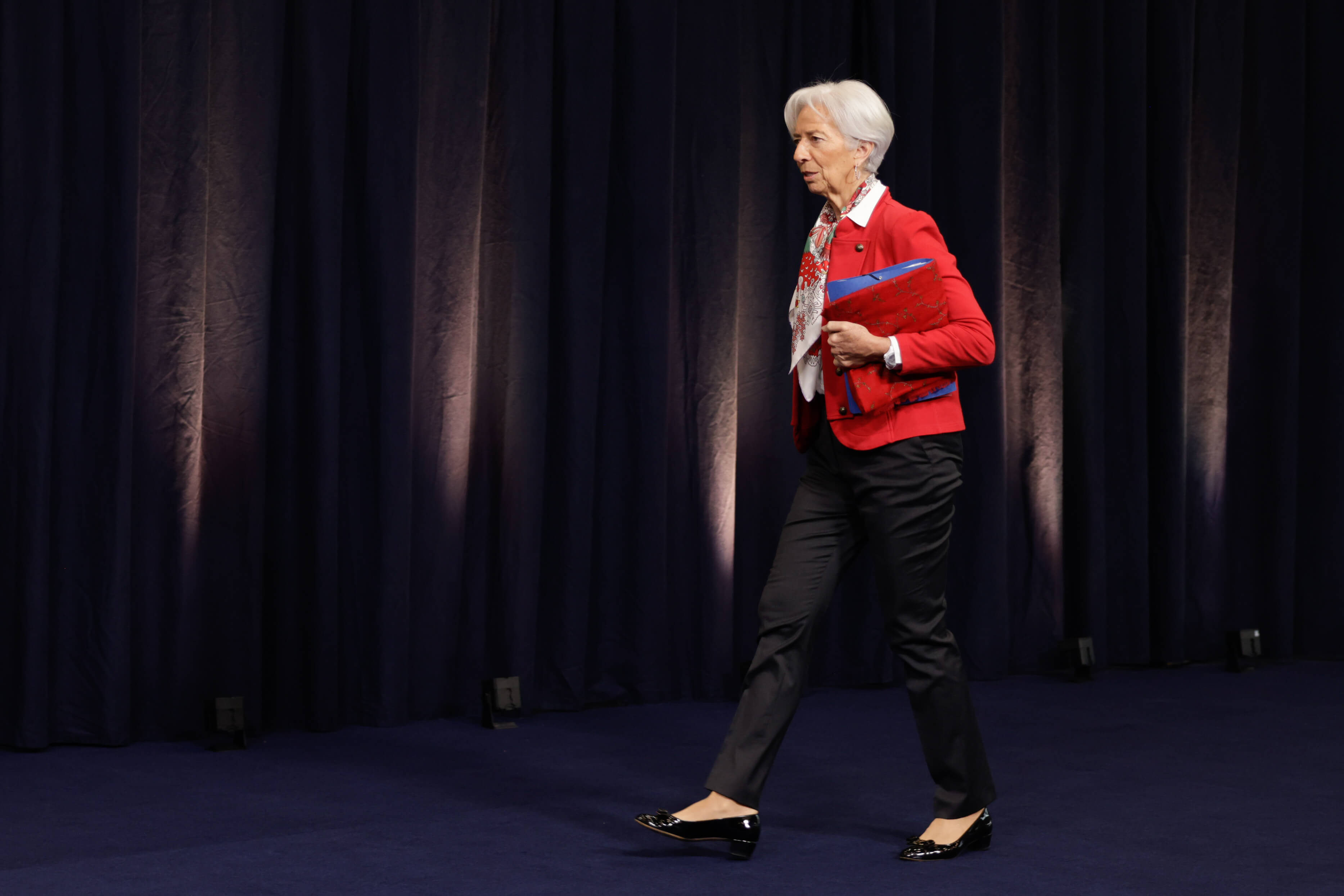 Christine Lagarde has pledged to take a “data-dependent,” “meeting-by-meeting approach” to interest-rate decisions
Benchmark Brent crude oil prices are down 15% over the past month, and European natural-gas futures have fallen more than one-fifth from their March high. Overall, energy prices in the eurozone fell by an estimated 1.1% in May.
Of course, a prolonged standoff, or renewed escalation, in Iran could cause prices to soar again, and inflation could become entrenched, as the ECB fears.
But prices could also plunge tomorrow, if a peace deal is reached, and inflation could abate.
Rightly or wrongly, energy markets currently expect oil prices to decline by the end of the year—and businesses can lock in those lower prices now if they want.
While it might seem wise to hike interest rates preemptively, the opposite is true: when the economy is fragile and the future uncertain, the pragmatic thing to do is hold your fire.
The ECB should have learned this lesson in 2011, when it responded to a temporary oil-price and inflation spike by hiking rates twice, even as the eurozone grappled with a financial crisis.
This catastrophic blunder caused the economy to tank, forcing the ECB to reverse course quickly. If Europe’s central bankers again tip the eurozone into recession with another premature rate hike, they will shred their credibility once more.
Philippe Legrain, a former economic adviser to the president of the European Commission, is Visiting Senior Fellow at the London School of Economics’ European Institute.
