Elbridge Colby, Under Secretary of War for Policy at the Pentagon, explained to the allies in Brussels at the end of August why Europe should assume primary responsibility for the continent’s conventional defence.
Two months later, it emerged that he and other US defence officials had privately advised Lithuania, Latvia and Estonia to soften their public statements about Russia. As an example of unwelcome rhetoric, Colby cited remarks about Russia being “cornered like a rat”.
At the end of September, Estonian Prime Minister Kristen Michal described Putin as a cornered rat when speaking about Russian sabotage in Europe, but it is not known whether Colby had these words in mind.
The messages were delivered in a friendly tone but caused confusion among allies, because the Baltic intelligence services themselves assess that, although Russia is deploying a large part of its forces in Ukraine, it currently has limited capacity to threaten NATO.
Those services instead warn about the speed with which Moscow could restore its military power after the war, especially if sanctions are lifted.
The belief that Russia is exhausted is fuelling demands for tougher negotiating terms, while Washington is considering economic concessions to encourage Moscow to accept an agreement. Behind the disagreement over the choice of words lies a more serious dispute over the price of peace.
Washington seeks a softer tone while offering concessions to Moscow
US negotiators are trying to restart talks to end the war in Ukraine. Sanctions relief and future business cooperation are being considered as incentives for Moscow, while Kyiv is being asked to halt attacks on Russian energy infrastructure.
Advising allies to use softer language is part of the same approach, intended to make it easier for Moscow to return to the negotiating table.
The Baltic governments believe they must publicly explain the seriousness of the Russian threat, especially when they ask citizens to accept defence spending that was previously unimaginable.
Estonian Prime Minister Kristen Michal has said that he will continue to speak openly about Russian activities
The Estonian Ministry of Defence said no such advice had come through official channels, and the Pentagon did not comment on the content of the private meetings. Estonian Prime Minister Kristen Michal has said that he will continue to speak openly about Russian activities.
Lithuanian Defence Minister Robertas Kaunas responded more cautiously, saying that Vilnius was communicating verified facts about violations of airspace, whether they involved Russian or Ukrainian drones, and that Lithuania had no intention of provoking Moscow.
Some Ukrainian drones veered off course during attacks on targets in Russia and crashed in Lithuania, and the Lithuanian authorities have cited Russian electronic jamming as a possible cause.
The Lithuanian assessment determines the price of a possible concession
On 10 February, the Estonian Foreign Intelligence Service assessed that Russia has no intention of attacking Estonia or any other NATO member within the next year.
The director of the service, Kaupo Rosin, expects that a similar assessment will still be valid in 2027, which he attributes to the effect of previous defence measures, and he calls for continued investment.
In an assessment published in March, Lithuanian intelligence services outlined three possible scenarios. If the war continues to consume Russian forces and resources at its current rate, Moscow’s ability to threaten other states will remain limited.
A ceasefire or frozen conflict would allow faster replenishment of units and ammunition. The most unfavourable scenario is a peace agreement followed by the lifting of most or all international sanctions, after which Russia would find it easier to obtain the money, technology and people needed to equip new units.
According to the Lithuanian assessment, Russia could be ready for limited military action in the Baltic region within one to two years
In that scenario, Russia could be ready for limited military action in the Baltic region within one to two years, and for a major conventional conflict with NATO within six to ten years.
In the longer term, it could build an army 30 to 50 per cent larger than before the invasion of Ukraine. These are assessments of military capabilities, but it is precisely on this basis that Vilnius evaluates the risk of any peace agreement.
The Baltic states have good reason to insist on the sequencing of any concessions. A withdrawal of forces, monitoring of the implementation of the agreement, limits on rearmament and guarantees to Ukraine would all need to be agreed before any decisions restoring revenues and access to technology for the Russian economy.
Such a stance can create disagreement with Washington even when all allies agree that Russia poses a serious long-term threat.
The Baltic states are already paying for the defence that America is asking for
Colby’s plan, which he calls NATO 3.0, envisages European members taking the lead in the continent’s conventional defence and reducing reliance on US capabilities, and the Baltic states are already doing so.
Estonia has forecast defence spending of 5.4 per cent of GDP in 2026, Lithuania 5.38 per cent, and Latvia 4.9 per cent.
Almost a decade ahead of schedule, all three are close to the overall target of five per cent or above, which NATO set in The Hague for 2035 and which, in addition to at least 3.5 per cent for basic defence, also includes wider security investments.
Their governments must also explain to voters why the absence of an immediate threat is not a reason to reduce allocations. The Estonian service cites the strengthening of defence so far as one of the reasons why Moscow currently has no intention of attacking NATO.
Congress also approved $200 million for 2026 for the Baltic Security Initiative, a programme of US military assistance to the three countries
At the same time, the Pentagon is reviewing the presence of US forces in Europe. In the spring, the planned deployment of an American armoured brigade to Poland and a rocket battalion to Germany was suspended.
In Estonia, the number of US soldiers was temporarily reduced after one rotation. In July, the then Defence Minister, Hanno Pevkur, announced the arrival of a new unit in the summer, and on 23 September the Estonian Ministry of Defence stated that it was expected in November. That announcement has yet to be fulfilled.
The US Congress has set limits on such redeployments. The National Defense Authorization Act for Fiscal Year 2026 makes the use of funds to reduce the US presence in the European Command area below 76,000 troops for more than 45 days subject to specified assessments and consultations with allies.
Congress also approved $200 million for 2026 for the Baltic Security Initiative, a programme of US military assistance to the three countries. At the same time, Washington seeks greater European autonomy, is reviewing its own military deployments and maintaining institutional mechanisms that prevent sudden changes.
Baltic consent is also required for European sanctions
Special envoy Steve Witkoff met Vladimir Putin on 21 October in St Petersburg to discuss the continuation of the peace process, with Jared Kushner participating via video link. They also discussed the future of European security and potential post-war economic relations.
The previous day, Witkoff had discussed the proposals with Volodymyr Zelensky and European representatives in Oslo. Putin’s adviser Yuri Ushakov announced that Moscow is, in principle, ready to resume trilateral talks with the US and Ukraine after 10 November.
The United States can negotiate an easing of its own measures within the limits of US law, but EU sanctions are decided by the member states.
On 25 June, the Council of the European Union extended economic sanctions against Russia until 31 July 2027, and unanimity is required for any decision to ease or lift them before that date.
Baltic capitals can insist on a phased easing of sanctions, verifiable Russian commitments and the rapid reinstatement of measures if the deal is breached
Lithuania, Latvia and Estonia can withhold consent regardless of what kind of deal Washington might reach with Moscow. Unanimity, however, works both ways.
The Baltic states can prevent an early easing of sanctions, but they cannot on their own secure an extension beyond July 2027, which also requires the consent of all members.
Differences between US and European decision-making could become the most difficult part of the negotiations. Any peace plan that offers Russia access to the European financial markets, technology or energy revenues would have to take into account the position of countries whose intelligence services warn of accelerated Russian rearmament.
Baltic capitals can insist on a phased easing of sanctions, verifiable Russian commitments and the rapid reinstatement of measures if the deal is breached. Their negotiating power stems from EU rules, even when they are not at the table where Washington and Moscow are talking.
A dispute over wording will most likely become a dispute over the terms of peace
Baltic governments will probably continue to speak openly about Russian military policy, but will more carefully distinguish the immediate threat from longer-term capabilities.
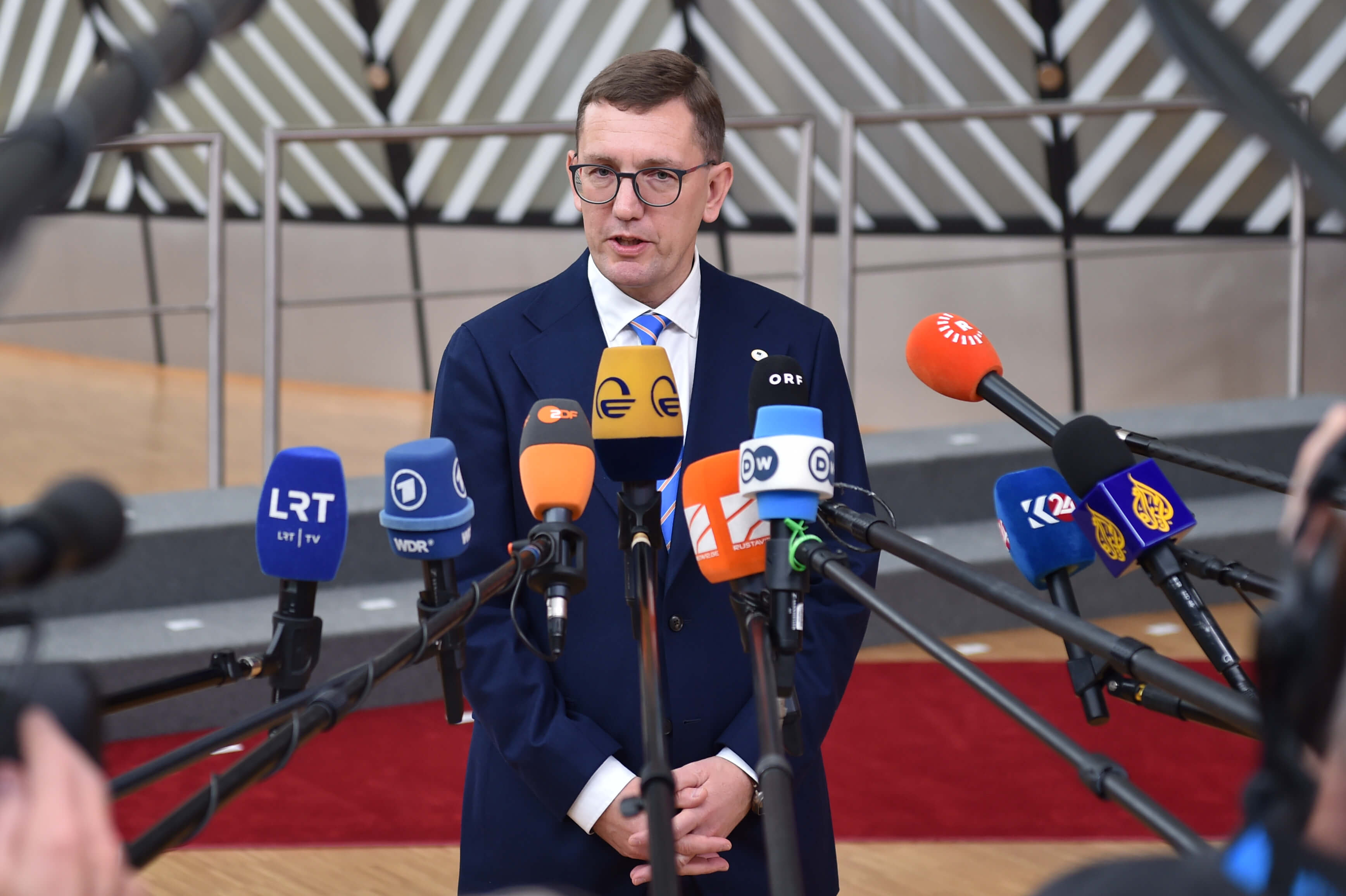 Baltic governments will continue to speak openly about Russian military policy - Kristen Michal
More serious disagreements with Washington can be expected when negotiations move on to specific deadlines for lifting sanctions and providing security guarantees.
In the November talks, it will be crucial whether the US demands European economic concessions in advance or only after Russia has met the agreed obligations; the willingness of the Baltic states to support the agreement will also depend on this.
The Pentagon can expect more restrained language from its allies as they continue to support efforts to deter Russia. What Washington demands when deciding on substantive economic concessions will be crucial.
The Baltic states already bear a large part of the burden that US policy places on Europe, and in the Council of the European Union they have the right to influence one of the most important instruments in negotiations with Moscow.
US military power gives Washington the leading influence in the alliance, but the European cost of any agreement with Russia will have to be negotiated with Vilnius, Riga, and Tallinn.
