At the beginning of 2026, a development occurred that best demonstrates how semiconductors have become a strategic battleground.
Washington gave the green light for the export of Nvidia H200 chips for artificial intelligence to China, while Chinese authorities almost simultaneously ordered customs to prevent the chips from entering the country.
Although the American side conditionally allowed sales, China decided against buying, at least under the offered conditions. Chinese companies have been instructed to refrain from purchasing unless strictly necessary, with narrow exceptions for research and development projects at universities.
The H200 is no ordinary product. It is Nvidia’s second most powerful graphics processor for artificial intelligence. The GPU (graphics processing unit) was originally developed for graphics, but today it serves as an engine for training advanced AI models.
Because of its computing power, the H200 is a key component for the development of new AI technologies.
For Chinese technology companies, the H200 promises to accelerate projects. For security strategists in the US, the same chip raises concerns that it could empower China’s military and intelligence apparatus with advanced capabilities.
This tension between technological progress and national security forms the basis of the H200 dispute.
The American announcement appeared to the public as a signal of relaxation after several years of restrictions. China’s countermove signalled that Beijing will not automatically accept American flexibility if it is accompanied by conditions, controls, and political calculation.
US export conditions: controls, quotas, and the transactional approach
The US decision was not a straightforward licence but a regime under strict restrictions. The Department of Commerce, BIS (Bureau of Industry and Security), has made it possible to consider applications individually instead of automatically rejecting them.
This gave Nvidia an opportunity to obtain a licence for certain Chinese customers, but with rules that make each chip a regulatory project.
Every H200 destined for China must undergo testing at an independent US laboratory, with performance and safety verified.
A quota was established to prevent China from receiving more than half the volume allocated to American users. Nvidia must confirm sufficient availability for the US market before exporting.
Buyers in China must demonstrate that they have compliance procedures in place, including due diligence on purchasers and measures to prevent chips from being diverted to military users.
Formally, the message is clear: the sale can only proceed if Washington retains control over the end use.
Nvidia Blackwell, the fastest generation, remains banned for Chinese firms
A financial component was added to the decision, which attracted particular attention. Donald Trump's administration tied exports to an arrangement in which the US government takes 25 per cent of sales revenue.
In practice, this is a tax that turns the chip into a political-economic transaction. Washington is thus attempting to combine industrial profits and budget income while maintaining a security lever.
Within the US, the move has divided the industry and some of the administration from security hawks in Congress.
Some argue that controlled sales are preferable to a total ban, as a total ban accelerates Chinese self-sufficiency and pushes Chinese firms towards alternatives without any American influence.
Others warn that even a chip that is not the latest can provide additional impetus to China's military modernisation and that it is difficult or impossible to guarantee it will not end up in strategic projects.
The issue of smuggling networks, redirection, and intermediaries remains a real problem. Critics therefore see the move as potentially trading long-term security for short-term profits.
Washington defends its position with the argument that the H200 is not the top of the pyramid. Nvidia Blackwell, the fastest generation, remains banned for Chinese firms.
This preserves the technological gap. In this logic, the H200 is a risk management mechanism rather than an actual gesture of goodwill.
China's restriction: self-sufficiency, sovereignty, and bargaining leverage
China's response was as much political as economic. Instead of purchasing, Beijing imposed restrictions within its own borders.
Chinese customs have been instructed not to allow the H200 into the country. Technology companies have been told not to buy unless absolutely necessary, with only narrow exceptions.
Although this measure may be temporary, its tone is such that, in practice, it functions as a ban.
The first motive is industrial policy. For years, China has pursued a strategy of reducing dependence on foreign technologies, especially American ones.
China's import of high-end Nvidia chips carries the risk of continuing to rely on technology that another country controls. Today it is a permit; tomorrow it may be a ban.
The H200 set a precedent. The state then halted purchases and forced the market to turn to domestic solutions. The H200 is treated in the same way.
If the H200 becomes the standard in Chinese data centres, domestic manufacturers will have less opportunity to develop.
If the H200 remains unavailable, Chinese firms are compelled to adopt domestic chips, optimise software, and accelerate the development of their own solutions.
Another motive is sovereignty and rejection of external conditions. The offer from Washington comes with restrictions, checks, and a 25 per cent tax.
Accepting such an offer also means accepting the logic that the US holds the keys to the technology and dictates the terms. Beijing sees a political cost in this.
Therefore, Beijing conveys the message that it will only make purchases "under the rules of others" in situations that are strictly necessary.
The Chinese blockade of the H200 also serves a negotiating function. It allows Beijing to delay a decision until it is clear whether the US licence represents a viable offer or a temporary exception without broader political backing.
The American side is already closing loopholes through which Chinese users could indirectly access powerful GPU resources via cloud services
With this move, China is also taking a risk. Chinese AI companies want the most powerful GPU chips because they speed up model training.
If the H200 stays outside the country, they will be forced to combine older hardware, domestic chips, and software optimisations. Beijing apparently believes that the long-term strategic gain outweighs the short-term slowdown.
Technology and geopolitics
The H200 case fits into the technological competition between the US and China. It reflects a trend in which technology and geopolitics are so intertwined that infrastructure planning has become a political issue. Semiconductors are now a strategic commodity. Control over the most advanced chips has become a lever of power over the economy and security.
For the US, an advantage in AI means both commercial dominance and military superiority. In that logic, the H200 is permitted only as a controlled product that preserves the technology gap.
For China, access to cutting-edge technology is a condition for modernisation, but also a matter of sovereignty. Beijing is opting to enhance its self-sufficiency instead of accepting an offer that carries political implications.
American and Chinese companies will increasingly operate in separate systems
This development leads to the division of the technological space. American and Chinese companies will increasingly operate in separate systems, with different suppliers, rules, and technical standards.
This reduces mutual dependence, which until now has acted as a brake in political crises. As those brakes weaken, the scope for more drastic political and security moves increases.
This case also raises the political risk for companies outside China and the US. Until recently, the focus was on who offered the best chip. Today, there are also concerns about whether the chip will be on the permitted or prohibited list tomorrow, whether the licence regime will change, and whether intermediate models of use via the cloud will be blocked.
The American side is already closing loopholes through which Chinese users could indirectly access powerful GPU resources via cloud services. This means that physical import is not the only point of control; control also extends to capacity access.
Europe, Taiwan and South Korea
The European Union does not have an equivalent to Nvidia, but it is interested in maintaining market stability, as European industry depends on these chips.
The H200 episode further supports European plans to strengthen its own capabilities through industrial incentives and factories, aiming to reduce dependence on external shocks.
Europe will largely remain aligned with Washington in controlling strategic technologies, but it would rather not become collateral damage in a technological conflict.
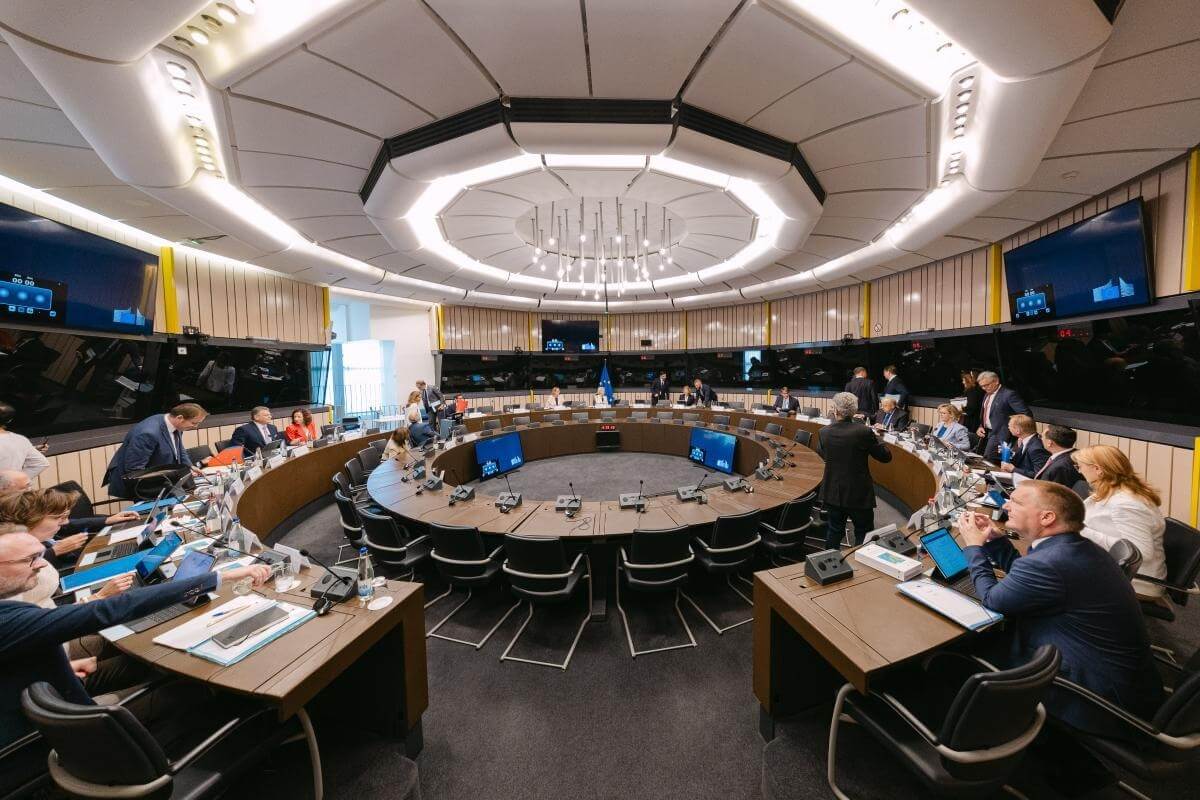 Europe will largely remain aligned with Washington in controlling strategic technologies, but it would rather not become collateral damage in a technological conflict
Taiwan is crucial because high-end chips are physically manufactured in Taiwanese factories. Taiwan balances its security dependence on the US with the economic realities of global supply chains.
Any acceleration of Chinese self-sufficiency reduces the long-term significance of Taiwan's position in the overall balance of power, but in the short term, Taiwan remains irreplaceable.
South Korea is a US ally, but has deep economic ties to China, particularly in memory and industrial components sectors.
The escalation of the technology war increases the risk of Chinese countermeasures and uncertainty for Korean giants. Seoul therefore has an interest in keeping tensions manageable, even as it follows US strategic guidance.
The most realistic short-term outcome is a prolonged standstill, with the possibility of selective exceptions and quiet flexibility, especially ahead of high-profile political meetings.
Another possibility is escalation, where permits would be withdrawn, and countermeasures extended to other sectors. Perhaps the most important outcome is adaptation.
The world will gradually become accustomed to the fact that chips are not just a commodity but a strategic instrument. Companies will diversify suppliers, countries will invest in domestic production, and technological development will increasingly be planned with political scenarios in mind.
The Nvidia H200 case demonstrates how much technology has become subject to political control. A chip that was recently a commercial product is now treated as a matter of state policy.
This implies that political interests and security assessments, rather than the market, now determine the rules of trade. In such an environment, even products that are not the latest generation can be stopped or permitted overnight.
The relationship between the US and China is entering a phase where technology is under constant oversight, and countries and companies situated between the two powers bear most of the risk.
