Canada aims to bring together an initial group of countries around the Defence, Security and Resilience Bank (DSRB), a new multilateral financial instrument for defence, security and resilience, at the NATO summit in Ankara on 7–8 July.
The ambition is substantial: up to £100 billion in soft capital for allied nations and their defence industries. Ottawa is attempting to present around ten founding countries in Ankara, although the agreement has not yet been finalised.
Canada’s chief negotiator Isabelle Hudon, executive director of the Business Development Bank of Canada, said the summit was set as a deadline for announcing the initial group, but that the outcome depended on the final talks, particularly on states’ capital commitments. To date, only Canada and Luxembourg have been publicly confirmed.
This uncertainty determines the true weight of the project. The DSRB does not yet have the backing of major Western economies, a confirmed group of founders, or market testing demonstrating that it can provide capital on better terms than existing instruments.
Nevertheless, the proposal comes at a time when NATO allies have already accepted a significantly larger bill for their own security, yet it remains unclear who will finance it, how the money will be raised, and through which institutions it will be channelled to industry.
The bill from The Hague
At the summit in The Hague in 2025, NATO members adopted the goal of annually allocating 5% of GDP to defence and wider security by 2035. At least 3.5% should go to what directly determines the military strength of allies: weapons, ammunition, equipment, logistics, command systems, air defence, training and the ability to rapidly deploy forces in joint operations.
The remaining 1.5% is earmarked for the wider security domain, from the protection of critical infrastructure and communication networks to civil preparedness, innovation, and the strengthening of the defence industry.
On paper, it is NATO’s biggest financial shift in decades. In practice, its value will depend on whether states turn that money into contracts, production lines, supplies and equipment, or whether they lose it in slow national procedures and annual budget debates. This is where Canada is trying to find room for the DSRB.
Canada’s Department of Finance describes the DSRB as an instrument for long-term defence, security and resilience financing
NATO has raised the financial bar, but industry will not react simply because governments have promised larger budgets. New production lines are opened only when companies have multi-year contracts, predictable demand, access to capital and confidence that orders will last long enough to justify the investment.
The idea is that part of the financing of the new defence economy should not rely exclusively on annual budgets and traditional state borrowing, but on a permanent multilateral institution that can attract private capital, facilitate production financing, and support companies that have the technology or capacity but lack a sufficiently strong balance sheet for rapid expansion.
Canada’s Department of Finance describes the DSRB as an instrument for long-term defence, security and resilience financing, with particular emphasis on supporting government projects, members and SMEs in the defence supply chain.
Canada's middle power ambition
Canada sees more than technical funding in this project. Ottawa is trying to position itself within a new Western security policy agenda, in which European allies are asked to shoulder a greater share of the burden, while American attention is increasingly focused on the Indo-Pacific, China and Washington’s domestic politics.
Prime Minister Mark Carney has already built policy on the premise that middle powers must organise themselves more effectively in a world where the old American order no longer functions with the same predictability. DSRB is the financial expression of that idea.
For Canada, the success of the DSRB would mean far more than simply hosting an international institution. If Ottawa can assemble a sufficiently serious founding group, it will secure a seat at the table that will shape the financing of new Western armaments: who receives capital first, which projects are prioritised, and how quickly the money reaches industry.
This is Canada's attempt to expand its role in transatlantic security beyond the traditional military contribution. The problem is that the project currently lacks the weight to guarantee success, with only Canada and Luxembourg publicly confirmed so far.
If funding turns out to be more expensive or more complicated than existing options, the project will remain an institutional ambition with limited practical value
No other G7 member is close to joining the bank, with South Korea mentioned as a possible latecomer, while Italy, Spain, Turkey, Belgium and Ukraine have considered the proposal without publicly deciding to do so. Germany, which previously stayed away, is now participating in the talks as an observer.
Without the participation of several countries with strong public finances and high credit ratings, the DSRB can hardly provide low-cost funding on a scale that would distinguish it from existing sources.
That is the difference between a politically useful idea and a financially robust institution. DSRB may enjoy a good moment, a compelling story and the support of part of the market, but its importance will depend on capital commitments and the quality of its founders.
If funding turns out to be more expensive or more complicated than existing options, the project will remain an institutional ambition with limited practical value.
The fuss over defence funding
The Canadian proposal enters a field where other formats already exist. The European Union has launched SAFE, an instrument offering up to 150 billion euros in loans for defence investments and joint procurement by member states.
Brussels is presenting this as a way to quickly secure long-term, competitive financing for large, urgent procurements, while strengthening Europe's defence industrial base.
SAFE is therefore both a financial and political instrument: it should increase capacity while keeping as much of the money as possible within the European industrial area.
The UK, Finland and the Netherlands are developing their own approach through the Multilateral Defence Mechanism, announced in March 2026, with the aim of establishing by 2027 a framework for pooling demand, accelerating joint procurement, and increasing investment in, and availability of critical capabilities, including ammunition.
This is particularly important for London, which wants to remain a key actor in European defence even after leaving the EU, without being completely tied to Brussels’ instruments.
The EU wants industrial control and joint procurement within the Union
The DSRB will therefore not operate in a vacuum. It will need to find its place among EU loans, the UK–Nordic–Dutch approach, national plans and private funding. Each channel has its own political logic.
The EU wants industrial control and joint procurement within the Union. Britain wants a flexible framework with selected partners. Canada wants a bank that would operate in the same security space as NATO, but as a financial institution rather than another body of the Alliance.
Such crowding can be useful when different instruments address different problems. It can become dangerous if they begin competing for the same countries, projects, banks and companies.
Western defence industries already face bottlenecks in production, manpower, components, certification and government procurement procedures. Another financial channel makes sense only if it reduces those bottlenecks.
If it merely overlays them with a new layer of institutional coordination, it will primarily benefit consultants, lawyers and conference panels.
The industry needs predictability
The biggest challenge for Western armaments is not states formally increasing their budgets. The hard part is turning political decisions into industrial production.
Companies that produce munitions, air defence systems, radars, communications equipment, drones, cyber tools and spare parts need to see a sufficiently sustained demand curve. One-year contracts and emergency purchases can fill some gaps, but they do not establish a permanent manufacturing base.
DSRB could be useful where the largest producers already have access to capital and smaller suppliers remain out of sight. In the defence industry, many critical components are not produced by large systems integrators but by specialised firms that depend on banking conditions, government guarantees, and secure orders.
Money will not solve slow permitting, national protectionism, differing standards, shortages of skilled labour or fragmented procurement
If those firms cannot scale up production, the most expensive programmes remain vulnerable because of parts that are often financially minor but operationally crucial.
That is why one of the possible contributions of DSRB is to support the lower and middle parts of the supply chain. More favourable loans, guarantees and long-term financing could reduce the risk for companies that want to expand capacity but cannot bear the investment burden alone. It would not replace state contracts but would make them more accessible to a wider range of manufacturers.
The limits of this approach are also clear. Money will not solve slow permitting, national protectionism, differing standards, shortages of skilled labour or fragmented procurement.
The bank can help only if countries know what they want to buy, if orders are large enough, and if there is the political will to jointly plan part of defence production. Without that, leveraged capital remains a supplement to a system that continues to operate too slowly.
The American shadow over Ankara
The debate on DSRB is gaining momentum because of the shift in the American attitude towards European security. Washington is increasingly asking its European allies to assume primary responsibility for the continent’s conventional defence.
This aligns with the broader US pivot to the Indo-Pacific and the political uncertainty that the Trump administration introduces into the transatlantic relationship. Article 5 remains NATO’s formal foundation, but European governments are increasingly unable to plan on the assumption that US military and industrial support will always be available at the same scale and pace.
In such an environment, financing becomes a strategic tool. States that control capital shape priorities, timelines, suppliers and standards.
Major European economies will not join the bank simply because the idea is politically attractive
If European countries want greater capacity to act, they need not only larger budgets, but also mechanisms that can quickly link government demand, industrial production and private capital. DSRB is seeking to address precisely that gap between political decisions and industrial outcomes.
Canada must now convince potential partners that DSRB will not be merely a project with a Canadian address, but an institution in which the founders have real influence over credit decisions, priorities and governance rules.
Major European economies will not join the bank simply because the idea is politically attractive. They will join only if they see clear benefits: cheaper capital, faster financing of production, and the ability to direct money towards projects that national budgets and existing European instruments cannot cover quickly enough.
What Ankara will really show
Ankara will provide the first indication of how politically difficult the Canadian proposal really is. Publishing the initial group of countries would be enough for the DSRB to move to the next phase of negotiations, but not enough for it to become a significant financial instrument.
It will be crucial whether among the founders there are countries whose credit rating, capital commitments and political weight can secure large-scale cheap borrowing. Without that, the bank may have a clear purpose, but it will lack the financial strength to change how allies pay for new armaments.
The real test will therefore come after the summit, when political support must be translated into capital, governance rules and initial projects.
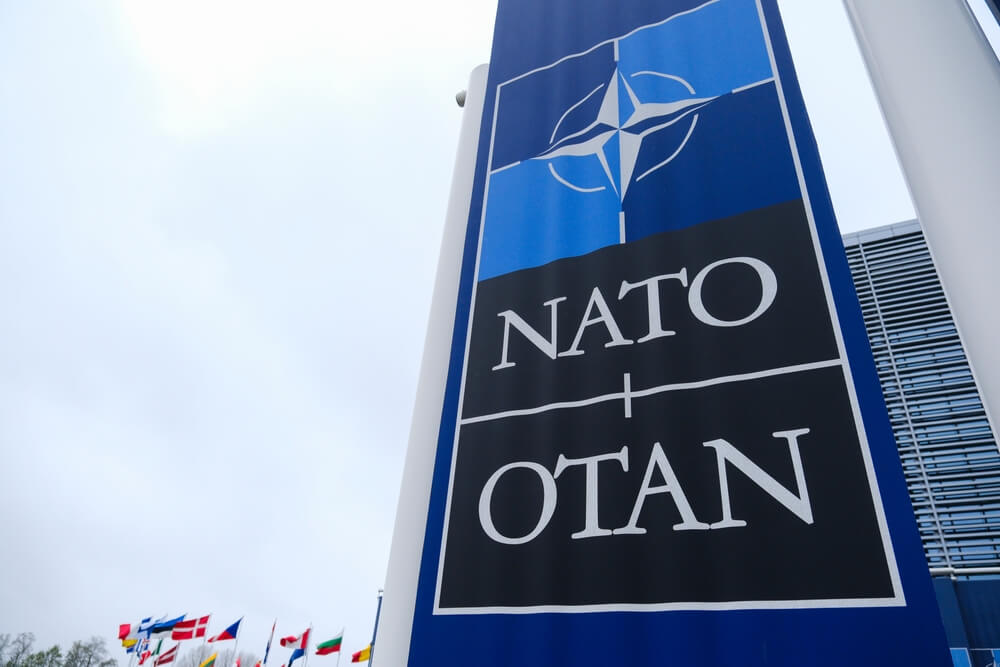 The real test will come after the summit, when political support must be translated into capital, governance rules and initial projects
If the DSRB secures founders who can provide it with high credit quality, its main focus will not be financing large programmes that states can fund through national budgets anyway, but supporting those parts of the industry that usually lag behind political decisions: supply chains, specialised manufacturers, new production lines, and capacity for ammunition, spare parts, communication systems and equipment, which in a long war become as important as the most expensive combat systems.
If, however, the founding core consists of politically willing but financially constrained states, the DSRB will remain a supplementary instrument with limited use.
In that case, the main burden of financing will fall on existing channels: the EU through SAFE, the UK working with partners through its multilateral format, and the largest countries through their own budgets and direct contracts with industry.
This would not mean that the Canadian proposal is without value, but it would mean that it has not become an instrument capable of shifting the balance between political ambition and industrial capability.
The most likely outcome lies between these two extremes. The DSRB can secure the initial group and continue to develop, but its importance will depend on whether, during the second half of 2026, it attracts at least one or two financially strong countries that give the project weight in the markets.
Without them, the bank will remain a limited instrument, usable for individual projects but without the power to shape broader Western defence financing. With them, it could become one of the few new instruments through which the West is trying to make long-term defence spending sustainable.
That is the essence of the decision now unfolding. NATO has raised its level of ambition, but new defence capabilities will not come from higher percentages of GDP alone. They are created where a political decision is turned into credit, contract, factory, inventory and delivery.
Canada was the first to try to give this process a dedicated financial institution. Ankara will show whether allies are ready to back the idea with capital, not just approval.
