On 25 November 2026, the Space Bureau of the US Federal Communications Commission (FCC) authorised SpaceX, under certain conditions, to place up to one million satellites in low Earth orbit.
Computers on these satellites would take over some of the work currently performed by large data-processing centres on Earth.
According to the European Space Agency model, there were approximately 11,300 active spacecraft orbiting the Earth on 1 February 2026.
The full network, called Starmind, would have about 88 times as many satellites as the total number of active spacecraft in all orbits at that time.
The US approval comes before the first tests, and operators from other countries must consider the possibility of sharing with SpaceX the trajectories on which they have been planning their own missions for years.
The Bureau made its decision under authority delegated to it by the FCC. Companies and organisations harmed by the decision, such as Amazon and the astronomers who opposed it, have 30 days to request a vote on it by the commissioners, who govern the FCC and sit above the Bureau.
Under the terms of the licence, the first satellite must be in its intended orbit and operational by 25 November 2033, 100,000 satellites by the same date in 2035, half a million by November 2038, and the entire network by November 2040.
Missing any deadline will void the licence, but the FCC can grant an exemption.
There are two years between the first and second deadlines. If SpaceX deploys only test vehicles until 2033, it would then have to launch an average of about 137 satellites per day.
At that rate, in less than three months it would place as many satellites as there were active spacecraft in all orbits at the beginning of February 2026.
On 5 June, the Bureau decided that Amazon Leo, a satellite arm of Amazon, would not lose its licence even though it could not meet the transition deadline.
By 30 July, half of the network, i.e. 1,616 satellites, was supposed to be in operation, but by then Amazon had launched fewer than 400.
Under the Bureau’s decision, satellites deployed by Amazon after that date will temporarily lose priority in the use of frequencies and, because of the missed deadline, the company will also forfeit its financial guarantee. The network-wide deadline of 30 July 2029 remains in place.
The limits of computing in orbit
The pace of deployment will depend on how often, and at what cost, Starship, SpaceX's new large rocket, can fly.
There is no air or water in space to cool computers, so satellites emit heat through large metal plates, known as radiators, which radiate it into space.
The more powerful the computers, the larger and heavier those radiators have to be, and every extra kilogram makes the launch more expensive.
The decision lists six altitude zones, ranging from 500 to 1,002 kilometres. The Bureau accepted only part of SpaceX’s plan to remove satellites from orbit when they stop working, namely to lower them into the atmosphere, where they burn up.
The part relating to satellites at altitudes lower than 600 kilometres has been approved.
In the four upper zones, SpaceX cannot deploy any satellites until it submits a new plan and the Bureau approves it.
The decision does not make clear how many of the million satellites SpaceX intends to place in those higher zones.
The satellites would exchange data with one another and with Earth primarily through laser links via the Starlink network
The satellites would exchange data with one another and with Earth primarily through laser links via the Starlink network.
Radio connections are permitted only as a backup and for emergencies, provided they do not interfere with other users of the radio spectrum.
The main advantage of computers in orbit is energy. A satellite on a trajectory that keeps it almost constantly in sunlight receives electricity from solar panels with virtually no interruption.
By contrast, large computer centres on Earth require land, a connection to the power grid and water for cooling.
On 2 February, SpaceX announced that it had acquired xAI, a company that develops artificial intelligence systems. xAI needs massive computing power and, since it is now part of the same group, it will most likely be the first user of Starmind.
This is where the problem arises. For an artificial intelligence system to ‘learn’, thousands of computers must process huge amounts of data together and continuously exchange intermediate results.
On Earth, these computers are in the same building and connected by cables. In orbit, they would be on different satellites, linked by laser connections, and data would have to be constantly sent from Earth. Because of this, the very work for which xAI most needs computing power is the hardest to do in orbit.
Competitors must factor in Starmind
On 6 March, Amazon Leo asked the Bureau to deny SpaceX’s request. Amazon claims that the project, at the proposed scale, is speculative and that SpaceX is seeking to pre-empt the altitudes that other operators are relying on.
Commission Chair Brendan Carr said on 11 March that Amazon should focus on its own network because, in his estimation, it will be about 1,000 satellites short of meeting the upcoming deadline.
Blue Origin, the company founded by Amazon founder Jeff Bezos, submitted a request on 19 March for up to 51,600 satellites for the same purpose.
SpaceX does not have priority over the approved reserve radio frequencies and must coordinate their use with other users
The terms of the SpaceX licence give the bureau a starting point for considering that request.
In response to Amazon’s objection, the Bureau stated in its decision that the FCC can approve multiple systems with similar paths.
SpaceX does not have priority over the approved reserve radio frequencies and must coordinate their use with other users.
Its advantage is that it already has rockets, ground stations, and Starlink laser links.
While SpaceX can develop the network under known conditions, other operators, when planning their missions, must estimate how many of its satellites will be at the same altitudes and how often they will need to coordinate manoeuvres.
Costs to be borne by others
SpaceX must report to the FCC twice a year on how many times its satellites have come dangerously close to other spacecraft or pieces of space debris, how many times they have had to change course to avoid a collision, and how many satellites have been deliberately sent into the atmosphere, where they burn up.
The 2035 deadline envisages a network of 100,000 satellites. If only 1 per cent of them malfunctioned and could no longer be controlled, there would be 1,000 spacecraft in orbit that could not move out of the path of other satellites.
The actual number will depend on the satellites’ reliability, and the same percentage of failures would be more dangerous at higher altitudes.
There, the air is thinner and slows the satellites less, so malfunctioning spacecraft can orbit for years before falling into the atmosphere and burning up on their own.
 Each year, the European Space Agency estimates how much the satellites and space debris currently in orbit will increase the risk of collisions in the coming decades
. It uses a special metric for this, where a value of one indicates a level the agency considers sustainable.
In 2025, that number was about 50, meaning that the load in orbit is about 50 times higher than sustainable.
The year before, it was about four times higher. That jump occurred before any of the Starmind satellites were launched.
For companies that already have satellites in busy orbits, the most important question is how many broken spacecraft will remain at their altitudes, and for how long.
The danger does not end even when a satellite has completed its work properly.
As it descends towards the atmosphere, it passes through all the lower zones and must pass by the spacecraft operating there. Satellites placed so high end up endangering those orbiting lower down.
The Bureau concluded that approving these operations in space does not trigger an obligation for an additional impact assessment under US federal environmental law.
Astronomers and organisations that monitor the sustainability of space activities have warned of the risks posed by large satellite networks
Astronomers and organisations that monitor the sustainability of space activities have warned of the risks posed by large satellite networks.
During the proceedings, questions were raised about what burning a large number of satellites will leave in the atmosphere when they re-enter.
The Bureau noted that the impact of rocket launches is being evaluated by the US Federal Aviation Administration.
That assessment refers to launches, whereas the objection concerns the hundreds of thousands of possible satellite re-entries into the atmosphere.
The Bureau found that the data submitted in the proceedings did not substantiate that risk to an extent requiring an additional assessment.
Satellites reflect sunlight, leaving bright streaks on telescope images that can spoil observations.
The Bureau has not imposed any new rules on SpaceX to prevent this. Instead, it has relied on the company’s existing commitment to work with the National Science Foundation, the US government agency that funds major observatories.
Astronomers warned of another problem: satellites with onboard computers constantly emit heat, and some telescopes detect heat, so heat from the satellites could interfere with them. The Bureau decided that the issue was not within its jurisdiction.
Observatories now have to negotiate with SpaceX themselves if they want to protect some of their observations.
Beijing has already taken the dispute to the UN
The 1967 Outer Space Treaty is the fundamental international agreement on the use of outer space.
Under it, every country is free to use space but is responsible for the actions of its private companies there.
The state must issue them with licences and constantly monitor their activities. The treaty also provides for consultations.
A country planning an activity that it expects could interfere with another country’s space activities should consult that country before commencing. A state that fears interference may also request consultations.
China has already invoked the treaty. In December 2021, it informed the UN Secretary-General that its space station, where astronauts live, had to alter its trajectory twice that year, in July and October, to avoid possible collisions with Starlink satellites.
In January 2022, the US responded that in neither of those two cases was the danger, according to its standards, high enough to warrant an urgent warning to China.
Both sides knew which spacecraft had made the approach and when, yet they reached different assessments of how dangerous it was.
The exchange of satellite position data is therefore not enough. States must also agree on the distance at which a collision is considered imminent, who informs whom and whose satellite moves.
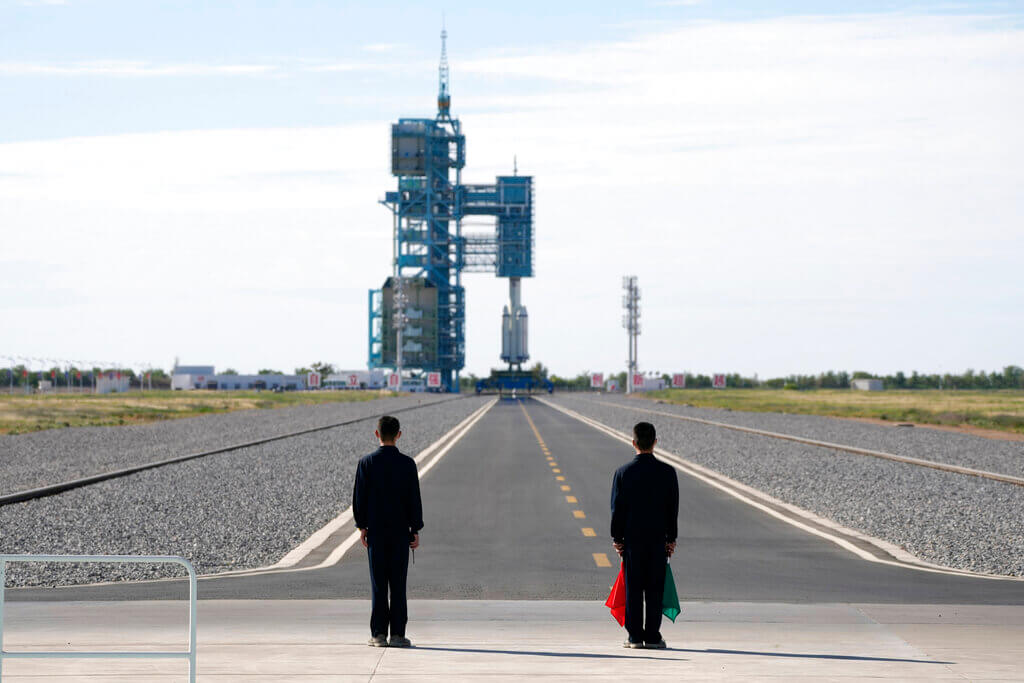 Today, China is also building its own large satellite networks, Guowang and Qianfan. The rules it would require from Washington would also apply to its companies
.
In June 2025, the European Commission proposed the EU Space Act, a law that would also apply to companies outside the Union if they sell their services on the European market.
Data on satellite movements is also important to European governments because the Union funds its own satellite network for secure government communications, IRIS².
A company that does not sell services in the Union, however, would not be covered by those rules, and its satellites could still lie in the path of a European spacecraft.
Without the cooperation of the state that issues a licence to such a company, it is not clear who would provide the Europeans with the information needed to move their satellite in time.
The first serious international dispute over Starmind will most likely erupt when SpaceX moves from test satellites to mass launches.
Before deploying satellites in the four higher zones, SpaceX must obtain new approval.
Washington will then have to assess how the first satellites performed, and other countries will have the opportunity to request consultations under the Outer Space Treaty before the network grows.
An international limit on the number of satellites is less likely than an agreement on what data companies must share: information about malfunctions, trajectory changes, and the deorbiting of satellites.
While no such agreement exists among countries, other companies will verify increasing numbers of warnings about possible collisions for themselves and use fuel intended for their own missions to get out of the way of SpaceX’s satellites.
That part of the cost of the US licence will be borne by other satellite companies, starting from the first large series of launches.
