In recent weeks, the world’s attention has centered on how the Iran war will end, whether the United States and the Islamic Republic can reach a ceasefire agreement, and how Israel will respond.
Equally pressing are the economic consequences: when oil and gas prices will stabilize, whether Saudi Arabia’s economic projects can get back on track, and when governments and investors across the region can return to business as usual.
Early in the war, there was hope that it would end quickly and amount to little more than a brief interruption in the Gulf states’ economic and geopolitical ascent.
That moment has passed, as a fragile ceasefire has given way to renewed US, Iranian, and Israeli strikes.
But even if the war ends soon, geopolitical uncertainty will continue to weigh on the Gulf and the broader region for years to come.
Despite the recent escalation, the most likely outcome remains an unsatisfying ceasefire that ends the current phase of the war without resolving the underlying issues that caused it.
Under such an agreement, the US and Iran would lift their respective blockades in exchange for a formal end to hostilities and a commitment to pursue nuclear negotiations at a later date.
Negotiating an enduring nuclear agreement
Numerous proposals have been floated to resolve the nuclear issue, most focused on Iran’s stockpile of highly enriched uranium.
Yet the two sides remain far apart because both want an agreement they can portray as a victory.
Iran seeks to avoid major nuclear concessions in an initial agreement while securing sanctions relief or other economic benefits.
Since Trump has already described the current negotiations as “very boring,” it is doubtful that he has the patience for a lengthy diplomatic process
US President Donald Trump, by contrast, wants nuclear concessions first and significant economic relief only in a final agreement.
Failure on either front would expose him to criticism that his deal is weaker than Iran’s pre-war offers and the 2015 Joint Comprehensive Plan of Action, which he abandoned during his first term.
But negotiating an enduring nuclear agreement would likely require months of technical and diplomatic work involving experts and policymakers from across the region and beyond.
Since Trump has already described the current negotiations as “very boring,” it is doubtful that he has the patience for a lengthy diplomatic process.
Another round of fighting would be too costly
At the same time, Trump has repeatedly signaled a reluctance to resume the war.
Qatar, Saudi Arabia, and the United Arab Emirates seem to have persuaded him that another round of fighting would be too costly, given the Iranian regime’s willingness to retaliate without restraint in the face of an existential threat.
If Iran targets the UAE’s power grid or Bahrain’s water supply, for example, the consequences would be catastrophic.
There is little evidence that additional military action would advance America’s objectives
Moreover, there is little evidence that additional military action would advance America’s objectives.
The US cannot bomb Iran’s stockpiles of highly enriched uranium into the custody of a trusted third party.
And absent a major ground operation along Iran’s coast, it is unlikely to break Iran’s grip on the Strait of Hormuz.
With both a decisive military victory and a comprehensive diplomatic settlement out of reach, the Gulf is likely entering a prolonged period of uncertainty.
The relative winners and losers
Under this scenario, the US and Iran will reach an interim deal, essentially an extended ceasefire focused on restoring commercial traffic through the Strait of Hormuz.
The two countries will have 60 days to discuss Iran’s nuclear program, but will fail to reach a comprehensive agreement within that time frame.
The deadline will be extended again and again as negotiations drag on without resolution.
Over time, the world will come to accept this as the new status quo. Shippers and insurers will remain wary of renewed conflict, preventing traffic through the Strait of Hormuz from fully recovering for months, if not years.
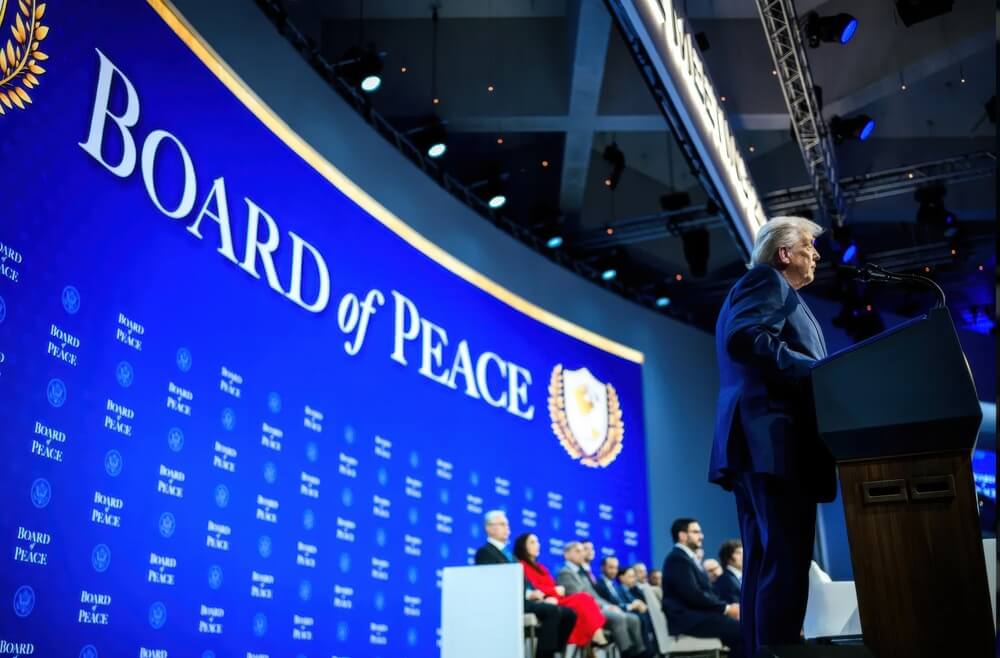 For the US, the challenge goes well beyond ending the war. What is ultimately at stake is the future regional order and America’s role within it
With the conflict unresolved, Gulf countries will be forced to make economic and foreign-policy decisions amid persistent uncertainty.
While a clear American victory might have encouraged them to deepen ties with the US, now they will have to chart their own strategic course.
Some may even seek accommodation with Iran, particularly if they conclude that America’s negotiating posture does not adequately reflect their concerns.
The longer this uncertainty persists, the more likely Gulf countries are to pursue independent agendas.
The UAE has already broken ranks on Sudan and Yemen, and more recently quit OPEC.
Without a credible American security guarantee or a realistic prospect of a pacified Iran, each Gulf government will have to decide for itself how to balance relations with the US, Iran, the European Union, China, and Russia.
As their foreign policies diverge, disagreements over regional and global issues will become more pronounced, and incentives for cooperation will weaken.
Both Israel and Iran will seek to exploit these disagreements.
Meanwhile, US influence in the region will diminish, either because it has lost credibility with its Gulf allies or because domestic political backlash to Trump’s war with Iran will revive efforts to shift American foreign policy away from the Middle East.
The dust is far from settled, both literally and figuratively. The relative winners and losers, the shape of new alliances and rivalries, and the fate of major economic agendas all remain uncertain.
Rather than preparing for what comes after, Gulf governments and their global partners must prepare for an extended period of instability and strategic ambiguity.
For the US, the challenge goes well beyond ending the war. What is ultimately at stake is the future regional order and America’s role within it.
By focusing solely on limiting the political damage to Trump and the Republican Party and failing to articulate a broader postwar vision, the administration risks leaving the Middle East trapped in a strategic limbo.
In trying—and failing—to contain one disruptive actor, the US may have destabilized the entire region and set even its most stable allies on a perilous path.
Don Aviv is CEO of Interfor International.
