Foreign aid is shrinking, but it is not disappearing. Even after the sharpest annual decline on record, OECD donors still provided $174.3 billion in assistance in 2025.
This includes $29 billion from the United States, despite the slashing of 83% of US Agency for International Development (USAID) programs by Donald Trump’s administration.
Moreover, wars, epidemics, displacement, and geopolitical competition will ensure that rich countries continue to spend money abroad, whether for humanitarian reasons or in pursuit of their own interests.
With the number of ongoing conflicts having reached a record high in 2025, and with 117.8 million people ending the year forcibly displaced, the question is not whether foreign aid will survive, but what sort of aid system will emerge from the current retrenchment.
This is a moment not to discard decades of progress in learning how to deliver aid, but to reconsider priorities and demand greater accountability.
Focusing on last-mile delivery
Aid has long drawn two basic complaints. The first is that it does not work: either the promised funds never reach the people who need them, or the money arrives but fails to have the intended impact.
The second is that aid is spent on the wrong things: even when it works, it may not serve the donor country’s interests or align with taxpayers’ priorities.
The recent cuts are ostensibly justified by this second argument. Since aid is public money, the argument goes, it should be redirected toward national-security objectives, commercial interests, or other goals that command broad taxpayer support in donor countries.
Poorly managed cuts risk worsening the problems that aid was supposed to address
But while such debates are legitimate, poorly managed cuts risk worsening the problems that aid was supposed to address, and just when substantial progress has been made in improving aid delivery.
For most of its history, foreign aid focused on government-to-government transfers.
Beginning in the early 2000s, however, the development community paid growing attention to the “last mile” between a donor’s disbursements and the person the aid is ultimately meant to help.
Just as vaccines do not administer themselves, cash-transfer programs need registries, payment systems, and grievance procedures. Maternal care depends on workers who know which women are pregnant, which families distrust clinics, and which roads vanish in heavy rains.
For aid to work, funding must be converted into actual goods and services for people in remote villages and refugee camps.
Focusing on last-mile delivery can increase efficacy and therefore boost the appeal—the soft power—of the donor. But when delivery fails on the last mile, even well-intentioned aid can cause harm.
Connecting foreign resources to local delivery systems
Food aid is a good example. Aid workers have long warned that without stronger local infrastructure for delivery, food often ends up in the hands of militias instead of hungry families.
Research shows that US food aid, despite the humanitarian intent behind it, tends to increase the incidence and duration of civil conflict in recipient locations.
The problem arises when logistics, monitoring, and local safeguards are treated as administrative add-ons, rather than as a central element of the intervention.
Through painstaking fieldwork, however, researchers and aid workers have made real progress in understanding how to improve the last-mile delivery of public services.
In rural India, child vaccinations rose by 22% when immunization information was directed to villagers who had been identified by their neighbors as effective information spreaders, rather than to people chosen at random.
In Uganda, community-health programs performed better when they recruited workers who exhibited strong prosocial motivations.
When put on the front lines of public health, such workers conducted more prenatal checks and remained in their jobs longer.
Effective aid requires connecting foreign resources to local delivery systems, and building those systems where they do not yet exist
These studies demonstrate that effective aid requires connecting foreign resources to local delivery systems, and building those systems where they do not yet exist.
That means recruiting people with local knowledge, training them well, creating organizations with good incentives, and strengthening supply chains.
Last-mile aid matters not only because it vaccinates a child or supports a farmer today, but also because it supports the formation of critical capacities, including cohorts of trained workers, functioning supply chains, reliable information systems, and domestic institutions capable of carrying the work forward after foreign assistance ends.
The benefits accrue both to recipient countries and to donor governments seeking durable alliances and greater stability globally or in their own neighborhood.
Foreign aid is not disappearing
But delivery capacity takes longer to build than it does to lose. It resides less in buildings and equipment than in people, routines, and relationships.
When a community health worker leaves, their replacement may need to rebuild trust from scratch, such as by learning which households need what kinds of attention.
When an organization shuts down, its trained staff will scatter. When a data system or supply chain is abandoned, a program may stop functioning even if some funding remains.
That is why cuts or reallocations intended to serve donor interests can make the remaining aid less effective, especially when they are abrupt and poorly planned.
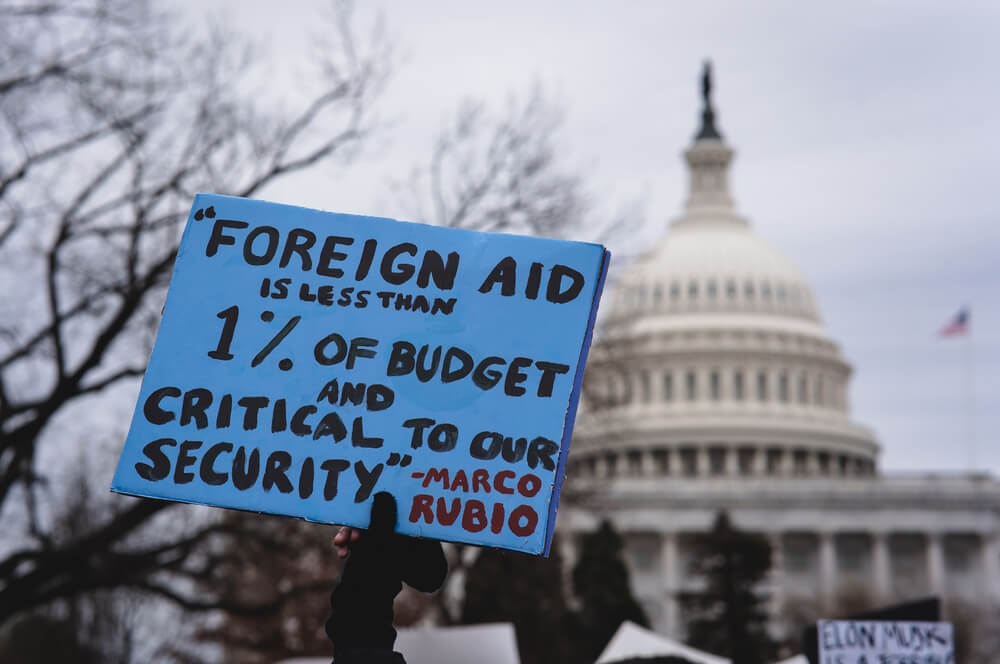 Donors are entitled to change their priorities. But it is in everyone’s interest to preserve the machinery of delivery
Last year’s sweeping USAID cancellations illustrated this perfectly. They left workers unpaid, medicines unavailable, referral systems broken, and local partners stranded.
They risked dismantling the monitoring and data systems needed to distinguish effective programs from ineffective ones.
Donors are entitled to change their priorities. But it is in everyone’s interest to preserve the machinery of delivery.
Programs that no longer fit a donor’s objectives should be transferred, consolidated, or wound down in an orderly fashion, and not demolished overnight.
Foreign aid is not disappearing, but it remains to be seen whether our hard-won knowledge about effective aid delivery will survive its retrenchment.
It would be a tragedy to throw this knowledge away, only to have to rebuild it later at a greater cost.
Donor governments therefore face an important choice not between preserving every aid program and abandoning foreign assistance altogether, but between needless destruction and rebuilding the system around what has been learned. It is not too late.
Nancy Qian, Professor of Economics at Northwestern University, is Co-Director of Northwestern University’s Global Poverty Research Lab, Founding Director of China Econ Lab, and a visiting professor at the Einaudi Institute for Economics and Finance.
