Russia is replenishing its stocks of armoured vehicles and artillery at military storage bases, including facilities near the borders with Finland and the Baltic states.
This trend may indicate that the Kremlin seeks to preserve its capacity for future military deployments despite substantial equipment losses in its war against Ukraine.
According to media reports and satellite imagery, new military equipment – including tanks, armoured fighting vehicles and artillery systems – began appearing in 2026 at Russian Ministry of Defence storage bases that had been largely depleted in 2022–2023.
It is important, however, to distinguish between the accumulation of equipment at storage facilities and its actual combat readiness.
The presence of weapons at these sites does not, in itself, mean that they have been transferred to military units or are ready for immediate use in combat operations.
Geographic distribution and types of equipment
In 2022–2023, the Russian army relied heavily on its stock of armoured vehicles to compensate for losses in Ukraine.
Subsequently, drones, precision-guided weapons and air strikes assumed a greater role on the battlefield, while the use of tanks and armoured vehicles became more challenging due to the widespread deployment of reconnaissance and attack UAVs.
Nevertheless, Russia's need for armoured vehicles and artillery has not diminished.
Current satellite observations indicate a gradual replenishment of Russian reserves in various regions of the country.
This process involves not only refurbished equipment but also new vehicles that may have recently come off production lines
According to available reports, this process involves not only refurbished equipment but also new vehicles that may have recently come off production lines.
In particular, the arrival of T-90M tanks, BTR-82A armoured personnel carriers, BMP-3 infantry fighting vehicles and armoured recovery vehicles was recorded at the 22nd Central Reserve Base in the town of Buy, Kostroma Region, approximately 500 kilometres from the Estonian and Latvian borders, between autumn 2025 and October 2026.
Another area of interest is the Republic of Karelia, where artillery systems, including Malva wheeled self-propelled howitzers and Giatsint-K self-propelled artillery systems, have reportedly been gradually accumulating since late 2025 at the 374th Centre for Mobilisation Deployment Support.
The facility is located approximately 185 kilometres from the Finnish border.
These developments warrant attention because of the combination of two factors: the replenishment of stocks with modern weapons and the geographic location of the facilities in question.
Replenishing reserves as part of long-term military planning
The accumulation of equipment at storage bases indicates that Russian military planning extends beyond the immediate requirements of the war against Ukraine.
Despite substantial battlefield losses, Moscow is seeking to replenish its weapons stocks, which could be used to reinforce existing military units, create new formations or compensate for future losses.
This does not necessarily mean that Russia is preparing for an inevitable attack on NATO.
However, these activities make it more difficult to assess Russian military capabilities solely on the basis of the losses sustained in Ukraine.
The number of vehicles in storage is not equivalent to the number of troops ready for combat
The depletion of existing reserves and the defence industry's ability to manufacture new equipment are distinct indicators that must be analysed separately.
Of particular importance is whether Russia's defence industry can do more than replace current losses and is also capable of building up stocks for future deployments.
If new tanks, infantry fighting vehicles and artillery systems are indeed being delivered to reserve bases in the reported quantities, this would suggest that the Kremlin is seeking to preserve its ability to rebuild conventional mechanised and artillery capabilities.
At the same time, the scale of this process must be assessed in light of production rates, the technical condition of the vehicles, crew availability, logistics and the ability to assemble combat-ready units at operational speed.
The number of vehicles in storage is not equivalent to the number of troops ready for combat.
Drone warfare does not eliminate the threat from armoured forces
The war against Ukraine has demonstrated that the widespread use of unmanned systems is fundamentally changing the conditions under which armoured vehicles operate.
Reconnaissance UAVs make it easier to detect targets, while attack drones increase the risk of tanks, armoured personnel carriers and artillery systems being destroyed.
These developments are forcing military commanders to revise tactics, strengthen vehicle protection and adapt the organisation of combat operations.
Technological change, however, does not mean abandoning conventional weapons.
Tanks, infantry fighting vehicles and artillery can still play an important role in large-scale ground operations, particularly when supported by adequate protection, coordination with other military branches and reliable logistics.
For NATO, this means that Russian military capabilities must be assessed comprehensively
Russia's efforts to replenish its armoured vehicle stocks should therefore be viewed not as a return to an outdated military model, but as an attempt to combine the lessons of modern warfare with its remaining capacity to conduct conventional ground operations.
Drones may be a central element of contemporary combat, but they do not replace armoured or artillery forces.
For NATO, this means that Russian military capabilities must be assessed comprehensively.
The analysis should cover not only missile arsenals and UAV production, but also stocks of armoured vehicles and artillery, mobilisation and force-generation capabilities, and Russia’s ability to rebuild combat-ready formations after the fighting in Ukraine ends or is frozen.
Implications for the security of NATO’s eastern flank
The accumulation of weapons in the Kostroma Region and Karelia has implications for the long-term defence planning of Finland, Estonia, Latvia and other allies.
The proximity of these military storage bases to NATO borders makes their infrastructure, logistical capacity and rates of stock replenishment important priorities for monitoring.
Under certain conditions, pre-positioned equipment could reduce the time required to equip newly formed or reconstituted military units.
However, converting stored reserves into actual combat capability would still require trained personnel, ammunition, maintenance infrastructure, transport and command structures.
Alongside the quantity and quality of weapons, these factors should be central to NATO’s assessment.
The decisive question is whether the allies can identify changes in Russian capabilities in a timely manner
The Alliance would benefit from strengthening systematic surveillance of Russian storage bases, production facilities and equipment movements.
It is also important to assess how quickly Russia can convert accumulated reserves into combat units and to compare these indicators with the allies’ capabilities to mobilise forces, deploy reinforcements and sustain the eastern flank.
At the same time, conclusions about NATO’s preparedness for potential threats should be based on specific defence-planning indicators rather than general assertions about the Alliance’s bureaucratic slowness.
The decisive question is whether the allies can identify changes in Russian capabilities in a timely manner and adjust their own defence plans accordingly.
Resilience of the Alliance’s eastern flank
The replenishment of Russian stocks of armoured vehicles and artillery near the country’s north-western borders underscores the need to assess the Russian threat from a long-term perspective.
Even if Moscow continues to devote most of its resources to the war against Ukraine, this accumulation of weapons could lay the groundwork for rebuilding Russia’s conventional ground-force capabilities in future.
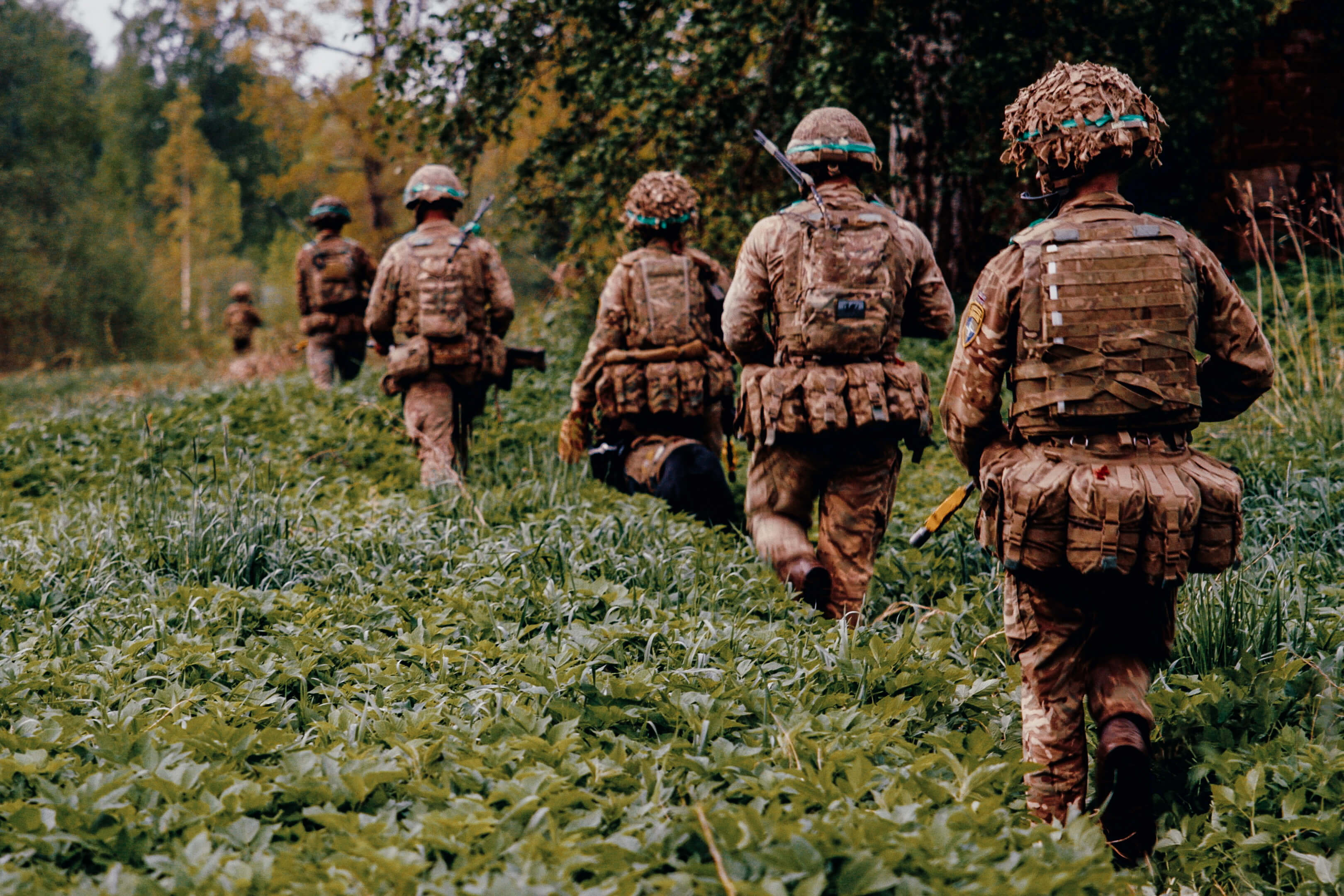 Effective response must be based on verified intelligence, a realistic assessment of Russia’s production capacity and the allies’ readiness to maintain credible deterrence
For Western countries, the key question is not whether every new piece of equipment at a Russian base signals preparations for an attack, but how quickly Moscow can convert industrial output and stored reserves into actual military power.
This capability will determine how rapidly the balance of forces could shift once the intensity of fighting in Ukraine declines.
NATO should therefore not equate Russia’s substantial losses on the Ukrainian battlefield with the long-term elimination of the threat.
At the same time, an effective response must be based on verified intelligence, a realistic assessment of Russia’s production capacity and the allies’ readiness to maintain credible deterrence.
The replenishment of Russian reserves does not prove that another conflict is inevitable, but it does provide sufficient grounds for closer scrutiny of Russia’s military capabilities and the resilience of the Alliance’s eastern flank.
Oleksandr Levchenko, a former Ukrainian diplomat, is a professor at the State University (Kyiv) and a member of the Academy of Geopolitics and Geostrategy (Kyiv).
