On 22 July, the United States and Saudi Arabia signed an agreement on civil nuclear cooperation and an accompanying bilateral safeguards agreement. The US Department of Energy presented them as the legal foundation for a decades-long nuclear partnership and contracts worth tens of billions of dollars.
The agreement allows Saudi Arabia to develop uranium enrichment capacity in future, but only after a joint US–Saudi assessment and new approvals from Washington.
The full text of the agreement has not yet been published, so the boundaries of the future arrangement are not known. Available data indicate that the document does not include a permanent renunciation of enrichment and reprocessing, as the United Arab Emirates accepted in 2009.
Saudi Arabia thus becomes the first major test of the new US approach to exporting civilian nuclear technology, in which uranium enrichment and spent fuel reprocessing are no longer ruled out in advance, but depend on subsequent agreement, US oversight and political assessment.
The agreement was signed as the United States and Israel wage war against Iran, with one of the stated goals being to prevent Tehran from bringing its nuclear infrastructure closer to weapons production.
Washington is now challenging Iran’s enrichment while preserving for its ally Saudi Arabia the option of negotiating the same technology later. Iran already has a developed uranium enrichment infrastructure, a long history of disputes with the IAEA, and a record of undeclared nuclear activities.
Saudi Arabia does not yet have such a programme. Nevertheless, the agreement shows that Washington evaluates the possibility of future enrichment not only in terms of technical risk and the inspection regime, but also in terms of the political relationship with the country seeking this option.
This agreement extends far beyond the Saudi energy programme. The Trump administration has already instructed US diplomats to negotiate at least 20 new agreements under Section 123 of the Atomic Energy Act by the end of the 120th session of Congress.
Washington is thereby putting nuclear technology back into the service of exports, long-term political influence, and the suppression of Russian and Chinese competition.
The Saudi deal may therefore set a precedent for future allies who want US reactors but are not prepared to permanently renounce uranium enrichment and fuel reprocessing.
Saudi Arabia is getting what the UAE could not
Section 123 agreements allow significant US exports of reactors, key equipment, fuel and technology. However, they do not in themselves constitute permission for every future transaction.
Individual transfers and sensitive activities are subject to additional approvals, export licences and subsequent arrangements.
Signature from Washington therefore does not give Saudi Arabia centrifuges, an enrichment plant or the automatic right to produce nuclear fuel.
US law does not require any country seeking nuclear cooperation with the US to renounce uranium enrichment and spent fuel reprocessing in advance. Washington has sought such restrictions only in certain agreements.
The strictest example was the agreement with the United Arab Emirates in 2009. Abu Dhabi then permanently renounced both activities and accepted the IAEA Additional Protocol, which allows inspectors to check whether hidden or undeclared activities are taking place outside declared nuclear facilities.
In 2012, Washington decided that permanent enrichment waivers would not be a mandatory condition for any future agreement. The 2014 Vietnam deal had already shown that the Emirati model would not automatically apply to all partners.
Any eventual Saudi enrichment plant would be built by American companies, while Riyadh would not gain access to the most sensitive parts of the technology
The Saudi case, however, introduces that flexibility into a much more sensitive environment. Riyadh has discussed the full fuel cycle for years, has domestic uranium resources, and its crown prince has publicly said the kingdom would seek nuclear weapons if Iran acquired them.
Riyadh remains under the basic IAEA oversight regime, while additional controls are governed by a separate bilateral agreement with the United States.
Since that document has not yet been published, it is not known what kind of access to facilities, documentation and data it grants to the American side, nor how effectively it can substitute for stricter international oversight.
Information published after the signing stated that any eventual Saudi enrichment plant would be built by American companies, while Riyadh would not gain access to the most sensitive parts of the technology.
Before that, the two countries would have to determine whether such a facility is even necessary and commercially justified.
Washington thus calculates that it can maintain control over the technology and prevent its independent use or copying. It remains unclear, however, how reliable such restrictions would be over several decades and whether they would endure if the political relations between the two countries change.
Fear of Chinese and Russian competition softens American conditions
Saudi Arabia has a strong civilian case for developing nuclear power. Its electricity comes mainly from gas and oil, while summer demand for cooling and desalination requires large amounts of fuel.
Nuclear power plants could free more oil for export, stabilise electricity production and support the development of new industries.
Domestic enrichment is not necessary for this. Fuel can be bought on the international market, as many countries with nuclear power plants do.
Riyadh, however, has for years talked about using domestic uranium and developing a full fuel cycle. Saudi demands therefore include energy independence, industrial know-how, and a political hedge in case Iran one day acquires nuclear weapons.
Washington accepted the risk because the alternative was also unfavourable. China, Russia, France and South Korea are all potential partners for the Saudi programme. American officials are relying on the presence of US companies to provide better insight into Saudi facilities, secure long-term contracts for American industry and exert greater influence over Riyadh’s decisions.
American companies gain access to one of the largest potential nuclear deals in the world
For decades, a nuclear power plant binds the customer to the supplier through fuel, maintenance, spare parts, training and safety standards. The loss of the Saudi market would also mean the loss of a permanent strategic foothold.
Competition also arose during the development of the UAE’s nuclear programme. Abu Dhabi entrusted the construction of the power plant to a South Korean consortium, but the reactors used American technology and components, so Washington’s consent was still required.
At the same time, the Emirates were ready to import fuel and permanently renounce both uranium enrichment and the processing of spent fuel.
Saudi Arabia is putting forward a much broader demand. Riyadh wants to retain the option of developing its own fuel cycle and can choose between American, Chinese, Russian, French and South Korean partners. It is this difference that gives it greater bargaining power than the UAE had in 2009.
For the US administration, the gains are immediate. American companies gain access to one of the largest potential nuclear deals in the world, and Washington retains influence over the development of the Saudi programme, its safety standards and future fuel-cycle decisions. The problem will arise later, when other allies demand the same terms that Riyadh has received.
A precedent that will not remain in Riyadh
Every future partner will carefully examine the terms offered to Riyadh. Governments seeking American reactors will be able to argue that permanent renunciation of the fuel cycle is a political requirement, not a general rule.
The most immediate consequence may emerge in the UAE. The 2009 agreement stated that Emirati terms should not be less favourable than those the United States subsequently offers to any other Middle Eastern country.
Abu Dhabi may request consultations on a possible revision of its own terms
If Washington concludes a more favourable regional agreement, Abu Dhabi may request consultations on a possible revision of its own terms.
The UAE does not gain an automatic right to enrichment, but the Saudi exception could reopen an agreement that the United States has for years presented as a regional model.
The pressure will extend beyond the Gulf. Future negotiations will no longer begin from the Emirati ban as the strictest regional standard, but from the question of how far a partner can go under US management, bilateral oversight and subsequent approvals.
A sensitive capability will not be granted immediately, but it will also not be permanently closed off by contract. Washington reserves the right to decide, while the partner retains the option to renew the request.
Congress sets the cost of the exemption
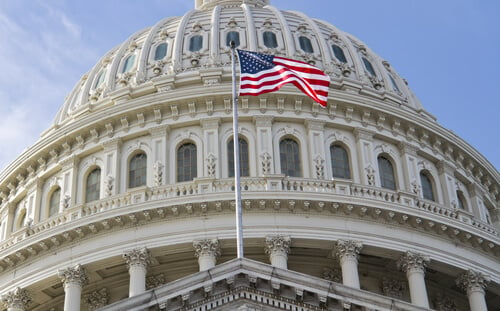
The deal now goes before Congress, which has 90 session days to consider it. Its entry into force does not require separate confirmation by both chambers.
Opponents can stop it only if the House and Senate pass a rejection resolution. If the president vetoes that resolution, a two-thirds majority in both chambers would be needed to overturn it.
Opponents of the deal will demand that Saudi Arabia accept stricter IAEA oversight, be permanently banned from enriching uranium and reprocessing fuel, and grant Congress greater control over future decisions.
The White House will argue that the US-supervised programme is safer
However, they are unlikely to muster enough votes to block the deal. The White House will argue that the US-supervised programme is safer and that the agreement itself does not yet authorise the construction of an enrichment facility, leaving that option to be negotiated at a later stage.
The most likely outcome is that the basic agreement will enter into force, with the most controversial decisions deferred to a later stage.
American companies would then gain access to the Saudi market, Riyadh would retain the long-term option, and the issue of centrifuges would remain tied to a joint study, additional approvals and a future political decision.
Such an arrangement suits both governments. The White House can claim that it has not transferred sensitive technology. The Saudi leadership can claim that it has not given up the full fuel cycle.
The most important dispute is thus postponed until a time when the economic, technological, and political ties between the two countries are already much deeper.
Riyadh is gaining more than just rights to the reactors
The first real test will come when Saudi Arabia requests a shift from reactors and imported fuel to domestic enrichment.
 If the deal passes Congress, Saudi Arabia will not receive the centrifuges immediately, but it will gain something more politically valuable: an option that any future US administration will have to consider seriously
At that point, Washington will have to decide how much Saudi access to technology it can accept, whether bilateral controls are sufficient, and whether it will require additional international inspections that are not currently part of the deal.
Until then, the precedent itself will already be in effect. The UAE will have ground to seek consultation. The new American partners will refer to the Saudi conditions.
Russia and China will use the agreement as evidence that US demands are being adjusted to political alignment and commercial interests. Iran will see it as confirmation that Washington treats the enrichment activities of adversaries and allies differently.
It is highly likely that Riyadh will not attempt to begin uranium enrichment for years to come. The possibility itself might be more useful than the facility. With it, Riyadh can demand stronger American security guarantees, increase pressure on Iran and strengthen its position in the Gulf.
If the deal passes Congress, Saudi Arabia will not receive the centrifuges immediately, but it will gain something more politically valuable: an option that any future US administration will have to consider seriously.
