The United Kingdom’s new prime minister, Andy Burnham, is already sending shockwaves through Westminster.
Defying almost every political forecast and market expectation, he has named John Healey, a former defense secretary, as the new chancellor of the exchequer.
Healey steps into this role—one of the most powerful in the UK government—at a challenging moment for the British economy.
Growth has been too low for too long; fiscal flexibility is limited; borrowing costs are the most burdensome among the G7 economies; and taxes are already high, though public services often disappoint.
External pressures compound the challenge, and the economy’s resilience has already been eroded by the COVID-19 pandemic and two energy shocks.
But the British economy’s potential remains considerable. Realizing that potential will not be easy, but it is doable, as long as Healey draws the right lessons from his predecessor’s experience—the good, the bad, and the ugly—and tackles the early challenges he faces effectively.
Much will depend on how Healey leverages three features of his background.
Institutional memory
The first feature is the most immediate: the shock of his selection. As late as the morning of the announcement, prediction markets put the chances that Home Secretary Shabana Mahmood would be selected for the role at around 90%.
Burnham’s pivot to Healey points to a deliberate, tightly held strategy, which depends on the installation of a very specific type of operator in the Treasury.
The question now is how the government will build on this surprise move.
Second, unlike Mahmood, Healey has experienced the Treasury from the inside, having served as a junior minister in the “New Labour” era, under Prime Minister Tony Blair.
Healey will not need a manual to lead him to the department’s levers of power; he already understands its complex machinery
Healey will not need a manual to lead him to the department’s levers of power; he already understands its complex machinery.
This institutional memory should enable him to move quickly in shaping a much-needed revitalization of the UK’s “growth mission.”
Third, Healey has fiercely advocated for higher defense spending—to the point that he resigned as defense secretary last month over the previous government’s unwillingness to increase funding for the military.
His resignation letter lambasted his and Burnham’s predecessors—Rachel Reeves and Keir Starmer, respectively—for failing to “commit the resources that the nation needs to defend the country at this time of rising threats.”
A vocal defense hawk
The Treasury is traditionally the department that refuses expensive requests. Giving a vocal defense hawk control over it is a bold—and risky—move.
The extent to which it pays off will depend significantly on how Healey accommodates his desire for higher military spending.
Can Healey find the funds to fill funding gaps without hiking taxes to politically toxic levels or slashing other essential services?
Can he find the funds to fill funding gaps without hiking taxes to politically toxic levels or slashing other essential services?
His openness to innovative financing approaches—such as “war bonds” coordinated with European allies and other multilateral defense funding mechanisms—could make a difference, though these would come with their own challenges.
Smart, calculated risk
This is just one part of a broader fiscal balancing act. Burnham, who has worried that the previous administration may have locked the Treasury into too tight a fiscal framework, has already said that he will use “flexibility” within the fiscal rules to increase investments.
It is now up to Healey to find this fiscal room to maneuver, especially to fund pro-growth infrastructure, without upsetting the bond vigilantes.
It might be a good sign that the bond market has not pushed back against the new government’s first fiscal measure—cutting value-added tax on electricity—but the situation remains fluid.
Ultimately, Healey is responsible for ensuring that economic growth—essential to long-term prosperity and fiscal sustainability—is not sidelined again by too narrow a focus on budget arithmetic.
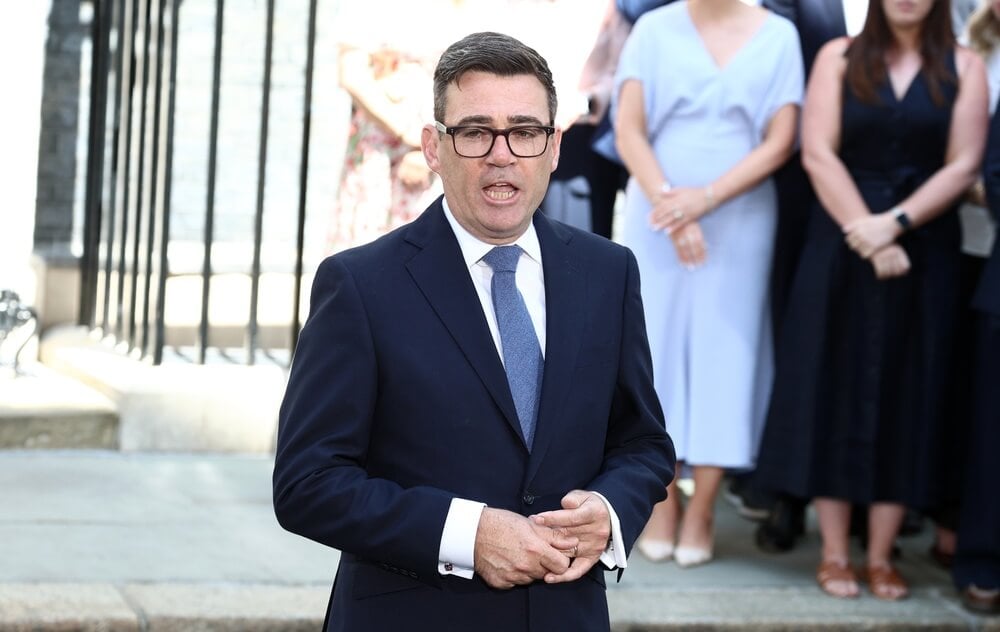 By appointing Healey, Andy Burnham has taken a smart, calculated risk
As he has recognized, “Treasury orthodoxy” has often kept the institution so obsessed with balancing the books that it has lost sight of broader policy strategy.
To succeed, Healey will have to coordinate very closely with Burnham’s office on a comprehensive policy approach that delivers sustained inclusive prosperity through higher productivity, scaling up of home-grown innovations, regionalizing growth engines, and reinvigorating trade links, starting with Europe.
By appointing Healey, Burnham has taken a smart, calculated risk. If Healey can leverage his insider knowledge of the Treasury, pursue a bold, pro-growth agenda, and responsibly manage his own defense-spending instincts, he may well be able to deliver the structural shake-up the British economy desperately needs.
But if he falls victim to the Treasury orthodoxy he has criticized, or if his commitment to raising defense spending spooks the bond market, he could quickly become a headache for the new government, especially given today’s fluid, uncertain, and shock-prone global economy.
Expectations are high for Burnham’s new government. Whether they can be met will depend significantly on whether Healey’s unexpected appointment as chancellor translates into the strategic agility the UK needs to navigate a narrow and rocky path to economic renewal.
Mohamed A. El-Erian, a former president of Queens’ College at the University of Cambridge, is Practice Professor at the Wharton School at the University of Pennsylvania, where he is also Senior Global Fellow at the Lauder Institute. He is Chief Economic Adviser at Allianz, and Chair of Gramercy Funds.
