Forecasts of millions of extra deaths and infections of HIV over the next few years, caused by massive cuts in the aid budgets of the US and other donors, made for a sombre World AIDS Day this year.
It did not help that Washington issued instructions to employees and grantees not to use any government funds to commemorate the day, which has been marked around the world on 1 December since 1988.
Donald Trump did find time this year to issue proclamations for other commemorations, including Anti-Communism Week on 2-8 November, National Energy Dominance Month in October, and Made in America Week on 20-26 July.
There has been significant progress against the HIV pandemic, but it is far from over. But the Trump administration is pushing ahead with plans that could make combatting HIV and other infectious diseases even harder.
Aid cuts trigger biggest setback in decades
Deaths may rise further under new plans being drawn up by Washington. Under a new template for aid, HIV assistance would be conditional on countries sharing with the US significant amounts of health data, including on abortion.
The template, which was obtained by The Intercept investigative news site, would also apply to assistance for malaria, tuberculosis and other pathogens and would require countries that receive aid to share a broad range of health care and pathogen data for the next 25 years.
“People are getting sick. Medicine is hard to find. I’ve even heard of condom shortages in some countries because the prevention funding for HIV has been stalled,” Elisha Dunn-Georgiou, president and CEO of the Global Health Council, told The Intercept. “Many countries are feeling so squeezed for funding that they will take the deal.”
After shuttering the agency USAID earlier this year, Washington is also looking to end the President’s Emergency Plan for AIDS Relief
Some 40.8 million people are living with HIV worldwide, 1.3 million new infections occurred last year, and 9.2 million people are still not accessing treatment, says UNAIDS, the joint United Nations Programme on HIV/AIDS that leads the global response.
Aid cuts around the world mean the response to HIV is undergoing the biggest setback in decades. “Our progress is fragile and is now under threat due to the collapse of international assistance and the regression on human rights,” said Winnie Byanyima, executive director of UNAIDS.
After shuttering the agency USAID earlier this year, Washington is also looking to end the President’s Emergency Plan for AIDS Relief (PEPFAR) within the next couple of years, according to news reports. The programme, started two decades ago under President George W. Bush, is estimated to have prevented 25 million early deaths.
Sharp and sudden reductions in funding
The numbers are stark. According to a recent study by academics at Duke University and the University of Washington, aid cuts could cause 10 million additional HIV infections and 3 million additional deaths over the next five years.
Children will be particularly hard-hit if global HIV programmes are cut in half. An additional 1.1 million children could acquire HIV, and 820,000 more could die of AIDS-related causes by 2040 – pushing the total toll among children to 3 million infections and 1.8 million AIDS-related deaths, says UNICEF.
The threatened escalation in the HIV pandemic is not confined to Africa and other low-income settings. In Eastern Europe and Central Asia, people who inject drugs were estimated to constitute the largest annual number of people from key populations with newly acquired HIV—25% of all new infections regionally in 2024, says UNAIDS.
The diminished funding from the US has highlighted the reliance of many countries on Washington’s assistance
The cuts to HIV programmes come just as new tools were adding momentum to the battle against HIV, says the World Health Organisation. It approved this year lenacapavir, a twice-yearly injectable, for HIV prevention.
WHO said that “sharp and sudden reductions in international funding this year led to disruption” in testing, treatment and prevention, such as pre-exposure prophylaxis (PrEP), a medication that reduces the risk of getting HIV from sex or injecting drugs.
The diminished funding from the US, which had dominated spending on HIV globally, has highlighted the reliance of many countries on Washington’s assistance, said Geoff Garnett of the London School of Hygiene and Tropical Medicine.
He said also that the “HIV community bears some of the responsibility for undermining its own success with ill-conceived messaging and talk of ‘ending AIDS’.” He urged a continued and robust HIV response, describing AIDS as a slow plague because infections and epidemics play out over decades, and “the withdrawal of funding for HIV surveillance will mean we won’t know what is happening.”
Unlikely that China will step in
It looks unlikely that China will step in to replace US aid. Although it has promised $500 million to the WHO, likely to make it the biggest country donor, it still accounts for only 2.8% of the WHO’s budget compared with the Gates Foundation’s 11%.
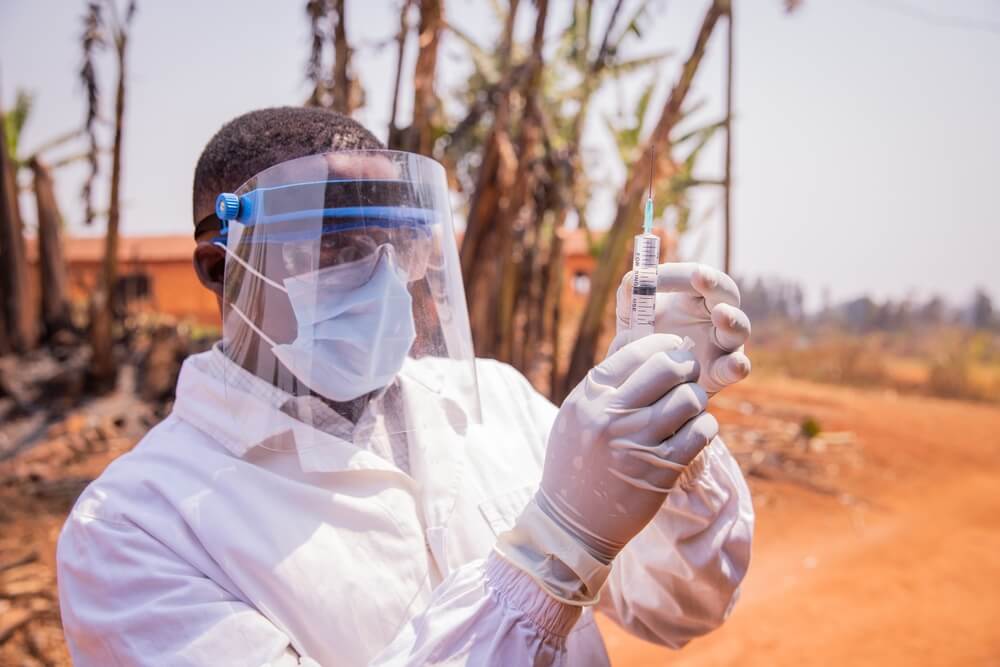 Trump’s America First Global Health Strategy is still being negotiated bilaterally with dozens of countries
In Zambia, where China has extensive business investments, it has donated 5,000 HIV testing kits, whereas the US had pledged $360 million before Trump assumed the presidency.
Trump’s America First Global Health Strategy is still being negotiated bilaterally with dozens of countries. As well as having to share data, countries would have to recognise drug approvals by US regulators, particularly where there are “large domestic markets [or] other strategic reasons,” The Guardian reported.
“For Washington, this approach aligns health security with industrial competitiveness,” said a Chatham House commentary. “For its partners in Africa and elsewhere, however, it risks hardening patterns of structural dependency precisely when they want to improve their own manufacturing and regulatory capacity.”
The outlook for global equity continues its downward trajectory.
