Supporters of Britain’s outlawed Palestine Action movement are not your typical terrorists. Press coverage of their illicit outings has tended to focus on the prevalence of pensioners, priests, careworkers and other worthies.
They are among those who have been caught up in a year-old ban since Keir Starmer’s Labour government added the pro-Palestinian activist group to the UK’s 80-plus list of designated terrorist organisations.
Civil rights groups and free speech campaigners warned at the time that lumping the group with the likes of al-Qaeda and the neo-Nazi National Action was an overreaction to its direct action tactics.
It certainly failed to silence the group’s partisans. As was predicted, the allegedly heavy-handed use of anti-terror measures has actually increased its profile and amplified its message.
That phenomenon has only grown in recent weeks, as continuing controversy over the ban has drawn in an award-winning novelist and a former journalist married to the UK’s national security adviser.
The right to peaceful protest
At last month’s Labour Party conference, dozens were arrested under the Terrorism Act for displaying Palestine Action slogans in what Amnesty International labelled a shameful attack on freedom of speech.
Kerry Moscogiuri, head of the rights group’s UK branch, criticised the arrests of “grandparents, teenagers and everyone in between” for merely holding placards.
It was not a good look for Prime Minister Andy Burnham’s new broom administration, which has stepped up its own criticism of Israel’s actions in occupied Gaza and the West Bank since he took office in July.
MPs were assured that the right to peaceful protest would remain protected
He inherited a Palestine Action ban that was aimed at its direct action assaults on property and infrastructure associated with Israel’s defence operations.
These included attacks on a Thales factory in Glasgow in 2022 and subsequent incursions, among them an assault on a defence plant operated by the UK unit of Israel’s Elbit Systems.
The Home Office warned ahead of the ban that it would be a criminal offence to be a member of the group or to recklessly express support for it.
MPs were nevertheless assured that the right to peaceful protest would remain protected, as would the ability to defend the rights of the Palestinian people and to oppose actions of the Israeli government.
That is not how it seemed to all those grandparents, teenagers and others in between who were hauled away at the recent Labour conference and other demonstrations.
Unlawful and disproportionate
The High Court was minded to agree with them when it ruled in February, in response to an appeal from Palestine Action, that the terrorism ban was unlawful and disproportionate.
However, that judgment was subsequently overturned by the Court of Appeal in a June ruling. The case will now go forward to the Supreme Court next month for a final say after it agreed to hear a further appeal from the banned group.
While Home Secretary Shabana Mahmood has said the government would robustly defend its stance at the forthcoming hearing, there are rumblings within the ruling party that the terrorist designation went too far.
Miliband announced sanctions on illegal settlements in the West Bank
Foreign Secretary Ed Miliband acknowledged his unease about arrests of peaceful and elderly protesters when he told an interviewer: “I don’t think anyone’s intent was to have those people criminalised.”
Miliband, who has taken an increasingly critical stance on Israel since taking office, last month announced sanctions on illegal settlements in the West Bank, where he said the activities of Jewish settlers amounted to the ethnic cleansing of the territory’s Palestinian inhabitants.
In a furious response, his Israeli counterpart Gideon Saar announced counter-measures that included closing the UK's consulate in East Jerusalem.
That action was finally diluted with an agreement to merely downgrade the status of the consulate to that of a sparser diplomatic mission, a deal secured by the UK national security adviser, Jonathan Powell, during a visit to Israel.
Meeting the criminal threshold
As chance would have it, Powell was briefly in the news again this month when his wife, author and former Jerusalem-based journalist Sarah Helm, was investigated by Scotland Yard for alleged support for Palestine Action.
Helm’s potential crime was to have voiced support for Irish novelist Sally Rooney. The Irish author this month agreed with the decision of her publisher, Faber, to withdraw her books from the UK market.
Rooney acknowledged that having them on sale might constitute a serious criminal offence after she had previously pledged the royalties to Palestine Action. Support for the group carries a potential 14-year sentence.
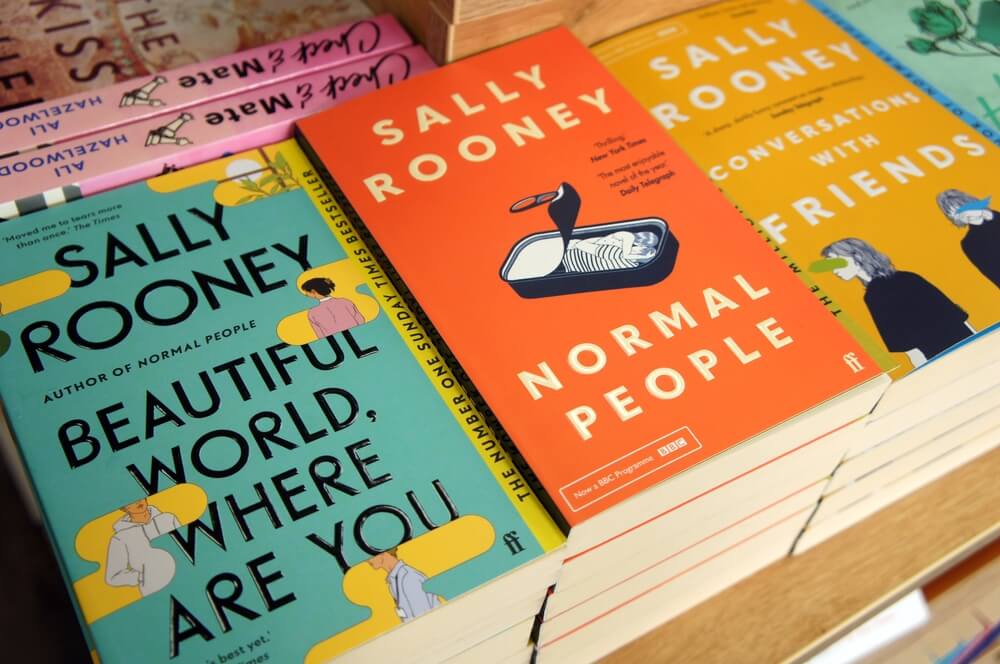 Sally Rooney agreed with the decision of her publisher to withdraw her books from the UK market
Helm weighed in by posting on X: “God help us authors who support Palestine and Palestine Action.”
Cut to Scotland Yard, where the Metropolitan Police portentously revealed that the post was in the process of being assessed to determine the need for further police investigation.
There was relief all round therefore on the following day, after “specialist officers” had assessed the post and determined that it did not meet the criminal threshold, when the Met announced: “No further police action will be taken.”
Helm, a former Middle East correspondent for The Independent newspaper, has since followed up by signalling that she would support a petition to lift the ban on Palestine Action.
The year-old terror ban merely merits a rethink
The growing unpopularity of the measure, both in and out of parliament, may have been partly fuelled by the Trump administration’s decision to designate the UK group as a terrorist organisation in a move announced in August.
Announcing sanctions on the movement, US Treasury Secretary Scott Bessent, warned: "Far-left extremists, their fronts, and their enablers should be on notice: We will bring the full weight of our economic tools to bear.”
Pending next month’s Supreme Court decision, the year-old terror ban clearly merits a rethink
Pending next month’s Supreme Court decision, the year-old terror ban clearly merits a rethink.
While four Palestine Action activists have so far been jailed for a defence company break-in, and one defendant sentenced for causing grievous bodily harm to a police officer, more than 2,000 are still waiting to know whether they will face trial for merely declaring their solidarity with the group.
Regardless of the pros and cons of the arguments raised by Palestine Action and the moral legitimacy of its direct action tactics, the terrorism label is perhaps best reserved for the real killers.
