The yield on ten-year French government bonds reached approximately 4.9 per cent on 19 October, higher than Italy’s 4.58 per cent. At the start of the month, French yields climbed to 4.99 per cent, the highest level since 2002.
The market is already demanding a higher return for holding French debt as the government tries to pass a budget amid protests and clashes with police. The next test of investor confidence will come on 23 October, when Moody’s reviews France’s credit rating.
France illustrates how difficult it is to fund aid at a time of expensive energy, higher defence spending and ongoing support for Ukraine.
According to an estimate from Kyiv reported by Reuters on 16 October, Ukraine will face a shortfall of more than $70 billion in defence and regular budget funding in 2027.
European governments will negotiate the additional package as their domestic costs rise, and next year’s elections will make it harder to agree who will pay for it.
The war between the US and Israel against Iran has placed an additional burden on the European economy. Ursula von der Leyen announced that gas prices have risen by around 140 per cent since the end of February, and diesel prices have doubled.
The European Commission estimates that imports of fossil fuels from March to the end of September cost approximately €100 billion more, without any increase in the volume imported.
That bill is paid first by energy customers. Part of it then falls on public finances through subsidies, tax breaks and support for the economy, so every decision on consumer protection reduces the scope for other expenditure or requires additional revenue and borrowing.
The French budget is already delayed
The protests began over poor conditions in schools in the northern suburbs of Paris and then spread to broader dissatisfaction with prices and public services.
Prime Minister Sébastien Lecournu asked local authorities to impose a curfew in the worst-affected areas, and the government has not ruled out declaring a state of emergency.
The vote on the revenue side of the 2027 budget, scheduled for 20 October, has been postponed because the parliamentary debate has not yet concluded.
France’s public debt at the end of the second quarter stood at 119 per cent of gross domestic product, according to data from the French statistical institute Insee.
Higher market yields immediately make new borrowing more expensive, while the cost of existing debt rises gradually as old bonds mature and are replaced with more costly ones.
The spread over German ten-year bonds on 19 October was around 1.46 percentage points. The Assembly’s budget rapporteur, Philippe Jouvin, warned that the annual interest bill, which he estimates at around €78 billion in 2026, could exceed €100 billion before the end of the decade.
With such a burden, the government can hardly respond to the protests with broad subsidies or new public investment.
Marine Le Pen wants to cut VAT on fuel, while the left calls for greater public investment
Ahead of the presidential election, the opposition has little incentive to support unpopular budget measures. Marine Le Pen wants to cut VAT on fuel, while the left calls for greater public investment.
Moderating these demands could reduce discontent, but without a credible financing plan it would deepen investor doubts about the government’s ability to control the deficit.
For Ukraine, the political consequences of the French crisis are more significant. On 11 February, the National Rally delegation in the European Parliament voted against a €90 billion loan to Ukraine, citing, among other reasons, the difficult budgetary situation of France and the EU.
The party claims to support Ukraine and says it objected only to the way the loan was structured. The loan was approved, with 458 votes in favour and 140 against.
The first round of the presidential election is scheduled for 18 April 2027, in the months when Kyiv will need funding for that year, and the party that voted against the latest package is leading in the polls.
Higher energy costs reach voters faster
Analysis by the European Central Bank shows that changes in wholesale gas prices are now passed on to consumers more quickly, in more than half of the eurozone within one to three months. Tax rules, regulated prices and contract durations still create large differences between countries.
In the case of electricity, the method of production is also important. France benefits from nuclear power, Spain from earlier investment in renewable sources, while Italy is more exposed to the gas price.
Faster pass-through of price increases means governments have less time to prepare support before higher bills hit households.
The political consequences depend on domestic circumstances. In Italy, farmers and transport operators are particularly affected; in Spain, the main causes of protests are expensive housing and high rents; and in Portugal, the focus is on demands for higher wages and pensions.
Expensive energy exacerbates these problems but has not caused them. Governments therefore simultaneously negotiate energy support and other demands for higher public spending.
Alternative for Germany, the far-right party currently leading in German polls, is seeking to restore energy ties with Russia.
Grzegorz Braun, leader of Poland's far-right Confederation of the Polish Crown party, and Roberto Vannacci, a former Italian army general who leads the new right-wing National Future party, advocate the same approach.
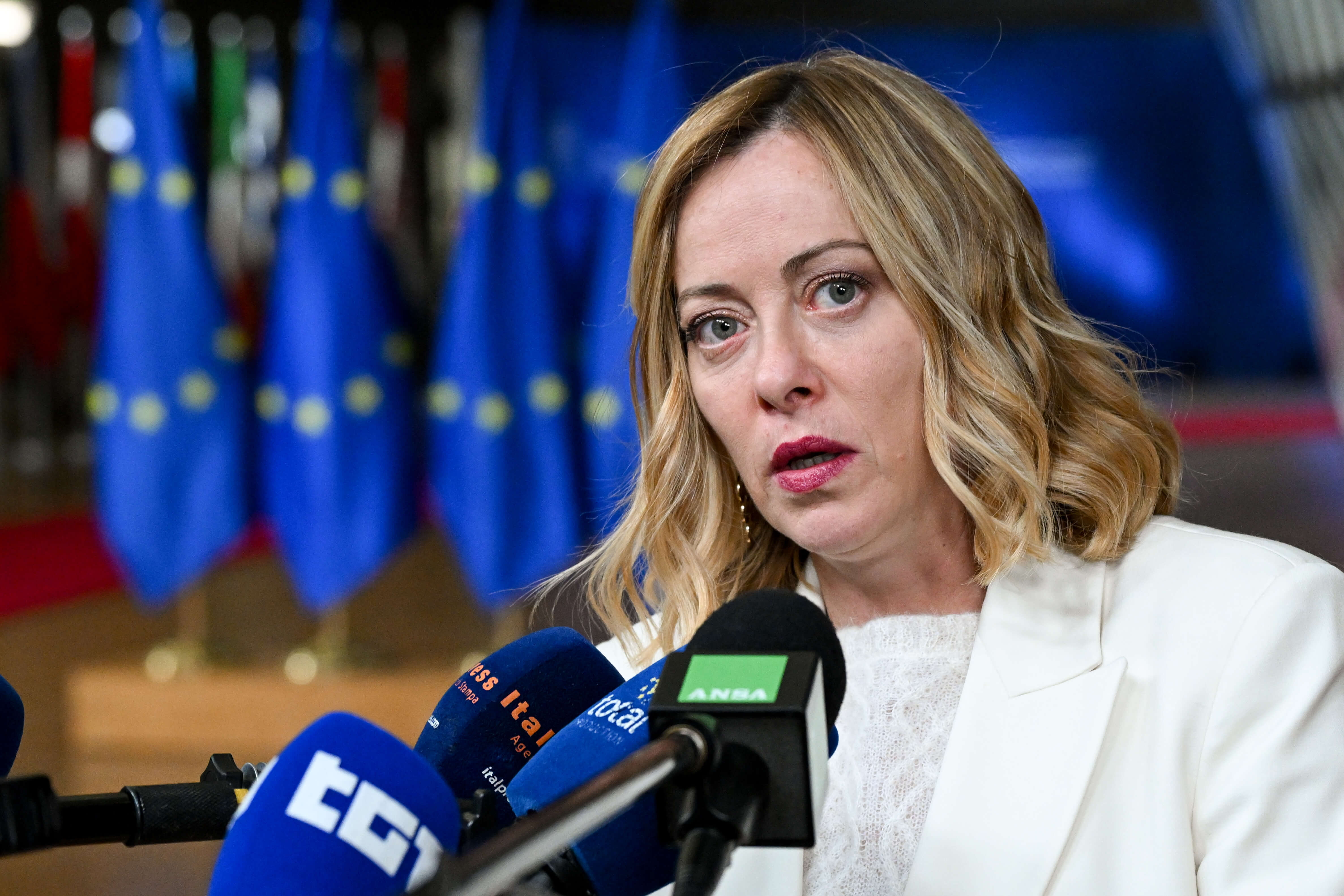 Giorgia Meloni criticised the US-Russian diesel deal, describing it as a risky move that weakens pressure on Moscow
According to the Commission, the share of Russian gas in the EU’s imports fell from 45 per cent four years ago to 12 per cent, so most of the former supply has already been replaced. A return to Russian gas would also require changes to European rules.
The regulation adopted in January provides for a complete ban on the import of Russian liquefied gas from the beginning of 2027, and pipeline gas from autumn 2027.
Even if the EU were to temporarily suspend that regulation because of a threatened supply disruption, the ban on the import of Russian liquefied gas under the 19th package of sanctions, adopted in October 2025, would remain in force.
On 14 October, Italian Prime Minister Giorgia Meloni criticised the US-Russian diesel deal, describing it as a risky move that weakens pressure on Moscow. She and Vannacci belong to the Italian right, but they hold opposing views on Russia and Ukraine.
High energy prices are strengthening parties calling for a return to Russian gas, but their demands have not yet changed the EU’s common policy.
Europe enters winter with the emptiest gas storage since 2011
Gas storage in the EU was 72.4 per cent full on 3 October, the lowest level for that time of year since 2011. These data were published on 9 October by the Institute for Energy Economics and Financial Analysis (IEEFA), an independent US research centre that monitors energy markets and their financial consequences.
If the winter is long and cold, Europe will have to import more gas and compete with other buyers for LNG supplies. Existing nuclear power plants and renewable energy are already reducing fossil fuel consumption, but no major new projects will be completed before this winter.
Inflation in the eurozone rose from 3.2 per cent in August to 3.8 per cent in September, mostly because of higher energy prices. In September, the ECB raised key interest rates by a quarter of a percentage point and expects economic growth of only 0.9 per cent this year. Governments therefore have to finance aid amid slow growth and more expensive credit.
IMF estimates that lowering energy prices for all consumers could cost three to six times more than direct cash assistance to poorer households
European leaders called on governments to direct aid in response to high energy prices towards those who need it most, and to limit such support to a short period.
The International Monetary Fund estimates that lowering energy prices for all consumers could cost three to six times more than direct cash assistance to poorer households that provides the same level of protection.
When the government lowers the price of fuel or electricity for everyone, it also benefits wealthy citizens who do not need help.
When money is given only to the poorest, people on average incomes are left without support, although they too are hit hard by expensive fuel if they drive to work every day.
Governments will therefore find it difficult to avoid arguments over who should receive aid, even when they agree that it should be targeted and temporary.
The dispute over Russian assets returns the EU to new borrowing
The European Union has already granted Ukraine a loan of €90 billion for 2026 and 2027. About €60 billion is intended for defence and €30 billion for the regular budget.
The money does not come from the national budgets of member states; the EU borrows it on the financial markets, and repayment is guaranteed by the common European budget.
Hungary, Slovakia and the Czech Republic are not participating in this arrangement. Interest on that debt is still paid by the EU, so even the existing loan places a burden on European finances.
Since 2022, around €210 billion in assets belonging to the Russian central bank have been frozen in the EU. The largest share, about €185 billion, is held by Euroclear, a Belgian financial institution that holds securities in custody. This sum is several times larger than the shortfall Ukraine is expected to face in 2027.
Russian assets are not mentioned in the conclusions of the EU summit on 15 and 16 October
The EU already uses the income generated by these assets to support Ukraine, but Belgium and several other member states block the use of the assets themselves.
The Belgian government fears that if the money is transferred to Ukraine, Belgium and Euroclear could eventually be forced to return it to Russia following a court ruling or a peace agreement.
It therefore asks other member states to commit in advance to covering the full amount in that event, whatever it may be, but they have not agreed to this.
New joint borrowing thus once again becomes the main option, although member states have yet to agree on the size of the new loan and who would participate in it.
Russian assets are not mentioned in the conclusions of the EU summit on 15 and 16 October. Leaders confirmed that funding for Ukraine’s needs in 2026 has been secured.
They warned that disbursement depends on the reforms Kyiv has committed to under the Ukraine Plan, primarily in the judiciary, the fight against corruption, and the management of public finances.
Before making a decision on 2027, they are awaiting a new assessment by the European Commission and the IMF of how much funding Ukraine needs.
Estonian Prime Minister Kristen Michal wants a decision to be taken before the end of this year, as election campaigns in several European countries would further complicate a deal. The first opportunity for such a decision is the EU summit on 17 and 18 December.
A new loan is more likely than an agreement on Russian assets
Governments will promise that support with expensive energy is temporary, but before elections they will extend it and offer it to an increasing number of citizens. Every euro spent on protecting voters at home will make it harder for them to accept new commitments to Ukraine.
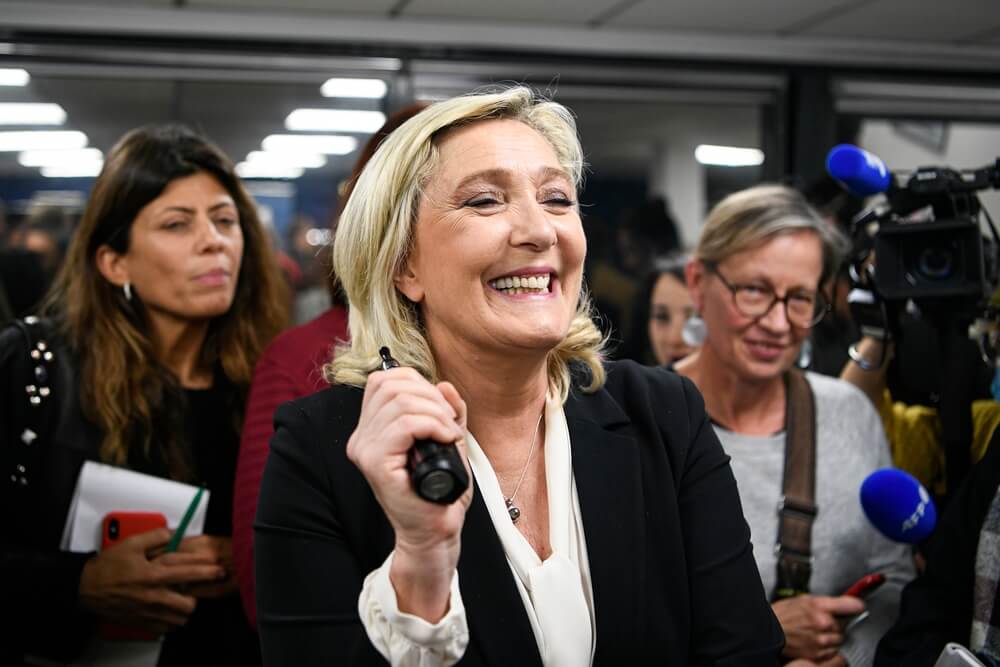 Ukraine will receive the money, but later and in a smaller volume than it needs. The greatest danger comes in April, when the French elect a president, and the favourite is the party that voted against the previous loan
Belgium will not agree to use frozen Russian assets to help Ukraine, so the EU will also borrow the money for 2027 on the market, as it did previously. In December, leaders are most likely to approve the new loan in principle, but the amount and repayment terms will remain undecided for months.
Ukraine will receive the money, but later and in a smaller volume than it needs. The greatest danger comes in April, when the French elect a president, and the favourite is the party that voted against the previous loan.
Such a France would not need to openly abandon Kyiv to harm it. It would only need to postpone decisions in Brussels, demand new conditions and offer limited support.
Moscow has good reason to step up its attacks on the Ukrainian energy grid until spring and to wait for European unity to buckle under the pressure of heating bills.
This winter, Europe is testing how long it can simultaneously pay for expensive energy at home and for a war it is not fighting, and it must not allow Ukraine to lose that war.
