Setting aside the moral, legal, and political arguments against the United States attacking Iran, US President Donald Trump’s latest war cannot be won for a more fundamental reason: it is based on whim.
War planning follows a certain logic. A vital interest, such as protecting citizens’ safety or national security, impels leaders to devise a policy for achieving that goal in a particular part of the world.
As Carl von Clausewitz famously put it: “War is nothing but the continuation of policy with other means.”
Policy often leads to strategy, an overall plan for victory that accounts for the tactics to be used. An operation is a specific act in a specific setting, whose success depends on having the necessary capabilities, including human resources and weapons.
The logic flows forward and backward, as a design and as a verification.
In design, each item determines the next: interest determines policy, policy determines strategy, strategy determines tactics, tactics determine operations, and operations determine capabilities.
Verification reverses the flow: Do we have the capabilities to carry out that operation? Does the operation serve the tactic? Does the tactic fit the strategy? Does the strategy implement the policy? Does the policy correspond to the national interest?
Victory demands an objective
Of course, war is a bloody, unpredictable mess. Conflicts can spiral out of control, and the enemy often reacts in ways that are hard to foresee.
Even leaders sometimes fail to understand what is happening. Trump, for example, is shown two-minute sizzle reels of “stuff blowing up” in Iran rather than being briefed.
While military planning is not sufficient to win a war, it is certainly necessary. If leaders fail to identify a national interest, a war cannot be won, because victory demands an objective.
Just because the US government can bomb anything it wants does not mean that doing so is in the national interest
In its war with Iran, the US has none. Instead, capabilities determined everything. It was possible to kill Iranian leaders, so the Trump administration did just that.
The military analyst B.A. Friedman has argued that US leaders reversed the logic chain when deciding whether to attack Iran, with the idea being that capabilities would create successful operations, enough operations would coalesce into a tactic, and so on.
But just because the US government can bomb anything it wants does not mean that doing so is in the national interest.
The pleasure principle
Trump has yet to provide a credible explanation for striking Iran. The only consistent message is one of enjoyment.
Kidnapping Venezuelan leader Nicolás Maduro in Venezuela was exhilarating, and Trump called into the TV show “Fox & Friends” to talk about how nice it would be to repeat the experience.
He now says that the war in Iran is “fun.” US Secretary of “War” (Defense) Pete Hegseth uses similar terms.
Trump and Hegseth take satisfaction in killing or dominating other people
Call it the pleasure principle: Trump and Hegseth take satisfaction in killing or dominating other people.
Despite commentators’ best efforts to divine a policy justification, it is whimsy all the way down.
Having started with the pleasure principle, Trump is trapped, like an amateur gambler, in a cycle of highs and lows.
It felt good to decapitate the Islamic Republic, but then it felt bad when Iran, instead of surrendering, expanded the war and blocked the Strait of Hormuz.
And now, the US must “double down” (notice the gambling jargon) to provide Trump with another short-term hit of pleasure. Each high will be more elusive than the last.
The US cannot win the war
Applying legal limits, ethical standards, and democratic principles to the Trump administration’s lack of war planning highlights how one man’s pleasure has superseded all other considerations.
For starters, the US is clearly fighting an illegal war of aggression. Moreover, no moral reason has been given for undermining the international order, let alone killing Iranian civilians.
And Trump did not seek authorization from Congress, which represents the American people and has the sole power to declare war under the Constitution.
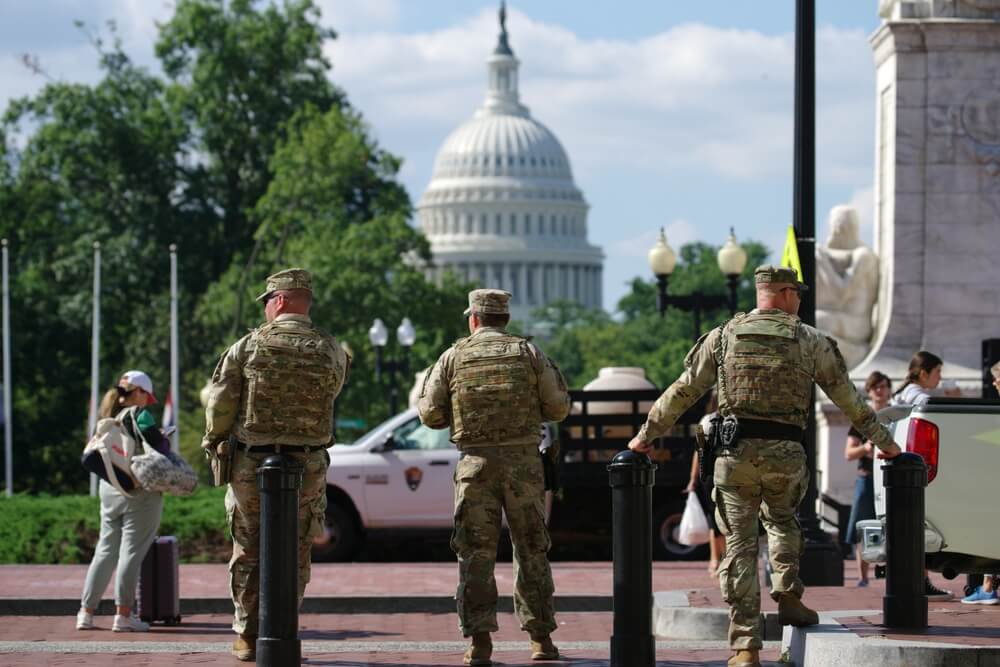 Trump may even try to use the conflict with Iran as a pretext for interfering in the midterm elections
While the US can weaken the Islamic Republic, it cannot win the war, because it is not fighting for anything. Its capabilities have become a trap.
And others have started to benefit from Trump’s pleasure principle. People around him are making money, while his patron Russian President Vladimir Putin is doing very well indeed.
Trump may even try to use the conflict with Iran as a pretext for interfering in the midterm elections.
Moral, legal, and democratic reasoning could have thwarted this typical form of tyranny, in which a leader uses his unchecked power to attack an adversary for his own enjoyment.
For Americans, the only victory in this war would be to vindicate the principles and restore the institutions that would have prevented it.
Timothy Snyder, the inaugural Chair in Modern European History at the Munk School of Global Affairs and Public Policy at the University of Toronto and a permanent fellow at the Institute for Human Sciences in Vienna, is the author or editor of 20 books.
