US President Donald Trump, whose life has revolved around turning himself into a global brand, now seems intent on destroying what he has created.
In his first year back in office, Trump has sown chaos in American cities and bullied allies and adversaries alike, undermining the attractiveness of the radical right-wing political movement he leads.
Consider a recent poll conducted in Greenland following Trump’s pressure campaign to acquire the island: 85% of respondents opposed joining the United States. Locals express fear, not excitement, at the prospect of becoming Americans.
So much for America’s supposed “unmatched cultural influence,” as touted by the US National Security Strategy.
Opposition remained overwhelming even after US officials floated the idea of generous lump-sum payments for Greenlanders.
Greenlanders’ resistance is certainly not driven by affection for Denmark, a former colonial power with a deeply troubling record.
It is America’s lurch toward authoritarianism that turns them off, and it’s not hard to understand why when we compare MAGA-era America to other right-wing authoritarian regimes.
Arrogant ruling class
While Russian President Vladimir Putin, Turkish President Recep Tayyip Erdoğan, and Hungarian Prime Minister Viktor Orbán have been effective critics of liberal democracy, their records of governance have been consistently dismal.
Young people emigrate from Russia, Turkey, and Hungary in large numbers because right-wing autocrats reliably dismantle the institutional features that make democratic societies prosperous and livable.
Electoral manipulation produces an unaccountable and arrogant ruling class. Erosion of the rule of law undermines investment and risk-taking. Rejection of expertise leads to costly policy failures.
At a deeper level, the governance failures of right-wing authoritarianism stem from the core of its promise: the replacement of a social order grounded in equality and justice with one that embraces hierarchy and domination as the natural basis of political power.
Right-wing voters underestimated how often ordinary citizens depend on liberal rights and institutions for protection
In recent decades, that vision has appeared attractive to a startling number of voters.
It promised a simpler world, where traditional social structures would be restored, and groups that agitated for equal rights, from immigrants and racial minorities to women and LGBTQ communities, would be stifled.
In practice, however, people living under such systems are discovering that hierarchical societies are far less appealing than advertised.
Right-wing voters underestimated how often ordinary citizens depend on liberal rights and institutions for protection.
Rather than guaranteeing dominance, hierarchy usually means finding oneself among the dominated.
Brexit
Britain offered an early warning. In 2016, the radical right persuaded a narrow majority of voters to support the country’s withdrawal from the European Union.
But Brexit resulted in economic stagnation, weakened public services, and heightened social tensions, while none of the promised benefits materialized.
The negative consequences were so profound that most radical right-wing parties across the continent no longer advocate leaving the EU.
While Brexit has come under intense scrutiny, the broader right-wing authoritarian project has not received as much attention.
With its unparalleled global visibility, America offers an unavoidable case study of radical right-wing governance in action
Western commentators frequently dismissed Russia, Hungary, Turkey, and other long-standing illiberal regimes as peripheral or culturally exceptional.
But the US under Trump’s second administration has changed everything. With its unparalleled global visibility, America offers an unavoidable case study of radical right-wing governance in action.
Conservatives are on the menu
Even conservatives in smaller and midsize countries must now confront the fact that in a world stripped of liberal, rules-based constraints, they are quite literally “on the menu.”
This realization likely contributed to the electoral success and booming popularity of the Liberal Party under Mark Carney in Canada.
It also helps explain why far-right leaders in Britain and France criticized Trump’s Greenland rhetoric – and why even Moscow showed little enthusiasm for the gravest NATO crisis since the alliance’s founding.
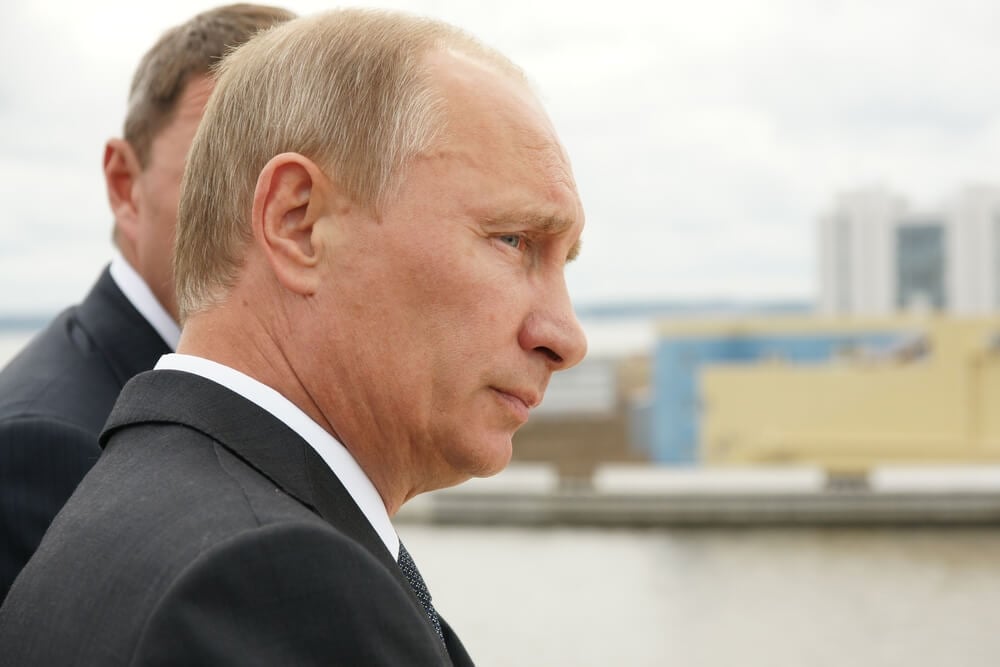 Putin, like other autocrats, has long been a free rider on the international system
Putin, like other autocrats, has long been a free rider on the international system, undermining it while assuming that others would continue to play by the rules. That is no longer possible if the law of the jungle is the norm.
Voters around the world must also consider whether the far right truly offers dignity to the forgotten and neglected people it claims to champion.
It has become conventional wisdom that liberal condescension fueled the resurgence of right-wing populism.
Yet it is difficult to recall any liberal leader who denigrated the ultimate sacrifice of allied veterans – a core conservative constituency across the West – by falsely suggesting, as Trump recently did, that those who fought in Afghanistan had remained safely behind the front lines.
The far right’s relentless pursuit of dominance offers not dignity, but symbolic humiliation of a kind that no liberal elite ever inflicted.
Trump effect
Domestically, the spectacle of American governance under Trump is proving equally sobering.
Observers across the West will inevitably ask whether this chaos is truly preferable to the liberal status quo, with all its imperfections and frustrations.
In the US itself, many Trump voters are finding that they got a raw deal: farmers hurt by tariffs, rural residents cut off from health insurance, and Latinos affected by immigration crackdowns.
Trump’s America may serve as a cautionary example, weakening the appeal of authoritarianism in other democracies
This may not be enough to save US democracy. Comparative experience suggests grim prospects for a free and fair presidential election in 2028 or a peaceful transfer of power.
But if liberal politicians and media outlets amplify the reality of life under Trump, they can generate a powerful “Trump effect” abroad.
Just as Brexit ultimately strengthened support for the EU, Trump’s America may serve as a cautionary example, weakening the appeal of authoritarianism in other democracies.
Maciej Kisilowski is Associate Professor of Law and Strategy at Central European University.
Anna Wojciuk is Associate Professor of International Relations at the University of Warsaw.
