Europe is no longer trying to build the army of the future; it is trying to build an army that can survive the war of the present.
This is a much more significant change than is currently apparent from European political statements and promotional presentations of new programmes for drones and autonomous systems.
The war in Ukraine has not only accelerated the development of unmanned platforms; it has also shattered a much deeper assumption on which European security policy has rested for almost three decades – that technological sophistication alone guarantees military advantage.
For years, European armies have built small, professional, and expensive military systems based on a limited number of highly sophisticated platforms.
This approach was politically comfortable, as it allowed states to reduce the number of soldiers, limit industrial capacity, and at the same time maintain the illusion of strategic superiority through several dozen modern aircraft, missile systems, or frigates.
Expensive systems versus cheap weapons
Ukraine has shown how vulnerable that model has become. Drones costing a few thousand dollars now destroy systems worth tens of millions.
The front in eastern Ukraine has effectively become a laboratory for the new economy of warfare, where the ability to mass-produce and rapidly adapt often outweighs the technical perfection of individual platforms.
European governments are now trying to catch up with a reality they considered for years to be a temporary phenomenon unique to Ukraine.
This is evident in the shift in language within European military structures.
A war of attrition returns industrial capacity to the centre of military power
Only a few years ago, terms such as "network-centric warfare", "precision strike capability", or "fifth-generation interoperability" were prevalent.
Now, it is increasingly common to refer to "attritable systems", industrial scale, production resilience, and the cost sustainability of interception.
The reason is simple: a war of attrition returns industrial capacity to the centre of military power.
The industrial logic of the new warfare
Russia recognised this before Europe. Moscow did not try to wage war solely with sophisticated systems; it combined expensive missiles with the mass deployment of relatively cheap drones, especially Shahed platforms developed with Iranian support.
The aim was not only the physical destruction of targets but also the economic exhaustion of the opponent.
When the adversary is forced to use multimillion-dollar air defence missiles to shoot down drones that cost significantly less, the problem eventually becomes fiscal rather than military.
It is this cost ratio that is now shifting European priorities.
The European defence technology sector is now attracting start-up companies that, a few years ago, would not have been considered for military projects
British, French, German and Polish companies are rapidly developing small interceptor drones, short-range autonomous systems and low-cost platforms intended for mass production.
It is no coincidence that the European defence technology sector is now attracting start-up companies that, a few years ago, would not have been seriously considered for military projects.
The European military industry is not fast enough
Major European arms manufacturers have been slow to respond because their business model has relied for years on expensive, long-term programmes.
The European defence industry is accustomed to multi-year development cycles, politically protected markets, and a small number of highly valuable contracts.
The war in Ukraine has shown that such a system lacks the necessary speed of adaptation.
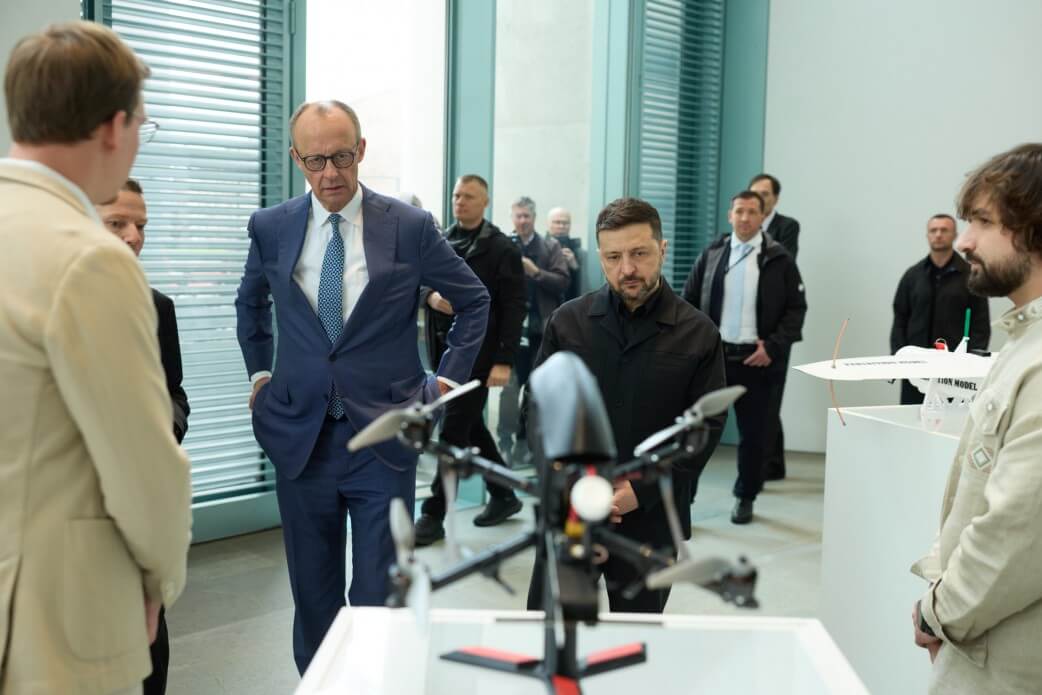 Drones now evolve almost monthly, with their software updated in real time - Friedrich Merz, Volodymyr Zelenskyy
Drones now evolve almost monthly, with their software updated in real time. Electronic interference forces manufacturers to continually change frequencies, navigation, and communication methods.
In this environment, a military industry operating like the automotive industry of the 1990s is simply too slow.
This is why the emergence of new European companies such as Germany's Helsing, which integrates AI systems, autonomous platforms, and real-time data processing, is particularly significant.
Investors no longer view defence technology as a politically unpalatable, slow-growth sector. They are beginning to treat it as a strategic industry for the next decade.
Capital enters where states anticipate long-term conflict
This also alters the financial logic of European security.
Capital now flows where European governments foresee a sustained need. The war in Ukraine has effectively created a new market for permanent military adaptation.
European countries are no longer buying systems for the next twenty years; they are seeking to develop the capacity for continuous technological adaptation.
Here lies the problem that European politicians still try to avoid acknowledging openly. Europe faces not only a technological challenge but also a challenge of political and administrative culture.
The war in Ukraine has shown that technological advantage now lasts for a much shorter period than before
The American and Israeli military systems were developed through much more aggressive cooperation between the state, private capital, and the start-up sector.
The European model remained slow, regulatory complex, and institutionally burdened. Acquisitions often take years. Procedural rules became more important than development speed.
In peacetime, such a system functioned rationally. In an era of accelerated technological conflict, it now creates a serious problem.
The war in Ukraine has shown that technological advantage now lasts for a much shorter period than before.
Advantage is no longer sustained by a single major innovation, but by the ability to adapt continuously.
Europe is aiming to produce both quantity and quality
This is why European governments are now seeking to build the capacity for mass production of cheap and expendable weapons: drones, ammunition, and autonomous systems that can be quickly produced, modified, and sent to the front in large numbers.
European military assessments are increasingly based on scenarios of long and exhausting conflicts with high consumption and constant losses of equipment, much more akin to today's war in Donbass than to the short American military operations of previous decades. This shift particularly affects European strategic thinking.
For the first time in many years, European militaries are seriously preparing for the possibility of a protracted, high-intensity conflict on the continent
For decades, Europe viewed security as a combination of American protection and limited professional capacity sufficient for low-intensity regional interventions. Today, the situation is entirely different.
For the first time in many years, European militaries are seriously preparing for the possibility of a protracted, high-intensity conflict on the continent.
This is why attitudes towards production are also changing.
The return of industry to the centre of military power
Previously, having a technologically advanced system was sufficient. Today, the speed at which it can be produced, repaired, and replaced is equally important. Industrial capacity is once again a strategic consideration.
This is of particular concern to European planners because many European countries have lost some of the production capabilities they once had over the past decades.
Deindustrialisation was not only an economic process; it is now also a security problem
Deindustrialisation was not only an economic process; it is now also a security problem.
The war in Ukraine has demonstrated how rapidly supplies can be exhausted. European factories producing ammunition, spare parts, and military components have operated at a peacetime pace for years. Current requirements are completely different.
This is why European governments are now seeking to link defence technology development with broader industrial policy.
It is no longer just a military issue; it is a question of technological autonomy, energy, supply chains, and control of key components.
The new European military industry is no longer exclusively military
It is particularly noteworthy that companies not traditionally part of the military sector are now involved in this process.
Automotive companies, AI firms, electronics manufacturers, and startups are increasingly entering European military production and security technology development.
However, behind this development lies another strategic dilemma that receives much less attention.
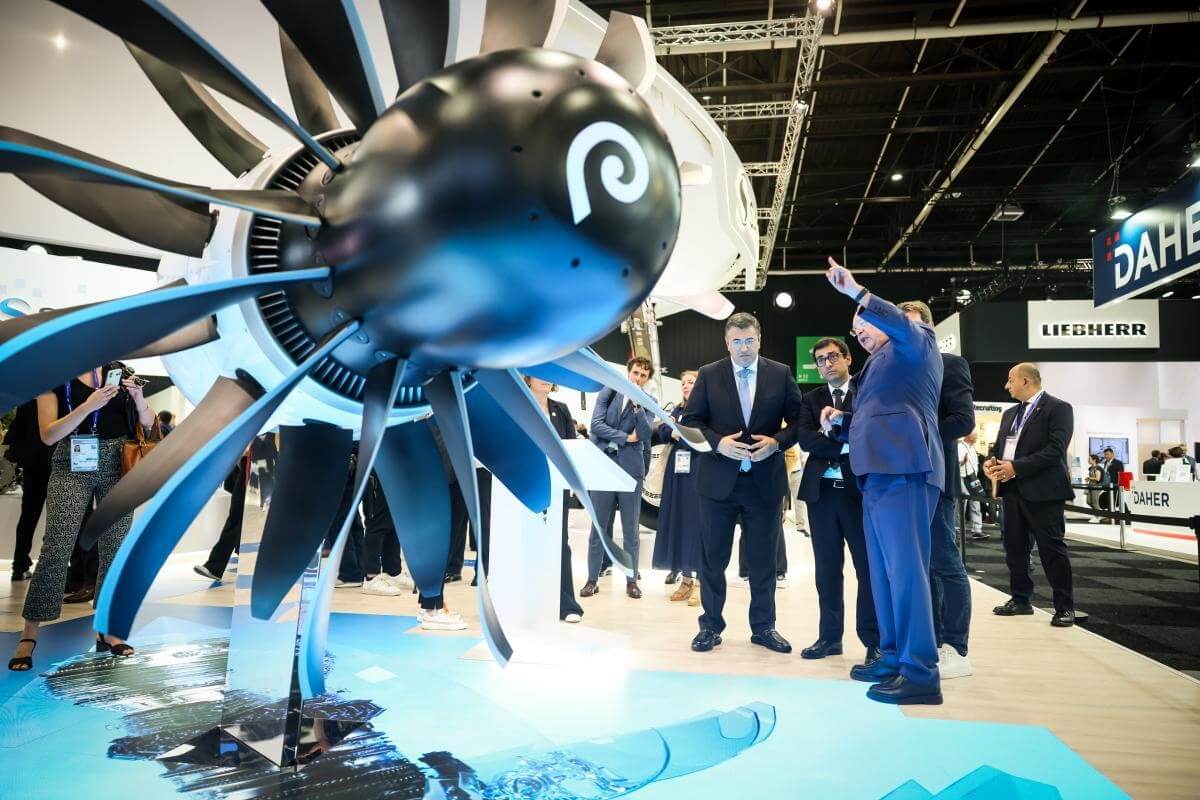 Europe is seeking to develop its own military technology base, even as it lags behind the US and China in key AI and digital technologies
Europe is seeking to develop its own military technology base, even as it lags behind the US and China in key AI and digital technologies.
This creates a risk that European defence technology will remain dependent on American software, cloud infrastructure, and semiconductors in the long term.
In other words, Europe is attempting to build military autonomy while simultaneously relying on external technological infrastructure.
This is a much more serious issue than the question of drones themselves.
The next phase of military development will be determined not only by the cost of platforms, but also by the quality of autonomy, data processing, and AI coordination on the battlefield. In these areas, Europe still does not hold a dominant position.
Therefore, today’s European race for inexpensive drones is not really about drones.
It marks the beginning of a much broader transformation in which Europe seeks to redefine its model of military power, industrial policy, and technological sovereignty simultaneously.
That is where the greatest risk lies.
Europe’s biggest problem is not funding, but speed
European governments currently have political momentum, as the war in Ukraine creates a sense of urgency.
However, European systems traditionally lose momentum once initial political pressure subsides.
The war in Ukraine has shown that future conflicts will not wait for the completion of European tender procedures
If the process reverts to slow regulatory frameworks, Europe could face another generation of expensive, delayed programmes, while genuine military innovation advances much more rapidly outside European institutional structures.
The war in Ukraine has shown that future conflicts will not wait for the completion of European tender procedures.
