On April 15, a group of developing countries launched the Borrowers’ Platform to create a more powerful collective voice in debt-management discussions and international financial negotiations.
While the initiative is grounded in the Sevilla Commitment, adopted at last year’s Fourth International Conference on Financing for Development, it was long in the making.
To paraphrase the French literary giant Victor Hugo, nothing is stronger than an idea whose time has come.
For decades, developing countries have been forced to navigate an increasingly complex international financial system.
With systemic and geopolitical risks mounting, uncertainty has become the new normal, leading to a growing chorus of Global South policymakers calling for more collaboration and coordination.
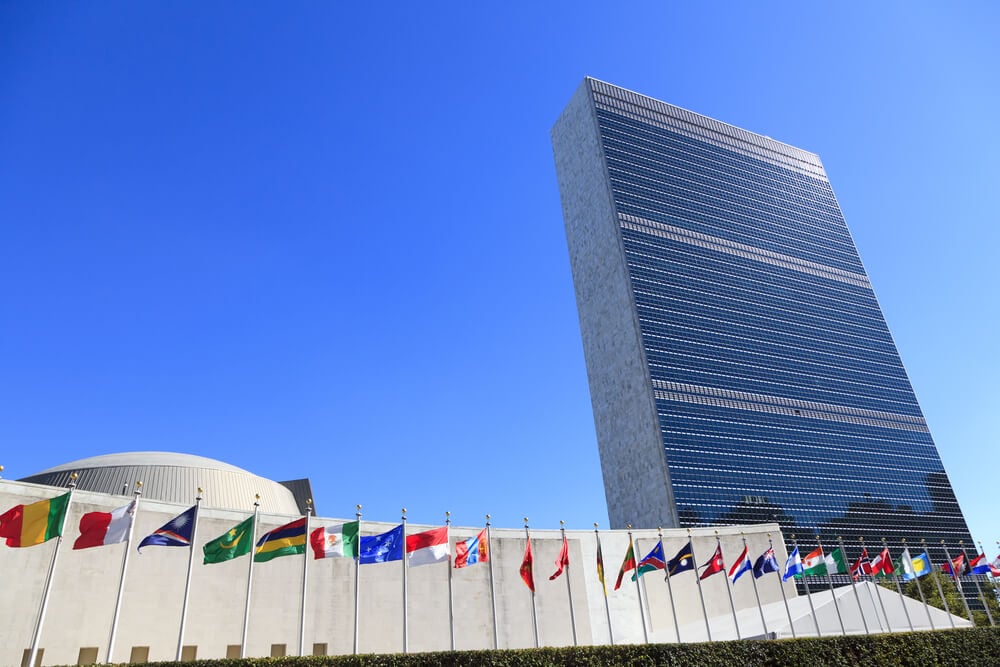
The Sevilla Commitment formalized this idea, with United Nations member states agreeing to “establish a platform for borrower countries with support from existing institutions, and a United Nations entity serving as its secretariat.”
The aim is to create a venue for these countries to discuss technical issues, share information on addressing debt challenges, access technical assistance and capacity building in debt management, coordinate their approaches, and influence the global debt architecture.
Limited fiscal space for public investment
The Borrowers’ Platform arrives not a moment too soon. In 2024, 61 developing countries spent at least 10% of government revenue on debt service, while 3.4 billion people live in countries that spend more on interest payments than on health or education.
In other words, the high costs of servicing the debt these countries have accumulated to finance their development are now threatening that agenda.
Global crises have resulted in a widening gap between developing countries’ interest payments and their government revenue
Interdependent and overlapping global crises, coupled with the most significant and extended period of monetary-policy tightening in more than two decades, have resulted in a widening gap between developing countries’ interest payments and their government revenue.
This leaves policymakers with extremely limited fiscal space for public investment, including to achieve the Sustainable Development Goals by 2030 and to build climate resilience.
Acute financing pressures
Compounding these countries’ dilemma, the nature of sovereign debt has changed significantly in recent years, reflecting shifts in creditor composition and the use of more complex instruments and contractual innovations.
Negotiating such a complex system requires informed and capable policymakers supported by skilled teams in finance ministries and debt-management agencies—a challenge even for advanced economies.
Meanwhile, existing global debt frameworks have not kept pace with these changes and remain unresponsive to the needs of countries in debt distress, many of which are in the Global South.
As a result, these economies are left to face acute financing pressures on their own, lacking the institutions (both formal and informal) that have long enabled creditors to align their activities.
Indebted countries have much to learn from each other’s experiences
The Borrowers’ Platform seeks to change that. It recognizes that indebted countries have much to learn from each other’s experiences.
Equally important, it can help these countries build capacity to identify and address debt challenges by providing coordinated technical assistance on issues ranging from debt management to engagement with rating agencies and other financial-market actors.
Moreover, there is strength in numbers when it comes to advocating for relevant and necessary reforms to the global debt system.
Effective mechanism
Developing countries were quick to seize on the agreement reached in Seville. To move the process forward, a working group comprising representatives from Egypt (chair), Zambia, Pakistan (vice-chair), Nepal, Colombia, Honduras, and the Maldives was established.
With support from UN Trade and Development experts, the group developed and agreed on a preliminary framework outlining the platform’s objectives, membership eligibility, and governance structure, which prospective members can consider and adapt during the interim phase (April-October 2026).
 Membership is open to developing countries that are UN member states, bilateral borrowers, and not permanent or full members of a creditor association
Membership is open to developing countries that are UN member states, bilateral borrowers, and not permanent or full members of a creditor association.
Of the more than 100 countries that meet these criteria and have been invited to join, over 30 have done so.
As the interim chair of the Borrowers’ Platform, I am committed to ensuring that the group delivers tangible results and evolves into an effective mechanism for all participating countries.
Members have already started working together on a voluntary and non-binding basis toward achieving common objectives, such as promoting peer learning, establishing a knowledge repository, and enhancing the quality and integrity of debt-related data.
Thus, borrower countries are signaling to markets a willingness and ability to improve debt practices and development-finance outcomes.
While the launch of the Borrowers’ Platform is a welcome milestone, it is only the beginning.
Its success will require sustained engagement by member countries, continued support from international partners, and a shared commitment to practical, results-oriented cooperation.
Ahmed Kouchouk is Minister of Finance of Egypt and Interim Chair of the Borrowers’ Platform.
