For years, the US economy has been the envy of developed and developing countries alike.
Dynamic, productive, and investing heavily in the drivers of future prosperity, the United States has consistently achieved stronger growth than most of the rest of the world – and not by a small margin.
But, as spillovers from the US-Israeli war against Iran materialize, concerns about the US economy’s prospects are becoming increasingly salient.
America’s recent economic record speaks for itself. While the US economy contracted sharply during the Great Recession that followed the 2008 global financial crisis, it still recorded average annual GDP growth of 1.48% in 2007-20, compared to only 0.59% for the eurozone, according to International Monetary Fund data.
The COVID-19 pandemic produced another disruption, but it did not derail the US economy for long: a robust recovery meant that growth averaged 3.27% in 2021-25, again outpacing the eurozone (2.63%).
Higher productivity, ample risk capital, dynamic entrepreneurship, and, until recently, an expanding labor pool were the primary engines of this growth, which has been turbocharged in the last couple of years by massive investments in AI.
Moreover, successive governments have pursued large fiscal stimulus, even though, with low unemployment, one would have expected them to run near-balanced budgets and limit the increase in national debt.
Growth headwinds
But growth headwinds might be emerging. The US Commerce Department recently halved its growth estimate for the fourth quarter of 2025, taking it from 1.4% to just 0.7%.
Now, the household and corporate sectors are confronting spillovers from the Iran war, including higher energy and borrowing costs, which threaten to exacerbate existing financial fragilities and generate new ones.
To be sure, the US is in a stronger position to weather these impacts than most other economies, particularly those in Asia and Europe.
Thanks to its energy independence, it avoids the specter of supply shortages now looming over Asia and parts of Europe.
The US economy is also less exposed to the accelerating fragmentation of global trade, investment, and payment systems.
The median US firm enters this period of high uncertainty with a relatively strong balance sheet
Moreover, while many countries are severely fiscally constrained, the US already has additional budgetary stimulus in the pipeline, owing to US President Donald Trump’s One Big Beautiful Bill Act.
And, while the US Federal Reserve might slow down its pursuit of interest-rate cuts, it may be less inclined than the European Central Bank or the Bank of England to hike rates, as its “dual mandate” requires it to weigh employment as heavily as price stability.
Then there is the agility of America’s private sector, which has traditionally been able to adapt to changing conditions with impressive speed, playing both defense and offense better than almost anyone.
The median US firm enters this period of high uncertainty with a relatively strong balance sheet.
There is also a clear incentive to restructure quickly to harness the potential of AI and other exciting technological innovations.
Inflationary pressures
But even if the US economy continues outperforming its peers, it will not necessarily remain insulated from the war’s adverse effects.
Already, higher energy and borrowing costs are exacerbating the affordability pressures many Americans face, creating downside risks for jobs and consumption, and increasing the likelihood of a growth slowdown.
The US entered the Iran war with sticky inflation – we are in the sixth consecutive year of the Fed missing its 2% target. Now, higher energy prices are poised to lead to broader price hikes.
What began as a surge at the pump – US gasoline prices rose by 30%, and diesel by 40%, in the first three weeks of the war – will soon be translated into higher costs for a wide range of goods, from semiconductors and fertilizers to airplane tickets.
Inflationary pressures could broaden further, as companies seek to pass higher input costs on to consumers
Eventually, inflationary pressures could broaden further, as companies seek to pass higher input costs on to consumers.
As cost-of-living pressures intensify, the negative social impact of America’s K-shaped economy – defined by high inequality of wealth and opportunity – will only grow.
Beyond inflation, the risk of financial instability is rising. We are already seeing tremors in private credit: funds limiting withdrawals, partial losses of bank financing, and mounting worries regarding some funds’ poor underwriting and valuation practices.
Leverage in parts of the global bond market is a concern, especially in the midst of the ongoing sell-off, as are the excessive hype-driven financial flows into AI and AI-adjacent activities over the past year.
Vulnerabilities in the US and global economies
None of these risks appears systemically threatening on its own. But in a stagflationary context of high inflation and lower growth, they could coalesce, fueling a dynamic that significantly tightens financial conditions and exposes vulnerabilities in the US and global economies.
The last thing the Fed needs is to have to enter crisis-management mode. Not only is it facing an unusually bumpy leadership transition amid political threats to its independence; its position has also been undermined by a series of forecasting errors, poor communication, policy slippages, and a prolonged failure to pursue necessary operational reforms.
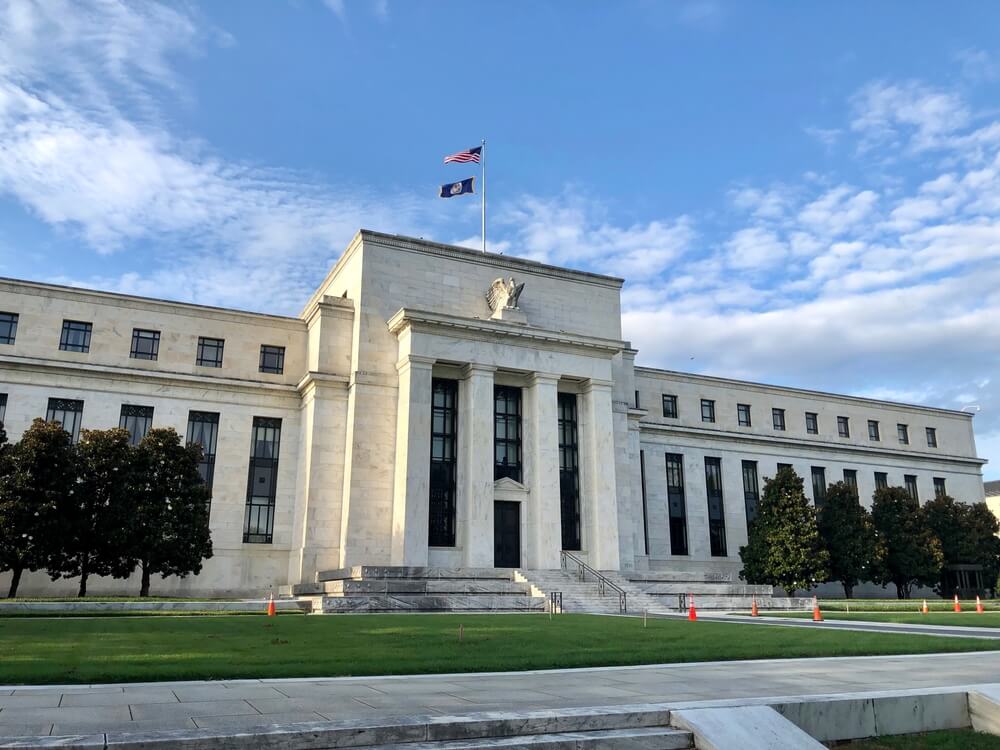 The last thing the Fed needs is to have to enter crisis-management mode
These are hardly the ideal conditions under which to navigate complex interest-rate decisions or respond to market disruptions.
While much of the world braces for the fallout of the Iran war, the US might be tempted to tout its relative economic strengths, not least its energy independence.
But what is true in relative terms is not necessarily true in absolute terms, and what is already true in absolute terms in the US today places the most vulnerable segments of the population at considerable risk.
Against this backdrop, what the US needs from its policymakers is not hubris, but humility and decisive action aimed at protecting those who need it most.
Mohamed A. El-Erian, a former president of Queens’ College at the University of Cambridge, is Practice Professor at the Wharton School at the University of Pennsylvania, where he is also Senior Global Fellow at the Lauder Institute. He is Chief Economic Adviser at Allianz, and Chair of Gramercy Funds.
