New START (New Strategic Arms Reduction Treaty) expires at midnight Moscow time on 5 February.
After this date, the last bilateral treaty legally binding the United States and Russia to limits on strategic nuclear weapons will lapse.
For the first time since the early 1970s, the two countries with the world’s largest nuclear arsenals will operate without any mutually agreed ceilings on the number of deployed warheads and their delivery systems.
US President Barack Obama and Russian President Dmitry Medvedev signed the treaty in Prague on 8 April 2010. It entered into force on 5 February 2011. It imposed three main restrictions:
- Up to 1,550 deployed strategic nuclear warheads on intercontinental ballistic missiles (ICBMs), submarine-launched ballistic missiles (SLBMs), and heavy bombers equipped to carry nuclear armaments.
- At most 700 deployed launchers (ICBMs, SLBMs, and heavy bombers).
- A total of up to 800 deployed and non-deployed launchers (including those under overhaul or testing).
Each heavy bomber was counted as one warhead, regardless of how many bombs or missiles it can carry. These restrictions came into full force after seven years, on 5 February 2018, and have been maintained by both parties to the present day.
The inspection process was comprehensive. Each side could conduct up to 18 short-notice on-site inspections per year; the side requesting an inspection did not have to give months of notice. Usually, 16–24 hours' notice was sufficient, and sometimes even less for certain types of inspections.
This was crucial to prevent the other side from hiding or moving items before inspectors arrived. Information on locations, numbers, and system status was exchanged 42 times a year.
The Bilateral Consultative Commission (BCC) met regularly to resolve implementation issues. This system has reduced the risk of surprises and misjudgements for decades.
“If it expires, it expires”
The original duration of the contract was ten years, until 5 February 2021, with the possibility of a single five-year extension. The extension was agreed on 3 February 2021 between the administration of Joe Biden and Russia, so the contract is valid until 5 February 2026. Further extension is not possible according to the text of the contract.
On 21 February 2023, Russia suspended its participation – inspections and data exchange – citing Western support for Ukraine and the expansion of NATO as reasons.
The United States responded by suspending inspections. Both sides still claim to respect the numerical limits, but without verification this remains only an assertion.
In September 2025, Vladimir Putin proposed that both sides voluntarily maintain the central restrictions for a year after they expire, with the possibility of further extensions if the US reciprocates.
Donald Trump said in October 2025 that this "sounds like a good idea." In a January 2026 interview with The New York Times, he changed his position: "If it expires, it expires. We'll do a better agreement." He added that any new agreement would have to include China.
So far, there are no negotiations or clear channels between the two administrations.
China refuses to join bilateral talks while its arsenal remains smaller
The expiration of the treaty means the end of the framework that began in 1969 with the SALT (Strategic Arms Limitation Talks) negotiations. Since then, treaties have kept strategic competition within defined limits.
Now, transparency is being lost. Without data sharing and inspections, each side must plan based on the worst-case scenario. This increases the likelihood of misunderstandings in a crisis.
Technological advances are already complicating stability: hypersonic weapons, fractional orbital systems, and improvements in missile defence. Without common rules, these changes become more difficult to manage.
China's arsenal introduces a new dimension. Beijing possesses about 600 warheads and is expanding rapidly. China refuses to join bilateral talks while its arsenal remains smaller. Insisting on its inclusion, as Trump demands, ensures that no new agreement will be reached soon.
Risks for Europe and the NATO
The consequences go beyond bilateral relations. The 2026 Review Conference of the Parties to the Treaty on the Non-Proliferation of Nuclear Weapons (NPT) is scheduled for spring 2026.
The expiration of New START coincides with the need for states to assess progress in disarmament. Many non-nuclear-weapon states already consider the major powers to be in default of their obligations under Article VI of the NPT.
The end of verified restrictions between Washington and Moscow will further weaken the non-proliferation regime.
For Britain, this is an immediate problem. The Trident system depends on the US nuclear umbrella through NATO.
Trident is Britain's strategic nuclear arsenal, consisting of four Vanguard-class (and soon Dreadnought-class) submarines armed with American Trident II D5 ballistic missiles carrying British nuclear warheads.
It forms the basis of Britain's independent nuclear deterrent, with the UK relying on American technology, maintenance, and support through the NATO alliance.
Both sides have reiterated in recent months that they intend to abide by the treaty's central limitations for now
The return to uncontrolled strategic competition increases the general level of risk in Europe. It also makes it harder to maintain alliance unity at a time when transatlantic relations are already under strain – tariffs, differing approaches to China, and the war in Ukraine.
There will be no immediate chaos. Neither the United States nor Russia have announced plans to increase the number of deployed warheads or launchers immediately after 5 February.
Both sides have reiterated in recent months that they intend to abide by the treaty's central limitations for now—1,550 warheads and 700 deployed launchers – albeit without any verification.
However, the absence of legally binding restrictions and transparency is not something history treats lightly. During the Cold War, the arms race intensified whenever a treaty expired or remained unreplaced.
There are numerous examples: between SALT I (1972) and SALT II (1979), or after the failure of negotiations for SALT III at the end of the 1970s, both sides rapidly modernised and expanded their systems.
When the Intermediate-Range Nuclear Forces (INF) Treaty collapsed in 2019, Russia and the US quickly developed new systems that had previously been banned.
The blurred line between stability and escalation
In the current situation, there is no reason to expect a different pattern. Without inspections and data sharing, each side must assume the worst – that the other is already working to increase capacity.
This creates pressure to do the same, even if neither side wants an open race. The US has a stockpile of warheads that it could deploy relatively quickly on existing missiles and bombers if Congress approves the funds.
Russia is already modernising and has hypersonic systems not covered by previous treaties, but its ability to scale up is limited by sanctions and the costs of war.
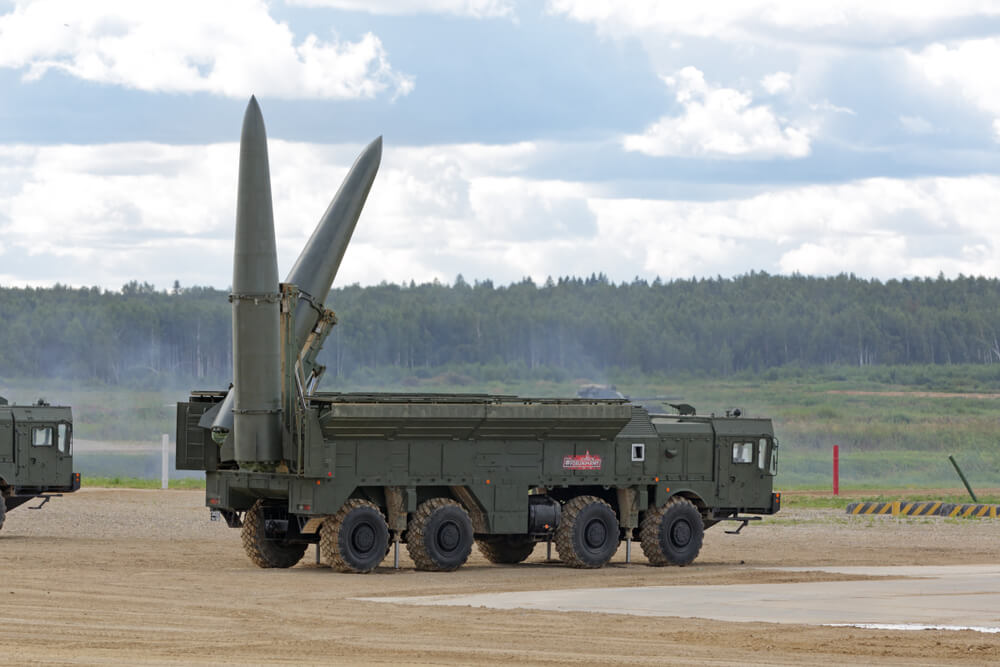 Russia is already modernising and has hypersonic systems not covered by previous treaties, but its ability to scale up is limited by sanctions and the costs of war
At present, there are no public plans for major changes, but this does not guarantee stability. Without a contract, the distinction between "maintaining the status quo" and "gradual increase" becomes blurred.
If one side takes a step forward – such as testing a new carrier or extending the life of old missiles – the other is likely to respond. This chain of reactions may not be dramatic in a single day, but it is dangerous over time.
Realistically, we should not expect thousands of new warheads to be deployed on launchers in the next two to three years.
A more likely scenario is a quiet, step-by-step build-up: adding spare warheads to existing missiles, testing new systems, and extending the lives of old platforms.
Without common rules, this process accelerates and becomes less predictable than when the contract was in force.
This is not a scenario of apocalyptic conflict but rather a slow erosion of the predictability that has prevented disaster for decades.
When there are no shared limits or checks, each side must act as if the other is already crossing the line. This is the logic that led to arms races in the past – not because everyone wanted war, but because no one wanted to be caught off guard.
Without a new agreement, the world is entering a phase where nuclear decisions are made unilaterally, without common rules, restrictions, or checks.
The greatest danger lies not in the prospect of immediate nuclear war, but in the gradual loss of predictability that has prevented small crises from escalating into catastrophes for decades.
