Overnight between 19 and 20 November, while Russia was attacking Ukraine, three flying objects came down in south-eastern Poland near Nowy Lipowiec, Rudnik nad Sanem and Młodzik.
The Polish authorities confirmed that one of them was a Russian Kh-101 cruise missile and, according to preliminary findings, the other two were another missile and a jet-powered drone.
According to Polish officials, one missile landed about 35 kilometres from the site where the first exercise of the multinational forces that could be deployed to Ukraine after a ceasefire is under way.
NATO scrambled fighter jets, and air traffic controllers were temporarily evacuated from Rzeszów-Jasionka Airport, the main hub through which Western military aid arrives in Ukraine. The Polish authorities have not reported any casualties or damage to critical infrastructure.
Prime Minister Donald Tusk said there was no doubt about the Russian origin of the events in Poland and that everything pointed to a deliberate provocation, while Defence Minister Władysław Kosiniak-Kamysz said the timing of the incident was not accidental.
For now, the link with the exercise is only an assessment by the Polish authorities, but the incident shows that the UK and France, which are leading preparations for the mission, must also plan to protect the personnel and equipment that would enter Ukraine via Poland after a ceasefire.
Whoever supplies the mission must be protected
Tusk said on 19 November that Poland is ready to provide logistical support and that Polish soldiers will not serve in Ukraine. Warsaw is discussing the terms of peace and Ukraine’s future security with the UK, France, Germany and Italy, and has a clear interest in those discussions, because the size and duration of the mission will determine how great a burden falls on Polish territory, even if no Polish soldiers cross the border.
The Coalition 26.2 exercise began on 9 November, and its main phase is being held at a military training ground near Nowa Dęba in south-eastern Poland, about 100 kilometres from the border with Ukraine.
It was organised by the Coalition of the Willing, a group of countries which, under the leadership of the United Kingdom and France, is preparing military support for Ukraine for the post-ceasefire period.
According to an announcement by the Polish Ministry of Defence, about 2,800 soldiers from 11 countries are expected to take part, with elements of the exercise also being held in France and Turkey.
In addition to Poland, the UK and France, the participating countries are Belgium, Estonia, Spain, the Netherlands, Lithuania, Germany, Sweden and Turkey, where the naval command of the exercise is located.
Poland led the logistical support, meaning that Polish services organised the reception and accommodation of foreign units, supplied fuel and equipment, and coordinated military operations with civilian services responsible for medical treatment and other assistance.
Warsaw needs an agreement on who will take over protection of the airport when the French deployment ends, especially if the mission lasts for years
In a real mission, that work would not stop when the first units move to Ukraine, because the soldiers would have to be replaced regularly, the equipment maintained and the wounded treated.
Any government considering sending troops will need to know how long it can rely on that system, and who will maintain it if the mission lasts longer than expected.
The most sensitive point in that support system is Rzeszów-Jasionka Airport in south-eastern Poland, the same airport from which air traffic controllers were evacuated on the night of the attack. Western military aid reaches Ukraine through it, and it is likely that the future mission would also be supplied via it.
On 6 November, the French ambassador in Warsaw announced that France will take over air defence at that airport from 1 January 2027, as part of NATO, but did not say for how long. Paris is thus taking on a specific task in Poland while preparing a mission for Ukraine with London.
Allies that do not wish to send soldiers to Ukraine could instead assume part of Poland’s defence and contribute to the mission through the obligations they already have towards each NATO member.
Warsaw needs an agreement on who will take over protection of the airport when the French deployment ends, especially if the mission lasts for years.
Article 5 does not extend beyond the border with Ukraine
NATO members have committed to collective defence: if one of them is attacked, the others are obliged to assist, and each government decides what measures to take, as set out in Article 5 of the North Atlantic Treaty.
The UK and France are leading the preparation of multinational forces for Ukraine outside NATO, and British or French soldiers deployed to Ukraine would therefore not receive alliance protection.
Governments sending troops must explicitly agree what the mission is authorised to do and what support it can expect if hostilities resume.
On 6 January, the UK, France and Ukraine signed a declaration in Paris expressing their intention to deploy multinational forces after a ceasefire, and the UK government then presented a plan for the US to lead monitoring of the ceasefire. US oversight could determine who violated the truce, but deciding what to do after a serious violation would require a separate political agreement.
European governments must state what they are prepared to undertake even without an American decision
On 20 November, Donald Trump said that security guarantees would be discussed only once an agreement on Ukraine had been reached, and his son-in-law and envoy Jared Kushner had spoken the day before about guarantees similar to NATO’s collective defence obligation.
Russian Deputy Foreign Minister Sergei Ryabkov rejected any arrangement that would give Ukraine a status close to NATO membership. London and Paris cannot yet conclude from those statements that the US would help if fighting were to resume.
For Kyiv, the sequence is crucial, as the Ukrainian government must assess the terms of any ceasefire before accepting them. If Washington wants to discuss guarantees only after an agreement, European governments must state what they are prepared to undertake even without an American decision.
As a starting point, they can clarify whether their soldiers would remain in Ukraine if Russia launched major attacks again, who would authorise changes to their mission, and what kind of support the Ukrainian military would receive.
Without those answers, Kyiv would have agreed to a truce knowing that its partners would take the most difficult decisions only once attacks resumed.
For Moscow, it is enough that the allies hesitate
Moscow benefits from uncertainty about the allied response even without an overt attack on Poland. If governments decide on reinforcements only after each incident, a new incursion into Polish airspace could delay the deployment of forces, even if supplies are not interrupted.
Foreign soldiers in Ukraine would raise the cost of a new war for Moscow, because any attack would also endanger citizens of other countries. That deterrent effect is weakened if governments delay decisions on how to respond until their soldiers are already under fire.
Following the incursion of Russian drones into Polish airspace in September 2025, the alliance launched Operation Eastern Sentry
NATO already has a framework for responding to the Polish request. Following the incursion of Russian drones into Polish airspace in September 2025, the alliance launched Operation Eastern Sentry, through which the allies strengthen the air defence of eastern members.
Poland then requested consultations under Article 4 of the North Atlantic Treaty, which stipulates that members consult together when one of them is threatened, and has now requested reinforcements under Operation Eastern Sentry.
For such a decision, NATO does not have to wait for an agreement on Ukraine, because it can rely on existing agreements and command structures. Warsaw would value a contribution that governments had pre-approved for the long term, rather than a promise to consider each new incident separately.
The background is secured before the first soldier
In the coming months, continued preparations in Poland and negotiations for a greater allied contribution to its air defences are more likely than a final agreement on what Europe would do if the war in Ukraine resumed.
London and Paris can arrange the reception of units, supplies and costs long before they decide on actual deployment.
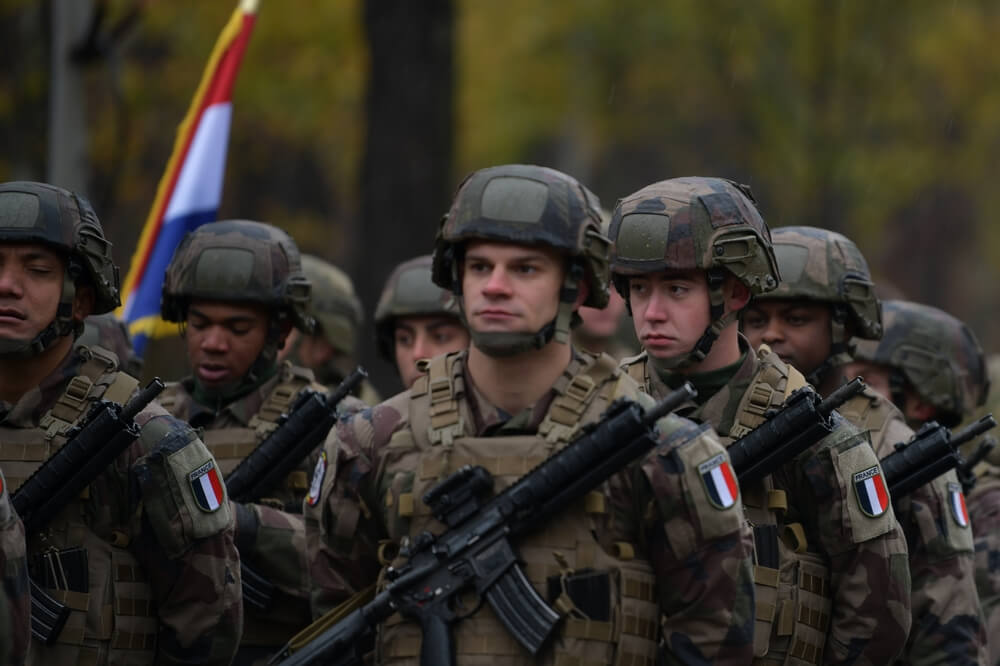 Who will defend Polish skies, and for how long, once the French deployment in Rzeszów ends
Reaching agreement on how those units would respond if Russia seriously violates the truce will take longer, because it requires the consent of governments that would be deciding on the lives of their own soldiers, and the American commitment does not yet exist.
Of the two decisions that Europe must make before the ceasefire, the first depends only on NATO members and could be taken in the coming months: namely, who will defend Polish skies, and for how long, once the French deployment in Rzeszów ends.
The other issue is who decides what troops in Ukraine do if Russia violates the ceasefire, and that decision is likely to be postponed until the final phase of negotiations. The cost of that delay would be borne chiefly by Ukraine, which must decide on the truce before that decision is made.
The European governments demonstrated in the exercise that they know how to deploy and supply the army intended for Ukraine. Before they send the first soldiers, they must make two commitments: to defend the country through which that army would pass, and to inform Kyiv in advance what their units will do if Russia attacks again.
Without the first commitment, the mission depends on when Moscow provokes the next incident in Poland, and without the second, Ukraine would receive foreign soldiers on its territory without knowing whether they would defend it.
