The European Commission proposed that Ukraine receive €45 billion over the next year from a loan provided by the European Union, raised on the capital market.
On the same day, the US government approved the potential sale of 500 PAC-3 MSE missiles, the latest model of the Patriot air defence system for shooting down ballistic missiles, together with spare parts and technical support, at an estimated value of $2.1 billion.
According to the US announcement, the purchase would be funded by Canada, Germany and Norway, using Ukrainian money from the European loan, and the US budget would not contribute to it.
Ukrainian President Volodymyr Zelensky thanked Donald Trump for the decision but warned that the new missiles, which still have to be produced, may arrive only in a few years’ time.
He called on the US and other allies to transfer missiles from their warehouses to Ukraine immediately and to replace them later with missiles from the new order.
The outcome of that request depends on Washington, which decides on its own stockpiles and on whether other countries are permitted to transfer to Ukraine American weapons they previously bought.
Missiles in European warehouses awaiting a signature from Washington
On 26 October, Zelensky said he had been waiting for almost a month for US Defence Secretary Pete Hegseth to sign the approval for the delivery of missiles for Patriot and NASAMS, another air defence system used by Ukraine.
He added that some of those missiles were ones European allies were ready to provide from their own stocks. US Secretary of State Marco Rubio acknowledged on 20 October that one shipment may have been held up, but argued that there was no political decision behind the delay.
On 30 October in Riga, US General Alexus Grynkewich, commander of NATO’s Allied Forces in Europe, stated that deliveries paid for by the allies through the PURL programme are not delayed and that Washington has approved every request by a third country to forward US weapons to Ukraine.
As he did not specify the number of missiles or which models were delivered, it is not possible to determine from his statement what happened to the shipments that Zelensky complained about four days earlier.
American control over these missiles stems from the rules that apply to weapons purchased from the US under inter-state treaties: the purchasing country must obtain Washington's prior written consent before transferring them to another country, even when giving them away.
Approval from Washington only paves the way for a purchase agreement
How that procedure works in practice is illustrated by a document published on 15 September in the minutes of the US Congress, according to which the State Department informed Congress on 14 August that it intended to allow Germany to transfer ten GEM-T missiles, an older Patriot model, to Ukraine immediately after the expiry of the period during which Congress can object.
Even for a gift from its own stock, Germany had to go through the American approval procedure, and the document does not show when the missiles arrived in Ukraine.
Ukraine receives most of its Patriot missiles through PURL, a NATO mechanism under which allies buy American weapons for Kyiv and the Alliance coordinates what is bought and the order in which it is delivered.
NATO Secretary General Mark Rutte said in May that since the mechanism was launched, about 70 per cent of all missiles for Ukrainian Patriot batteries have arrived through this route, and the allies had pledged more than $6 billion for equipment from the US by June.
Any delay in US approvals affects the very channel on which Ukraine’s anti-missile defence most depends.
Money from Canada, Germany and Norway for the new 500 missiles would go through JUMPSTART, a programme through which partners provide funds for Ukraine to purchase American weapons, and Ukraine would pay the remainder from the European loan.
Approval from Washington only paves the way for a purchase agreement; the sale is still being considered by Congress and a delivery date has not been announced.
Ukrainian needs collide with efforts to rebuild US supplies
Washington is reluctant to empty its own warehouses partly because of the war that the US and Israel launched against Iran at the end of February, in which US Patriot batteries fired large numbers of missiles to protect US bases and allies in the Middle East.
According to a July estimate by the Washington-based Center for Strategic and International Studies (CSIS), the US has used up about 65 per cent of the Patriot missiles it had before the war and now has fewer than 1,000 left.
On 29 July, the US Army signed a multi-year contract worth up to $58.62 billion with Lockheed Martin, manufacturer of the PAC-3 MSE missile, covering procurement through 2032.
In its announcement of the sale, the State Department states that it will not weaken the defence readiness of the United States
The company plans to triple its annual production by the end of 2030, from around 600 to 2,000 missiles; last year it delivered 620.
The order for 500 missiles for Ukraine is equivalent to four-fifths of last year’s production and will compete for space in the factory with orders from the US military and other customers.
The production rate also depends on Boeing, which announced on 5 October that it had secured a deal worth about $14.7 billion from Lockheed Martin over seven years to triple the output of homing heads, the electronic assembly at the top of a missile that locates a target and guides the missile towards it.
Lockheed Martin can assemble only as many ready-made missiles as Boeing supplies with homing heads from its Huntsville, Alabama, plant.
In its announcement of the sale, the State Department states that it will not weaken the defence readiness of the United States.
That assessment refers to missiles that have yet to be produced, and if Ukraine were to receive hundreds of missiles immediately from American warehouses, the Pentagon would have to decide separately how long it could tolerate a shortfall in its own stockpile.
European money is increasingly being spent on weapons
The proposed €45 billion is the second half of a €90 billion loan for 2026 and 2027 agreed in February. The distribution for next year still needs to be adopted by the EU Council, where the governments of the member states decide, and the Commission expects payments to begin in early 2027. The Union borrows money on the capital market, and repayment is guaranteed by the common European budget.
At Kyiv’s request, €31.7 billion would be allocated to defence and domestic weapons production, and €13.3 billion to the state budget, from which salaries and pensions are paid.
The share of defence in the same annual amount rises from about 63 per cent this year to 70 per cent in 2027, and each payment is conditional on progress in the rule of law and the fight against corruption, with supervision of the spending of European money.
Even that loan will not cover all of Ukraine's needs, because the Commission, assuming that the war will continue throughout 2027, estimates that Ukraine will still lack around €27 billion for the budget and €40.9 billion for defence.
A package of €6.1 billion was approved, including American PAC-3 missiles, and the purchase of American ammunition became an integral part of European aid to Ukraine
That total shortfall of €67.9 billion also includes military aid in equipment, meaning that part of it can be covered with weapons from allied warehouses instead of money.
The loan rules give priority to producers from the EU and Ukraine, as well as from Norway, Iceland and Liechtenstein, which are associated with the Union through the European Economic Area.
As a rule, parts produced outside that group must not account for more than 35 per cent of the value of the weapons being purchased, but the Commission can grant an exception when the weapons are urgently needed and European industry cannot deliver them in time.
Such an exception was approved by the Commission on 11 September, when it allowed Ukraine to use the loan to buy anti-aircraft missiles from a third country, explaining that there is no European product that meets the conditions of the loan and is compatible with the systems that Ukraine already uses.
A week later, a package of €6.1 billion was approved, including American PAC-3 missiles, and the purchase of American ammunition became an integral part of European aid to Ukraine.
European anti-missile defences are growing more slowly than Ukraine’s needs
Europe is developing its own production of missiles for the Patriot system in the Bavarian city of Schrobenhausen, where COMLOG, a joint venture between the American company Raytheon and the German branch of the European missile manufacturer MBDA, is establishing a plant to produce GEM-T missiles.
The NATO Support and Procurement Agency (NSPA) has ordered up to 1,000 such missiles for several members of the Alliance, if all the options in the contract are exercised, with the first deliveries scheduled for 2027. In April, Raytheon also signed a separate contract worth $3.7 billion to supply GEM-T missiles to Ukraine, in which the Bavarian plant plays an important role.
The GEM-T is an older model from the PAC-2 missile family and can shoot down short-range ballistic missiles, but the PAC-3 MSE, which destroys its target with a direct hit, has greater capabilities against them.
The missiles from Bavaria can only partially replace those that Ukraine requires from the US, but the German production line increases the total number of missiles and keeps in Europe some of the manufacturing and money that would otherwise go to the US.
It remains an open question whether sending missiles from Schrobenhausen to Ukraine will also require Washington’s consent, as the GEM-T was designed by the American company Raytheon.
The Ukrainians are developing the rocket and launcher, while European partners are expected to provide radars and other system components
Europe already has its own ballistic missile defence system, the Franco-Italian SAMP/T with Aster 30 missiles, which is deployed in Ukraine. In July, France and Italy agreed to accelerate delivery of the contracted Aster 30 missiles by October and approved their production in Ukraine under licence.
Ukraine announced the acquisition of four new-generation SAMP/T NG systems, for which it intends to seek financing through a European loan, while France has undertaken to temporarily transfer two existing systems to Ukraine until the new ones are delivered.
SAMP/T cannot use Patriot missiles or replace the batteries Ukraine already has, but it extends ballistic missile defence beyond reliance on the US supply chain.
In the long term, Ukraine and its European partners are also developing Freya, a joint project in which the Ukrainian company Fire Point plays a major role.
In September, the European Commission announced that it would support the project through the SAFE joint defence procurement programme.
The Ukrainians are developing the rocket and launcher, while European partners are expected to provide radars and other system components, and Kyiv expects the first prototype in the first half of 2027.
Freya will be available for use only once the prototype has successfully passed testing and the system has entered serial production.
Ukraine’s winter depends on stocks and previously contracted deliveries
On 30 October, Zelensky stated that Russia had fired 17 ballistic missiles at Ukraine the previous night and warned of a shortage of Patriot missiles.
In the preceding two weeks, he reported more than 30 Russian attacks on energy facilities, and in July he asked Trump for 300 Patriot missiles to help Ukraine get through the winter.
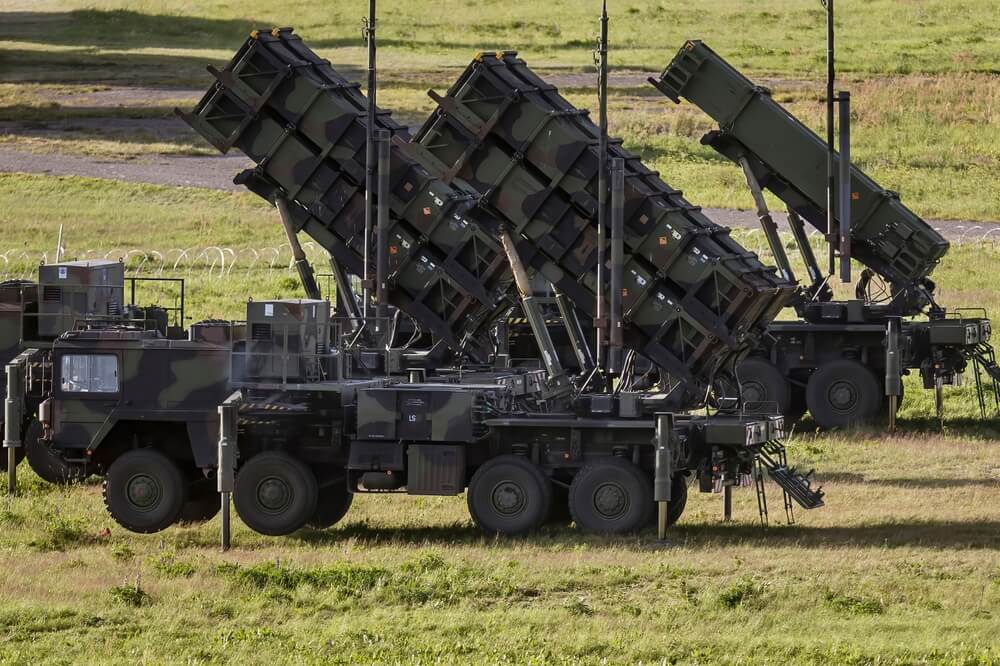 The defence of power plants and heating plants over the winter will depend on existing Ukrainian and allied stockpiles
A new order for 500 missiles will not cover that shortfall, and the defence of power plants and heating plants over the winter will depend on existing Ukrainian and allied stockpiles and on deliveries from previously contracted production.
When explaining the 11 September exception, the Commission cites a second route to faster supply: when production slots are reserved, other customers can rearrange their orders and allow Ukraine earlier delivery.
Together with transferring missiles from allied stockpiles, these are the two ways Ukraine can obtain missiles before production expands, both of which depend on agreements with governments that hold stockpiles or earlier orders, and on how quickly Washington approves such changes.
Over the winter, it will become clear how many missiles actually reach Ukrainian units, whether the demands that Kyiv complained about have been resolved and which deliveries the assurances from NATO refer to.
GEM-T missiles from Bavaria could gradually increase supply from 2027, and, if they pass tests, the new-generation SAMP/T, licensed production of Aster missiles in Ukraine and Freya would eventually reduce Ukraine's dependence on American approvals.
This winter, Ukraine is relying mostly on the weapons it already has and on deliveries that depend on Washington. Europe's billions currently give it a stronger position in negotiations for faster deliveries, while production over which Europe would have full control will take a few more years.
