The crushing Republican defeat on November 3 may mark the beginning of the end of Trumpism. The collapse of MAGA's electoral mythology is only part of the story.
Trumpism was a political project that captured the Republican Party, penetrated the institutions of the American state and concentrated extraordinary authority in the hands of a single man.
Donald Trump transformed a major political party into an instrument of personal loyalty.
Now that the coalition sustaining his power has fractured, Republicans face a question they have postponed for a decade: how does a party recover its identity after surrendering it to a single personality?
The capture extended far beyond electoral politics. Republican primaries became loyalty tests, congressional leaders abandoned their independence, and dissenters were systematically marginalized.
The administration sought greater control over the federal bureaucracy, challenged restraints on executive authority and subjected institutions, particularly the Justice Department, to political pressure.
The purge of experienced civil servants weakened the professional foundations of government.
Meanwhile, allegations of corruption and self enrichment reached extraordinary proportions.
Cryptocurrency ventures, family business interests, preferential access, government contracts and the influence of technology billionaires increasingly blurred the boundaries between public authority and private enrichment.
The networks of patronage and financial influence accumulated under Trump will not disappear with his eventual departure.
Defending another Middle Eastern war
MAGA was never the coherent political family its public performances suggested.
It united isolationists and interventionists, Christian nationalists and libertarians, working class populists and billionaire oligarchs.
Loyalty to Trump concealed contradictions that Gaza began to expose, particularly among younger conservatives increasingly uncomfortable with unconditional support for Israel. The war with Iran deepened the rupture.
A movement that promised to end America's foreign entanglements found itself defending another Middle Eastern war.
JD Vance openly attributed the Republican debacle to the Iran war
On the morning after the electoral defeat, JD Vance openly attributed the Republican debacle to the Iran war, while also pointing to the administration's relationship with Israel and the cost of living.
His intervention amounted to an extraordinary repudiation of the foreign policy of an administration in which he serves as vice president, and an early indication of the struggle over MAGA's political inheritance.
Its anti-establishment rhetoric became increasingly difficult to reconcile with its dependence on powerful donors, while promises of economic relief collided with tariffs, rising living costs and the consequences of war.
Electoral defeat has now deprived these competing factions of the argument that held them together: Trump's supposed invincibility.
Casualties of Trump's many wars
Trump's excuse that his name was not on the ballot cannot obscure that November 3 was a referendum on him.
His presidency, his policies, his wars, and his conduct were at the center of the election.
The defeated Republican candidates were casualties of Trump's many wars, foreign and domestic.
He cannot claim ownership of every Republican victory and disown the defeats. His reaction was revealing.
Within hours, he turned against Texas Governor Greg Abbott, accusing him of becoming a RINO, Republican in name only, the derogatory label reserved for insufficiently loyal Republicans.
The paradox is that Trump's political authority may diminish while his presidential powers remain formidable
This was the same governor Trump had endorsed and praised earlier that day. In Trump's logic, victory belongs to him and defeat belongs to the disloyal.
Steve Bannon had warned that Republican defeat would unleash a civil war within the party.
That struggle may already have begun. Competing MAGA factions will fight over the movement's political machinery, donors and ideological inheritance, while Republicans seeking to reclaim their party will challenge Trump's authority.
The more aggressively he demands loyalty and identifies scapegoats, the more he risks accelerating defections.
His increasingly digressive, repetitive speeches, apparent fatigue and diminishing command of public performances add another dimension to the crisis.
Electoral humiliation, congressional investigations and growing Republican dissent could fuel greater anger, more impulsive decisions and increasingly erratic behavior.
The paradox is that Trump's political authority may diminish while his presidential powers remain formidable. Political weakness does not necessarily lead to restraint.
The succession struggle
The succession struggle will be particularly unforgiving for JD Vance and Marco Rubio, two men who once openly despised Trump before becoming among his most prominent defenders.
Both abandoned their earlier judgments and joined his triumphal procession, calculating that political advancement required submission. They now risk becoming casualties of the movement they helped sustain.
Their association with Trump's presidency, its wars and its excesses cannot easily be erased.
An entire generation of Republican politicians surrendered its judgment to a man it once regarded as unfit to lead
The Republican defeat should serve as a cautionary lesson for decades to those who sacrifice their principles and political independence in pursuit of power.
An entire generation of Republican politicians surrendered its judgment to a man it once regarded as unfit to lead.
The political inheritance they eagerly sought may become a liability from which they cannot escape.
The end of Trumpism
Meanwhile, a new generation of Democrats has emerged. James Talarico's victory in Texas, Jon Ossoff's reelection in Georgia and Abdul El-Sayed's triumph in Michigan suggest a party rediscovering how to speak beyond its traditional constituencies.
They have understand that “third bathroom” politics is not a winning electoral message.
Economic security, healthcare, housing, wages and the cost of living provide a more compelling vocabulary than cultural provocations.
El-Sayed's victory is particularly significant. Despite enormous spending by AIPAC and its allies to defeat his candidacy, he prevailed, challenging assumptions about the ability of organized pro Israel political networks to determine electoral outcomes.
Israeli influence has not disappeared, but Gaza and the changing attitudes of younger Americans have revealed new limits to its political reach.
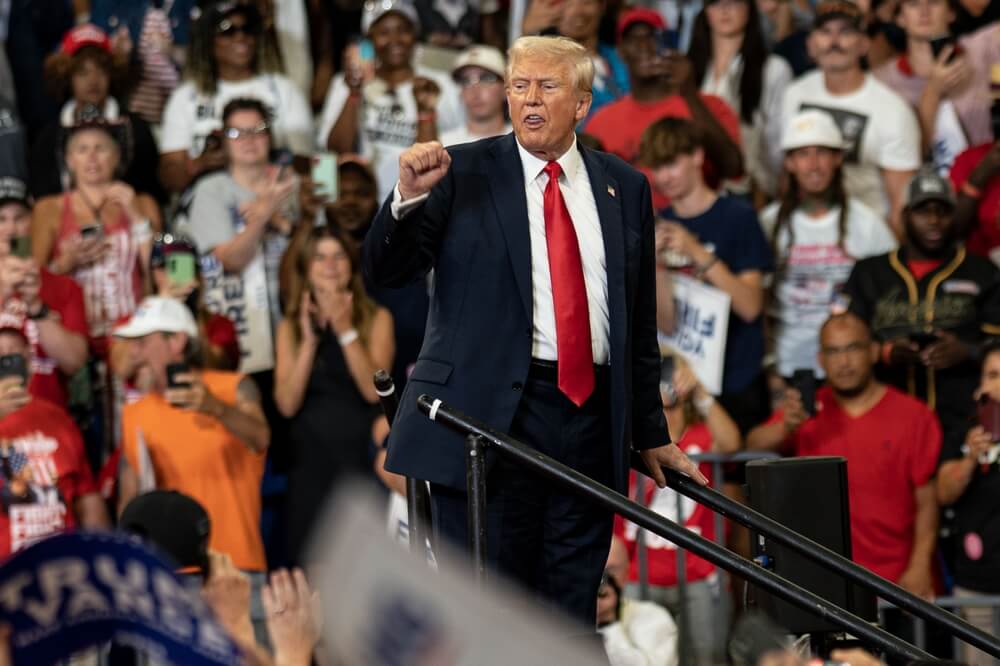 Trump retains the powers of the presidency even as his party confronts the consequences of electoral defeat
MAGA may eventually be remembered as another Tea Party phenomenon. The Tea Party intimidated Republican leaders, displaced establishment politicians and seemed destined to transform American conservatism permanently. Yet its independent identity disappeared, absorbed into Trumpism.
MAGA could follow a similar trajectory, surviving as a collection of grievances long after its identity as a governing movement has faded.
The difference lies in the damage left behind. The Tea Party influenced government, whereas Trumpism exercised presidential power.
Rebuilding the federal workforce, restoring institutional independence and recovering confidence in the impartial administration of justice could take years.
The next two years may prove especially turbulent. Trump retains the powers of the presidency even as his party confronts the consequences of electoral defeat.
The interval before the new Congress takes office presents particular risks, especially over Iran, where a president seeking to regain political momentum could pursue a spectacular military success or create facts his congressional opponents must inherit rather than choose.
The great irony is that Trumpism, which promised to restore American greatness, may leave its successors preoccupied with repairing both a political party and the institutions of the American state.
The end of Trumpism, if November 3 has inaugurated it, may prove considerably more turbulent than its rise.
Ahmad El Husseini is a political analyst and essayist who writes on Middle Eastern geopolitics, US foreign policy, and the evolving structure of regional power, with a particular focus on Lebanon, Iran, Saudi Arabia, the Arab Gulf, and the future of American influence in the region.
