Donald Trump is likely to lose the midterm elections. His name is not on the ballot, but Republicans appear headed toward losing the House, with the Senate also in play.
Defeat on November 3 may not produce a more cautious Trump. It could produce the opposite: an angry, unhinged 80 year old president, unable to run again, facing a hostile incoming Congress and increasingly preoccupied with his place in history.
Iran could become the battlefield on which he attempts to reverse the narrative of his presidency.
The coalition that returned Trump to the White House in 2024 was considerably broader than MAGA.
It included Hispanic men, Black men, younger men and independents who were neither ideological Trumpists nor conventional Republicans.
Some were difficult for pollsters to capture, and some were reluctant to advertise their preferences.
They worried about inflation, immigration and Democratic cultural excess, or simply decided to take another chance on Trump.
Their participation helped elect him. But it was a coalition of circumstance, not a permanent Republican realignment, and much of its outer ring has fallen away.
Trump’s gains among Hispanic men are difficult to sustain given what immigration enforcement subsequently became.
There is considerable distance between supporting control of the border and watching ICE operations become an indiscriminate spectacle of aggressive raids, mistaken identities and collective suspicion. What was sold as restoring order has often looked like intimidation.
The economic bargain has also weakened as voters confront inflation, rising energy costs, and uncertainty.
Trump never needed to win the Black electorate. He needed to reduce Democratic margins, particularly among Black men, and he succeeded.
But eccentric rappers and celebrity supporters were never a substitute for constructing a durable constituency.
Inflation, stalled social mobility, racialized exercises of state power and the absence of significant Black political representation around Trump make those gains difficult to preserve.
Then there are the independents. More Americans identify as independent than as either Democrats or Republicans.
The Iran war
Many who gave Trump another chance were voting against inflation, disorder, Democratic cultural excess and endless American wars.
Instead, they got another war, accompanied by a presidential style increasingly defined by personal prerogative: because I say so, because I can do what I want.
The Iran war has meanwhile accumulated objectives: destroy the nuclear program, keep Hormuz open, defend the Gulf, break Iranian power, force negotiations, perhaps collapse the regime. With so many shifting objectives, what exactly counts as victory?
The Democrats have helped themselves by doing less. They have let Trump and the Republicans dig themselves in deeper rather than rescuing them with self-inflicted cultural controversies.
Jon Ossoff, Abdul El Sayed, James Talarico, and a broader generation of younger politicians are emerging simultaneously
There has been little appetite for reviving “third bathroom” politics, the slogans and symbolic battles that once allowed Republicans to portray Democrats as preoccupied with cultural experimentation while voters worried about wages, prices and security.
They have also developed a deep bench of talented stars. Jon Ossoff, Abdul El Sayed, James Talarico, and a broader generation of younger politicians are emerging simultaneously.
They are not ideologically identical, which is probably an advantage. They represent generational freshness in contrast to a Republican Party still extraordinarily dependent on one man.
Unconditional loyalists
At 80, Trump increasingly resembles Shaquille O’Neal in his final days in the NBA: still enormous, still famous, occasionally capable of reminding everyone why he once dominated the game, but no longer capable of carrying an entire team to victory.
What remains around him is a much narrower MAGA: unconditional loyalists, an aging evangelical constituency whose attachment to Israel is intertwined with biblical prophecy, neoconservatives who see Iran as the unfinished business of American power, and the most committed Zionist constituencies.
Trump does not need to lose his 2024 Hispanic, Black, independent and younger voters to Democrats. They merely need to stay home
Even inside America First, Tucker Carlson and others have exposed the contradiction: how does America First turn into another Middle Eastern war?
How does populism reconcile itself with oligarchic enrichment, family business interests, and another open-ended foreign conflict?
Trump does not need to lose his 2024 Hispanic, Black, independent and younger voters to Democrats. They merely need to stay home.
Two-month window
If Republicans lose the House on November 3, Trump then enters a peculiar and potentially dangerous two-month window.
The voters will have chosen a new hostile Congress, but it will not take power until January 3. The outgoing Republican-controlled Congress remains in place.
The new majority, elected partly to restrain Trump, will still be waiting to be seated.
These will be Trump’s last two months before the congressional consequences of the election actually arrive. That creates a very different calculation over Iran.
Before November 3, Trump has Republican candidates to protect and voters to worry about.
Vance may seek an understanding with Tehran, but he cannot guarantee that Trump will honor it
After January 3, he may confront a Democratic House, perhaps joined by a Democratic Senate, capable of investigating his conduct, restricting appropriations, and challenging further escalation.
Between those dates lies a window in which he can create facts that the next Congress will inherit rather than choose.
J.D. Vance may send as many letters as he likes to Mohsen Rezaei, the former IRGC commander who now serves as secretary of Iran’s Supreme National Security Council.
They offer little reassurance when Trump can disown the diplomacy behind them.
His handling of the Islamabad memorandum of understanding has already shown how readily he can throw his own vice president under the bus, and he can do it again.
Vance may seek an understanding with Tehran, but he cannot guarantee that Trump will honor it.
Trump’s Hail Marys
Iran offers two desperate Hail Marys. The first is a spectacular victory: intensify the assault enough to collapse the Iranian regime before January 3.
Tehran falls, the Islamic Republic disappears, and the president who lost Congress presents himself weeks later as the man who accomplished what every American president since 1979 failed to accomplish. Electoral defeat disappears beneath historic foreign victory.
The chances are exceedingly small. Iran has survived sanctions, assassinations, sabotage, internal unrest, decapitation of its leadership and months of bombardment. Nor does the regional environment favor regime destruction.
Turkey, Pakistan, Egypt, Saudi Arabia and other Muslim states are increasingly making arrangements with Tehran.
An uncontrolled collapse of a country with more than 90 million people frightens many of Iran’s neighbors almost as much as Iranian power does.
The second Hail Mary is darker. Whether by design or miscalculation, Trump creates a war that the incoming Congress finds extraordinarily difficult to stop.
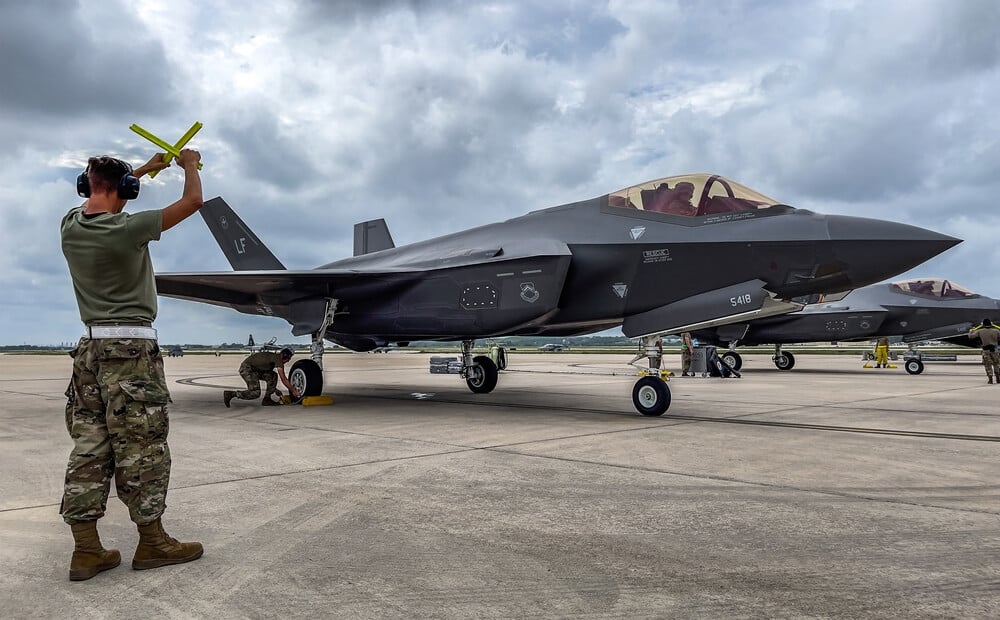 Trump could use the final weeks of the outgoing Congress to leave its successor a conflict it feels compelled to bless
Another massive American attack could provoke precisely the Iranian response that transforms the conflict: large numbers of American casualties, a devastating strike against a Gulf ally, complete closure of Hormuz, or another escalation creating the apparent necessity for a much larger American commitment, potentially including ground forces.
The new Congress would not arrive to decide whether America should enter such a war, but to confront one already underway.
Congress can resist a president proposing a new war. It is considerably harder to deny authority, money, and support to American soldiers already fighting one.
Trump could use the final weeks of the outgoing Congress to leave its successor a conflict it feels compelled to bless.
That is the danger after November 3. Trump will have lost many of the voters whose support constrained him, while the Congress elected to restrain him will not yet possess power.
For two months, he will occupy the space between political repudiation and institutional constraint.
He can throw jello at the wall and hope something sticks: regime collapse, Iranian capitulation or an Iranian mistake large enough to drag America fully into the war.
The first Hail Mary aims at victory. The second risks leaving the next Congress a war it inherits rather than chooses.
Ahmad El Husseini is a political analyst and essayist who writes on Middle Eastern geopolitics, US foreign policy, and the evolving structure of regional power, with a particular focus on Lebanon, Iran, Saudi Arabia, the Arab Gulf, and the future of American influence in the region.
