"Death to America is not a slogan, it is an objective." "Israel is a cancerous tumour that must be eradicated," "The barbaric Israeli regime has no cure other than annihilation."
These are not the words of some irrelevant radical but of Iran's Supreme Leader in statements to the Iranian parliament and official communiqués.
The Iranian regime executes women and homosexuals, finances global terrorism, and has breached its obligations under nuclear non-proliferation agreements.
The International Atomic Energy Agency (IAEA) has issued two resolutions condemning Iran, stating that cooperation from the Iranian regime is non-existent and that it is impossible to verify that the nuclear programme has exclusively peaceful purposes.
Iran has accumulated more than 400 kilograms of highly enriched uranium, when no more than 4% enrichment is required for civilian use. The nuclear threat is not an invention of President Trump. It has been verified by the IAEA.
The Iranian regime has been, for decades, the world's leading state sponsor of terrorism through the Revolutionary Guard (IRGC) and its Quds Force.
Terrorist actions promoted by the Iranian regime in recent years extend from Argentina to Bahrain, Lebanon, the United Arab Emirates, and Syria.
The Iranian dictatorship appears on the U.S. State Department's list of "State Sponsors of Terrorism". FinCEN and OFAC have sanctioned nearly 1,000 individuals and entities linked to terrorism financing by the Iranian government.
A clear and present threat
In recent weeks, the regime's campaign of repression has caused, according to independent medical organisations, the deaths of more than 32,000 Iranians, in addition to the detention, torture, and execution of dissidents and their families, the blocking of the internet, and the suppression of any independent information.
Despite this, some European media outlets disseminate data from the Iranian regime as if it were verified information, just as they did with Hamas propaganda.
Iran declared war on Israel directly through the Hamas invasion on 7 October 2023, the ongoing attacks by Hezbollah from Lebanon, and, above all, through the massive attack on Israel on 13 April 2024, known as "Operation True Promise".
The Arab League itself has confirmed through its condemnation that Iran's regime represents a clear and present threat to its Gulf neighbours
In that operation, Iran launched more than 170 drones, more than 30 cruise missiles, and more than 120 ballistic missiles against Israeli targets.
Direct attacks with hundreds of missiles and drones against U.S. interests in Iraq, against Israel, and against shipping in the Red Sea, combined with the continued campaign by its terrorist groups, constitute an ongoing armed threat that enables the right of self-defence under Article 51 of the United Nations Charter.
The Arab League itself has confirmed through its condemnation that Iran's regime represents a clear and present threat to its Gulf neighbours, in addition to threatening Western democracies through continuous attacks.
International law as a moral alibi
All these facts are sufficient grounds to act against the Iranian regime and invalidate the rhetoric of the Sánchez government.
Part of the left selectively appeals to "international law" and the UN Charter, using them as a moral alibi to avoid assuming the political cost of confronting regimes like Iran's.
That reading systematically ignores the regime's own prior actions, from financing terrorist groups to direct attacks with drones and missiles.
Have they not noticed how they only remember international law and human rights when doing so allows totalitarian dictatorships to remain in power?
Sánchez states, in a paternalistic tone, that "one can be against an odious regime like Iran's and against an unjustified attack," but his actions show otherwise.
In 2019, the Sánchez government committed to promoting and using the INSTEX instrument to circumvent U.S. sanctions against the Iranian regime.
Between 2018 and 2024, the government authorised millions in exports to Iran of "dual-use" material (civilian and military), according to official trade data.
Presenting the Islamic Republic as a passive actor that "has not attacked anyone" is an insult to intelligence
The legal debate on the use of force is usually reduced to a formalistic reading of Article 2 of the UN Charter, ignoring Article 51, which recognises the inherent right of self-defence against an "armed attack".
When a state continuously sustains direct attacks, operations through proxies, and financing of groups that commit massacres against civilians, the boundary between "armed attack" and "imminent threat" ceases to be theoretical.
The United Nations Charter is designed to regulate relations between cooperative states that protect their populations, not to accommodate expansionist terrorist regimes that make aggression against their own citizens and state terrorism their reason for being.
The same text that some invoke to characterise the Western attack as an "act of aggression" systematically ignores Iran's continued use of force against its neighbours, against Israel, and against Western interests.
If turning a country into a platform for financing, training, and arming groups that massacre civilians is not a "use of force," the concept loses all meaning.
Self-defence cannot be interpreted as passively waiting for the enemy to "annihilate" the population and "devastate" the country.
Legal doctrine has adapted precisely because dictatorships like Iran use intermediaries to evade direct responsibility. Presenting the Islamic Republic as a passive actor that "has not attacked anyone" is an insult to intelligence.
A profoundly hypocritical position
The Spanish Government hides behind the rhetoric of "international law" and rejection of "all violence" to justify its refusal to allow the use of Spanish bases.
The Foreign Minister states that Spain will not support any operation "that does not fit within the UN Charter," while simultaneously proclaiming condemnation of "the brutality of the Iranian regime towards its population.”
All this while Iran launches missiles at Gulf countries, Cyprus, and Turkey and continues murdering its own citizens.
This position is profoundly hypocritical for two reasons. First, because it reduces international law to a procedural formalism that ignores the actions of the Iranian regime.
Official foreign trade data demolish the image of a "neutral" government
A legal system worthy of the name cannot place democracies acting to defend themselves against a real threat on the same level as theocratic dictatorships that proclaim the destruction of other states as an official objective.
Second, because this supposed legal purity coexists comfortably with years of Spanish business dealings with Iran in military materials.
Official foreign trade data demolish the image of a "neutral" government. The Sánchez administration authorised millions in dual-use exports, including detonators, explosives, laboratory reagents, and control software. It is difficult to imagine a clearer example of double standards.
The luxury of saying “no to war”
The government's refusal to cooperate with its allies comes at a time when Spain has benefited from U.S. liquefied natural gas to avoid an energy crisis following the rupture with Algeria, our main supplier, caused by another unilateral shift by La Moncloa in foreign policy.
In the midst of escalation with Iran, Sánchez sends the message that Spain is an unreliable partner, willing to hide behind legal technicalities while authorising sensitive exports to the regime it claims to condemn.
International law cannot become a refuge for dictatorships that make terrorism and aggression their state policy while demanding an impossible level of purity from democracies attempting to contain them.
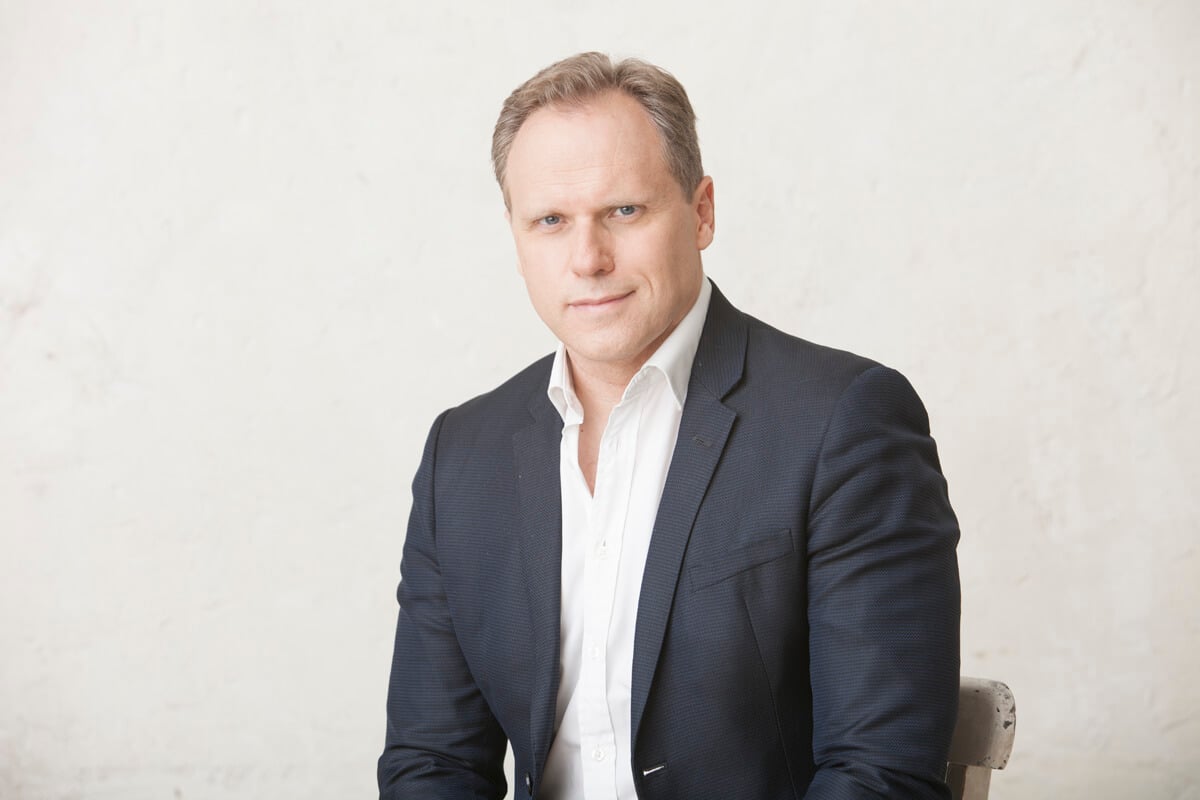 Sánchez's position consists of always being very tough on democracies and Western partners and very soft on terrorist dictatorships - Daniel Lacalle
Saying "no to war" while the United States, Israel, and NATO protect you, supply energy, and provide strategic and financial support is an exercise in shameful hypocrisy.
The Sánchez Government reproduces the same pattern it has applied in Gaza and Lebanon: it uses certain ministers (Robles, Cuerpo) to communicate cooperation to partners, while Sánchez and Albares disseminate a completely different narrative to the press and to third countries. That is why the Spanish government is not a reliable partner.
Sánchez's position consists of always being very tough on democracies and Western partners and very soft on terrorist dictatorships.
He only remembers international law and human rights when doing so allows him to perpetuate and whitewash dictatorships.
Sánchez has received congratulations from Hamas, Hezbollah, the Houthis, the Iranian regime, the Cuban dictatorship, the Chavista regime, and all the world's communist leaders. He has become the favourite leader of terrorists and totalitarians.
The position of the Spanish Government is neither neutral nor pacifist; it is a mixture of selective legalism and ideological calculation that leaves us worse positioned before our partners, weakens our security, and puts investment and economic growth at risk.
When an administration that has authorised sales of sensitive material to Iran claims a monopoly on "international law" to wash its hands of the response to that same regime, it is not on the right side of history but on the cowardly side of political marketing at the expense of national interest.
Saying "no to war" is a luxury when you are protected by NATO, the United States, and Israel, and your neighbours are countries like France or Portugal.
That luxury does not exist when your neighbours are murderous theocracies that boast of seeking your destruction.
