Since 2015, Saudi Arabia has faced sustained missile and drone pressure. Ballistic missiles, land-attack cruise missiles, and one-way attack UAVs have been used, testing geometry, radar coverage, and saturation thresholds.
Much of this activity has been orchestrated, enabled, or inspired by Iran through proxy networks, most notably the Houthis in Yemen and affiliated militias in Iraq.
Despite the Kingdom’s vast geography and the concentration of globally critical energy infrastructure, Saudi Arabia has not experienced sustained strategic paralysis.
The Saudi armed forces defend 2.15 million square kilometres (comparable in size to Western Europe), with two coastlines, multiple industrial corridors, dispersed massive oil fields, processing hubs, desalination facilities, export terminals, and major population centres separated by enormous distances.
This is not a point-defence problem; it is a continental defence problem. The Kingdom has built a continental air and missile defence architecture to match it.
That architecture was not created perfect. It was shaped by experience – beginning with the war against the Houthis in 2015 and crystallised by the September 2019 strike on Abqaiq and Khurais, which temporarily removed approximately five per cent of the global oil supply from the market almost instantly.
Defence and deterrence within the same ecosystem
At the upper tier of its architecture is THAAD – Terminal High Altitude Area Defense. With 44 launchers, seven AN/TPY-2 X-band radars, and approximately 360 interceptors entering service, the Royal Saudi Air Defense Force (RSADF) will operate the largest THAAD system outside the US Army.
THAAD provides altitude and depth, engaging ballistic threats in the upper atmosphere and extending the battlespace outward before missiles descend into their terminal phase. It offers a strategic ceiling.
Beneath that ceiling sits the backbone: Patriot PAC-2, PAC-3, and soon to enter service, the PAC-3 MSE. RSADF operates about 20 deployed Patriot batteries – the third largest Patriot enterprise globally and the largest in the Middle East.
The recent procurement of 730 additional PAC-3 MSE interceptors will add another 6 to 8 batteries and reflects sustained operational demand and deliberate magazine depth.
Defence and deterrence operate within the same ecosystem, sharing command logic, and a common battlespace picture
Patriot batteries in Saudi service have operated under live engagement conditions for nearly a decade. They have intercepted ballistic missiles, engaged cruise threats, and countered UAV swarms.
Engagement doctrine has developed, interceptor allocation has become more stringent, and radar discrimination has improved.
The RSADF operates as a separate service branch. Its radar networks, THAAD batteries, Patriot fire units, and short-range systems function within a unified national command architecture.
This architecture is directly linked to the Royal Saudi Strategic Missile Forces (RSSMF), an independent branch tasked with deterrence.
Defence and deterrence operate within the same ecosystem, sharing command logic, and a common battlespace picture. This institutional structure reflects seriousness and escalation control.
Beyond Patriot: the lower tier
Fully integrated into this defensive framework operates the Royal Saudi Air Force (RSAF).
The RSAF possesses the largest arsenal of advanced 4.5-generation combat aircraft in the Middle East.
Its fleet includes F-15SA strike fighters and Eurofighter Typhoon Tranche 2 and Tranche 3 squadrons, supported by F-15C/D and Tornado formations. The RSAF also maintains the second-largest F-15 fleet in the world after the US Air Force.
These aircraft are integrated into the national air and missile defence network. Depending on the trajectory, speed, altitude, and objective of an incoming threat, specific squadrons are tasked accordingly.
The Kingdom’s architecture does not rely solely on Patriot
What is often overlooked is the lower tier – the layer designed not for high-altitude ballistic missiles, but for low-flying cruise missiles, terrain-hugging threats, and small radar cross-section UAVs.
The Kingdom’s architecture does not rely solely on Patriot. It incorporates Shahine (improved Crotale), mobile SHORAD platforms including Avenger and Stinger systems, radar-guided 35 mm Oerlikon gun systems integrated with Skyguard fire control, and an expanding counter-UAS ecosystem combining electronic warfare and hard-kill interceptors.
These layers were significantly reinforced after 2019 to close low-altitude radar gaps and counter saturation tactics.
The challenge is structural
Low-cost one-way attack drones, including variants modelled on Iranian Shahed systems, present a different challenge.
They are small, slow, and inexpensive, yet easily concealed and deployable from improvised or short-range launch sites.
Their warheads are modest compared to those of ballistic missiles, but concealability is their strength.
They can be transported in civilian vehicles, launched from austere terrain, or fired in dispersed clusters to dilute radar focus.
Recent conflicts have shown that even limited payloads can cause disproportionate disruption when directed against flammable energy nodes such as refineries, stabilisation facilities, pumping stations, storage farms, or export terminals.
Air defence is a probabilistic discipline, not an impenetrable barrier
In the Saudi context, the challenge is structural. The energy infrastructure is extensive and geographically dispersed.
Stabilisation towers, tank farms, and pipeline manifolds extend across open desert and coastal terrain. No nation can position a high-end interceptor beside every asset without creating unsustainable cost asymmetry.
Small UAVs flying at very low altitude can exploit terrain masking, radar clutter, the curvature of the earth, and approach from unexpected azimuths, particularly if launched from proxy territory at short range.
In a mixed-salvo environment, occasional leakage is structurally inevitable. Air defence is a probabilistic discipline, not an impenetrable barrier.
Saudi Arabia has experienced this directly. There have been limited penetrations, including attempted strikes near Ras Tanura with associated market effects, and isolated impacts near sensitive sites such as the U.S. Embassy in Riyadh. Such incidents will occur in any sustained threat environment of this scale.
Scale, effect, and strategic impact
However, the distinction lies in scale and effect.
These incidents have been limited in nature and, in most cases, have resulted in contained or minor damage rather than systemic disruption.
A localised UAV impact does not equate to strategic paralysis. Saudi energy infrastructure is geographically dispersed, operationally redundant, and designed for rapid repair and continuity.
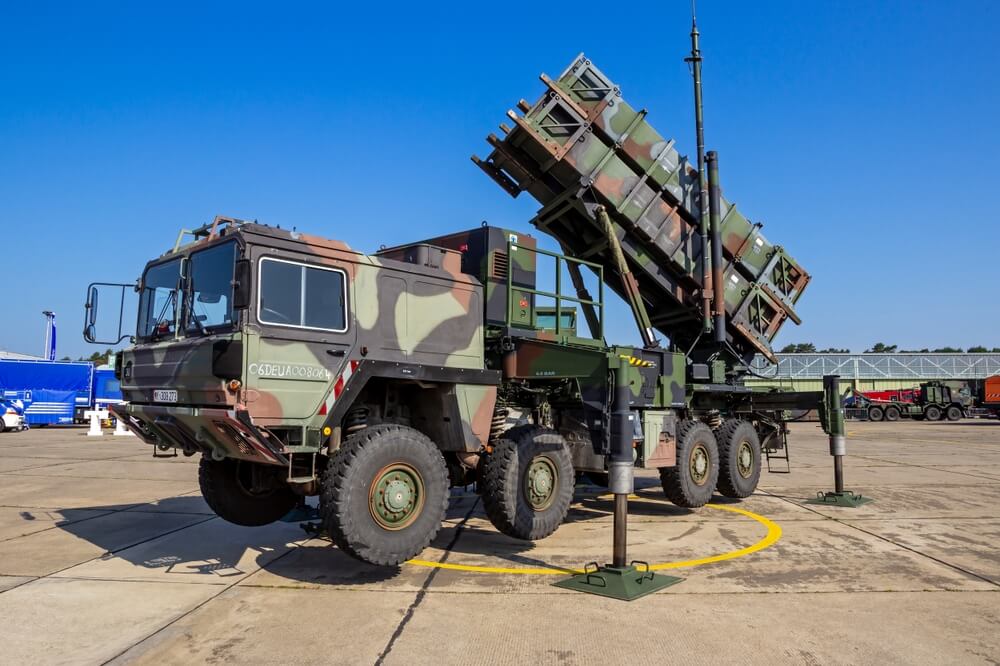 Saudi Arabia is not untouchable, but it is far harder to paralyse than many assume - Patriot System
The difference between a symbolic strike and sustained disabling degradation is significant, and sustaining the latter would require a depth of inventory, coordination, and escalation that Iran and its proxies have not demonstrated at scale.
A low-flying cruise missile or drone entering Saudi airspace does not face a single engagement opportunity but a sequence: early detection, potential mid-layer interception, short-range missile engagement, terminal gun defence, and, if necessary, fighter interception cued directly from the national C5ISR network.
This layered, probability-stacked defence is based on doctrine and experience.
Iran understands that energy infrastructure provides leverage. However, leverage requires capability, and sustained capability requires depth.
No air defence system is impenetrable. However, sustained strategic degradation – repeated disabling of export terminals, prolonged collapse of processing capacity, systemic paralysis – would require a level of technological escalation or saturation that Iran and its proxies have not demonstrated at scale.
Saudi Arabia is not untouchable, but it is far harder to paralyse than many assume.
It has built one of the most comprehensive, integrated, and battle-hardened air defence architectures in the world, and continues to refine it while others exhaust theirs.
Dr Nawaf Obaid is a Senior Research Fellow at the Department of War Studies, King’s College London.
