Germany is this year expected to technically break a three-year streak of economic stagnation but only with a meagre average 1 per cent growth forecast. This is unlikely to put to rest deep-seated worries about what should be the motor of Europe’s economy.
Continued doubts about the country’s economic future are going to weigh heavily on political stability, not only domestically but also throughout the continent, and can be expected to further weaken the EU’s geopolitical position in 2026.
The far-right extremist AfD party, which is supported by the Trump White House per the US’s National Security Strategy, has now built up an extended lead in most polls that is, for the first time, beyond the margin of error.
In a sign that Germany’s relatively new Chancellor, Friedrich Merz, will have to pay more attention and spend more political capital on the economy and domestic affairs, he this week replaced the head of his office.
The move is widely seen as an acknowledgement that Merz, in power since May, has not governed as effectively as had been hoped for, especially on crucial economic and domestic issues.
He admitted as much in his New Year’s message to CDU/CSU and SPD coalition members of the Bundestag, stating that the economic outlook remains “highly critical”. Steps taken thus far had not yet had the desired effect, he wrote.
Merz’s missive came on the heels of some extraordinary criticism at the end of last year from economic analysts and business leaders that would usually be expected to be sympathetic to a conservative Chancellor.
Business leaders warn of stagnation
The head of the leading Ifo economic institute, Clemens Fuest, told the Süddeutsche Zeitung in an interview published in the last week of 2025 that the government was only throwing money at the problem without serious reform.
“This will not go well,” he predicted and warned of further economic stagnation. The Ifo’s Business Climate Index shows that companies are less optimistic again about the first half of 2026, despite huge government spending programmes on infrastructure and defence.
The president of Germany’s employers’ association, Rainer Dülger, has linked the need for deep economic reforms to the dangerous international political landscape. “The foreign policy crisis makes domestic reforms more critical than ever,” he warned.
Merz’s own message to his parliamentarians, is that the junior coalition partner, SPD, is blocking much-needed domestic and economic reform
He criticised the current government’s reforms as not far-reaching enough. While the conservative-social democrat coalition is scrapping Germany’s Bürgergeld unemployment benefits system and replacing it with a much tougher approach, he says this should go much further.
Implied in many of the criticisms, and possibly in Merz’s own message to his parliamentarians, is that the junior coalition partner, SPD, is blocking much-needed domestic and economic reform.
Rather than form a united centrist front with the SPD, Merz, as well as business leaders, appear to be feeding the right-wing narrative that all Germany’s problems stem from an over-indulgent welfare state and a politically correct centre-left consensus.
Welfare cuts risk poverty without boosting growth
The Bürgergeld issue, for example, is a pet peeve of the far-right, fed by the initially generous treatment of refugees from Ukraine.
In an ominous echo from an admittedly much darker past, business leaders and industrialists thankfully co-opted this discontent and made common cause with it to force a much harsher approach.
The idea, as in many other European countries that adopted similar measures, is to ‘make work pay again’ and move the unemployed into employment.
In reality a large part of the people no longer eligible for pay-outs will find themselves permanently forced into poverty, yet off the benefits rolls.
Or, as for example in the Netherlands, permanently under-employed and/or under-paid in low-earning jobs, yet also formally off the unemployment register.
Cuts to the welfare safety net will only further depress much-needed consumer spending
Particularly in Germany at this point, this looks more like an ideological exercise than a sound economic proposition.
While it is true that productivity and competitiveness have lagged and need a boost, this can be more readily explained by decades of under-investment, high energy costs and issues such as a failure to sufficiently digitalise rather than the structure of benefit payments.
On the contrary, economic uncertainty and the rising cost of living have led German consumers to reduce spending and accumulate nearly unprecedented levels of savings. With lay-offs looming into 2026, cuts to the welfare safety net will only further depress much-needed consumer spending.
With only anaemic growth forecast, not the robust numbers that are needed to make the country feel better about itself again, increased economic pressure on the bottom and middle rungs of the economic strata is a godsend for extremist populists on the far-right and far-left.
An AfD surge
Merz’s own inclinations, before tethering himself to the SPD in order to become Chancellor, were firmly towards the more right-than-centre of his own party. He can be expected to use any excuse to forge a much harder right course.
His instincts, just like those of many right-of-centre European politicians, seem to be to adopt far-right talking points in the hope of draining away its support, even while condemning its brand of politics.
This can be seen too in the harsher anti-migration measures his government adopted almost immediately after taking over last year.
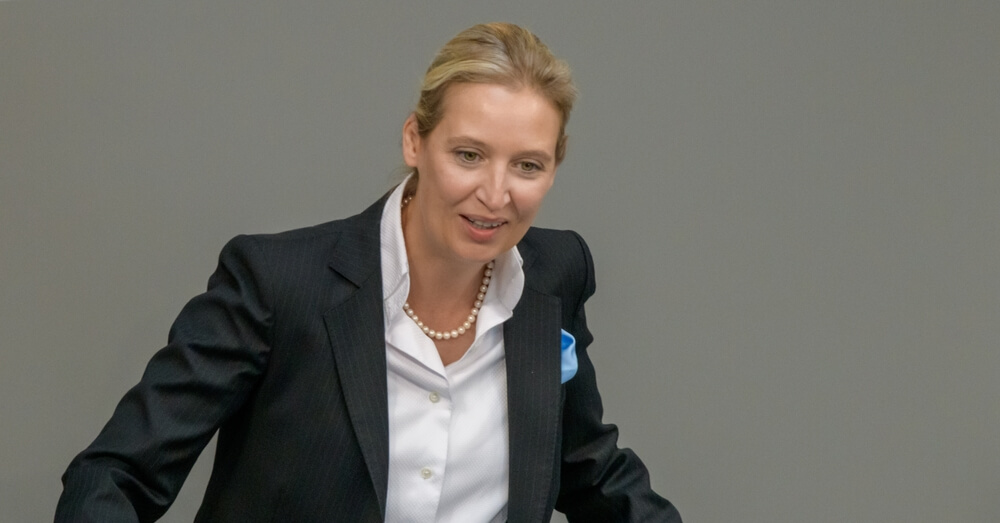 AfD dominance at the federal level is still a way off, mainly because of the sharp division in political preference between Germany’s East and West - Alice Weidel
Yet, in the eight months since then, the AfD has surged in the opinion polls, probably partly legitimised and buoyed by Merz’s implied endorsement of some of its ideas.
A political reckoning is looming later this year, with three elections in former East German states due in September. In two of them, Mecklenburg-Vorpommern and Sachsen-Anhalt, the AfD is slated to become so big that a stable coalition without it will not be possible.
With Germany’s political firewall against the AfD already showing signs of eroding in the East, this might be the time that the CDU will opt to completely let it crumble. It could govern regionally with external AfD support or even join AfD administrations on the Länder level.
If it does so, it’s questionable whether the federal Bundestag coalition with the SPD will survive.
The electoral math could still change. The CDU is ahead in two other state polls in the west of the country set for March that could deliver a bit of a bump.
But what is likely to count most is the general mood and sense of economic well-being, particularly in the East, by September this year.
Given the bleaker than expected outlook and the pain that the new benefits system is likely to cause, there’s very little ground for optimism.
AfD dominance at the federal level is still a way off, mainly because of the sharp division in political preference between Germany’s East and West. But none of this will make Germany, and hence Europe, more stable in the coming year.
