On the night between 6 and 7 January, an operation was conducted in the North Atlantic which, while technical in execution, marked a shift in the entire sanction regime.
The American authorities, acting on a federal court order, took control of the tanker Marinera, formerly known as Bella 1.
The operation was led by the US Coast Guard, with logistical and operational support from US military structures. The key fact, confirmed by several independent sources, is that the ship was empty at the time of seizure. The target was not the cargo but the tanker itself as a transport capacity.
Almost simultaneously, in the Caribbean basin, another tanker, the Sophia, was seized as part of the same broader action targeting Venezuelan oil flows under US sanctions.
In this case, the American authorities stated that the ship’s flag status was disputed, meaning the vessel was treated as a ship without a valid flag.
The two operations, separated geographically but connected by timing and legal framework, clearly indicate that these are not isolated incidents but rather a change in the way sanctions are implemented.
Until now, the dominant pattern of sanctions has been financial: blocking accounts, prohibiting transactions, and pressuring banks and intermediaries.
Such a model allows for adaptation – trade is diverted, documents are adjusted, ownership changes, and flows persist.
The seizure of the Marinera demonstrates a transition to a second phase, in which sanctions are enforced through physical control of the means of trade.
When a ship is seized or its status rendered legally and operationally unsustainable, it is not just a single shipment that is stopped, but an entire network is disrupted.
Grey zone of sanctioned trade
Marinera's case gains significance because of its trajectory. In December, the vessel was identified in the Caribbean during a US operation monitoring tankers linked to sanctioned Venezuelan oil flows.
According to US authorities, when the Coast Guard attempted a standard boarding for inspection, the ship did not comply with instructions and left the area, after which it lost contact with operational teams and began a transatlantic voyage.
This initiated a multi-week transatlantic pursuit. During this period, Bella 1 changed its identity, was renamed Marinera, and appeared under the Russian flag.
This move is not a technicality but a central element of the sanction circumvention strategy.
A ship's flag is not merely symbolic; it determines the legal regime, jurisdiction, registration, inspection procedures, treatment in ports, and insurance arrangements.
This message was directed at ports, insurers, shipping companies, and all intermediaries enabling the grey zone of sanctioned trade
Changing the flag, particularly to a major power's, aims to increase the political complexity and cost of any subsequent intervention.
In practice, this means that imposing sanctions on such a vessel no longer appears to be a technical measure but rather an action with potential international consequences.
The American response was carefully calibrated. Instead of showing force, the judicial basis was emphasised. A federal order, clearly highlighted in official announcements and media reports, formed the foundation of the entire operation.
In doing so, Washington signalled that it was acting within its own legal system and treating the seizure as law enforcement, not an impromptu naval action.
This message was not intended solely for Moscow; it was directed at ports, insurers, shipping companies, and all intermediaries enabling the grey zone of sanctioned trade.
How sanctions target networks
The phrase that the ship is "connected to Venezuelan oil" should also be understood in this context. It does not necessarily indicate the presence of cargo at the time of seizure.
In Marinera's case, the tanks were confirmed to be empty. Connectivity refers to the vessel's role in the network, previous routes, behavioural patterns, and its function as a logistical asset in the sanctions circumvention system. In modern sanctions regimes, logistics often carry more weight than individual shipments.
Maintaining such networks depends on a combination of legal loopholes and technical manipulation. One key element is AIS (Automatic Identification System), a standard tool for navigation and safety.
Under normal conditions, AIS enables transparent tracking of movements. In the grey zone, turning it off, manipulating the signal, or falsifying the route become methods of concealment.
When combined with changes to the ship's name, flag, and ownership structure, this creates a system that can operate alongside formal bans until sanctions are operationally enforced.
With the confiscation of Sophia, this operational aspect expands. The Caribbean operation demonstrates that pressure is not limited to a single route or vessel.
The American side demonstrated determination, strictly adhering to the legal framework
It suggests an effort to cut off alternative routes and increase uncertainty for the entire network. In this respect, the geographical spread of actions is as important as the seizure itself.
The European dimension is particularly significant here. The operation to seize the Marinera was conducted in the North Atlantic, in an area directly relevant to European security and surveillance of maritime routes.
Sources indicate logistical and intelligence cooperation with British agencies. If this cooperation is fully confirmed, it means that Europe is not merely a passive observer of the American enforcement of sanctions but an active participant with its own responsibilities and risks.
Enforcing sanctions at sea has political and security effects that extend beyond national borders.
The most sensitive aspect of the entire episode concerns Russia. Allegations have surfaced in the public domain about the presence of Russian military vessels, including a submarine, in the wider area of the operation.
Even without exaggeration, the mere fact that military elements are present in the background of sanctions enforcement highlights the approach to the grey zone, where any misstep could potentially be destabilising.
In this instance, there was no confrontation. The American side demonstrated determination, strictly adhering to the legal framework. The Russian side, by flying its flag, tested how far it could go in raising the cost of interception.
When ships, not oil, become the target
A realistic forecast arises from this dynamic. The most likely outcome is not open naval conflict but accelerated adaptation by both sides.
Networks transporting sanctioned goods will continue to change identities, flags, and routes, relying on legal and technical manoeuvres.
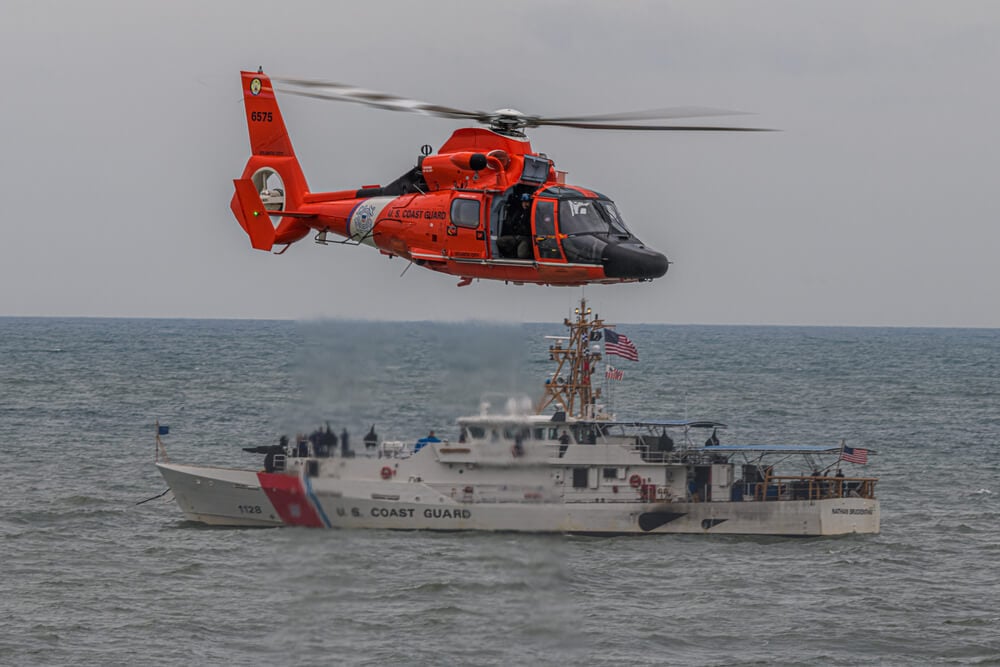 States enforcing sanctions will increase the use of court orders, targeted seizures, and international coordination - US Coast Guard
States enforcing sanctions will increase the use of court orders, targeted seizures, and international coordination, with particular emphasis on intermediaries, security, and port access.
This is the area where risk can be most effectively heightened.
In this case, the Russian flag did not prevent the seizure and thus revealed its real limitation. It can delay action and increase the political cost, but it does not guarantee the protection of vessels involved in sanctioned activities.
This fact alters the calculation: ships, insurance, and port access become vulnerable regardless of the formal flag, and the space for safely circumventing sanctions narrows.
The Marinera, although empty, therefore carries more weight than many full tankers that previously operated undetected.
It demonstrates that the focus has shifted from individual shipments to the flows themselves and the assets that enable them. The seizure of the Sophia confirms that this approach is not limited to a single case.
The consequence of such seizures is straightforward and measurable. Trade in energy products under sanctions no longer depends solely on the existence of a buyer and a price but on whether there is a ship that can sail, be insured, and enter a port without the risk of confiscation.
When these conditions are absent, sanctions cease to be merely a political message and become a mechanism that physically disrupts flows.
