This November saw the largest monthly increase in silver prices in fourteen years. The spot price exceeded $56 per troy ounce (31.1 grams) on 28 November; it peaked at $56.86 before stabilising between $56.45 and $56.60.
Since the start of the year, the price has risen by 97 per cent, far outpacing gold (54 per cent) and most other raw materials. This is not short-term speculation; it is the result of a structural deficit now in its fifth consecutive year and rapidly worsening.
Silver now stands apart from other precious metals, as half of its demand comes from industry. According to the World Silver Survey 2025, published by the Silver Institute in April, industrial consumption reached a record 680.5 million ounces in 2024 and will exceed 700 million ounces for the first time in 2025.
Two key sectors are driving this growth: photovoltaic industry and electric vehicles.
The lowest inventories in a decade
The photovoltaic industry used 232 million ounces of silver in 2024, four times more than in 2015. Each gigawatt of installed capacity requires between 18 and 22 tonnes of silver paste; a global installation of about 600 gigawatts in 2025 will require an additional 11,000–13,000 tonnes for panels alone.
Electric vehicles use between 25 and 50 grams of silver per unit, significantly more than vehicles with internal combustion engines. Sales of nearly 20 million electric vehicles in 2025 will add another 90 million ounces of demand.
On the supply side, the outlook is much bleaker. Mining production in 2024 was only 819.7 million ounces, with growth of a mere 0.9 per cent.
The cumulative shortfall from 2021 to the end of 2025 is approaching 800 million ounces
Over 70 per cent of silver is produced as a by-product from copper, lead, and zinc mines; when the prices of those metals fall or the mines close, silver production automatically declines.
Recycling reached 193.9 million ounces, but this is insufficient to close the gap. A total demand of 1.16 billion ounces created a deficit of 149 million ounces in 2024 – the fifth consecutive annual deficit.
The cumulative shortfall from 2021 to the end of 2025 is approaching 800 million ounces, nearly equivalent to a year of global mining production.
Inventories in London (LBMA) have fallen by a third since June 2022, from 31,023 tonnes to 22,126 tonnes by March 2025.
The Shanghai Futures Exchange is recording the lowest inventories in a decade. The market has become extremely sensitive to any disruption.
Trade wars adding to the uncertainty
The greatest risks are in Latin America and Africa. Peru and Mexico together account for about 40 per cent of global production. In Peru, protests and mine blockades in 2025 have already reduced exports by 5 per cent. Mexico is under pressure from new resource nationalism laws.
In Zambia and the Democratic Republic of the Congo, floods and droughts regularly damage infrastructure; the World Bank estimates that climate factors could reduce mining production in sub-Saharan Africa by 20 per cent by 2030. Resource nationalism in Chile and Bolivia further slows new projects.
China, which refines half of the world’s silver, relies on importing ore from these same regions. Any disruption in supply from Peru or Zambia directly affects prices in Shanghai and London.
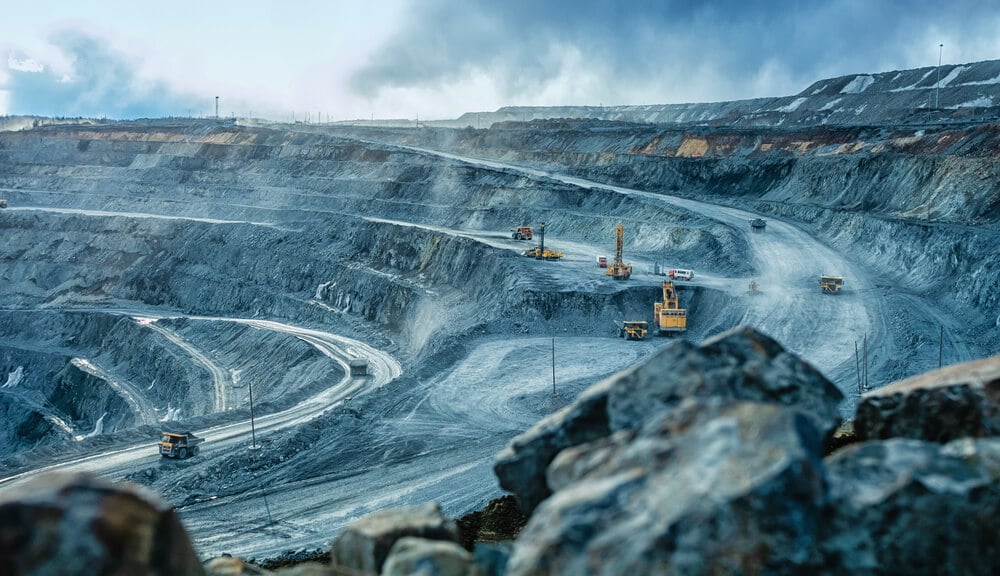 New silver mines require seven to ten years of development, and most projects in the pipeline are still copper or zinc by-products
Meanwhile, trade wars between the US and China, with threats of 100 per cent tariffs on certain goods, are adding to the uncertainty.
Silver was added to the US critical minerals list in November, raising the possibility of export restrictions or domestic production subsidies.
In the short term, expectations of Federal Reserve interest rate cuts are certainly contributing to price increases. However, the long-term driver is a physical deficit that cannot be closed quickly.
New silver mines require seven to ten years of development, and most projects in the pipeline are still copper or zinc by-products. Recycling is increasing, but not quickly enough to compensate for the 150–200 million ounce annual shortfall.
The “devil’s metal” dictates the pace of change
Therefore, the price of silver in the coming years will not depend on speculative capital flows, but on how quickly (and at what cost) the world can supply an additional 150–200 million ounces per year for solar panels, electric vehicles, and the modernisation of power grids.
If disruptions in Latin America and Africa persist and climate risks materialise, the average price in 2026 could easily exceed $70 per ounce and, in extreme scenarios, reach $80–90.
Silver has become crucial in the green transition supply chain. As long as demand for solar power and electromobility grows faster than mining production, the “devil’s metal” will continue to dictate the pace of change and drive up the cost of every kilowatt of clean energy installed worldwide.
