The biggest surprise of the past year is not that global asset prices have risen so sharply but that investors have shown so little concern about risk, apart from a brief scare following US President Donald Trump’s “Liberation Day” tariff announcement in April. The question now is whether 2026 will break the spell.
One might expect that, after three years of extraordinary returns, markets would start worrying about the inevitable crash that follows periods of sustained euphoria.
AI may be full of promise (at least for firms, if not always for workers), but the long history of transformative technologies – from railroads and internal combustion engines to the internet – has been marked by booms and busts.
Early entrants often collapse spectacularly, only to be replaced later by second-generation firms that “get it right.”
And while a few companies may come to dominate, as IBM once did in computing, that does little to reduce uncertainty, since longevity is never guaranteed.
As investors struggle to assess how AI will affect growth and corporate profits, the odds of a global stock-market crash in the next few years appear uncomfortably high.
Does that mean it is time to sell? Not necessarily, as stock prices can continue to rise long after warning signs start flashing red.
That is what happened in 1996, when then-Federal Reserve Chair Alan Greenspan – drawing on the work of future Nobel laureate Robert J. Shiller – warned of the stock market’s “irrational exuberance.”
Greenspan and Shiller were ultimately proven right, but their timing was off: the dot-com bubble did not burst until March 2000, after stocks had more than doubled.
The pressures on the system
The same thing could easily happen now. Yet the pressures on the system are becoming increasingly harder to ignore as we head into 2026, starting with the geopolitical uncertainty looming over the global economy.
Even if Ukraine and Russia reach a ceasefire agreement, Europe’s eastern frontier will probably continue to simmer for years.
Meanwhile, China is expanding its naval fleet at a breathtaking pace, and no matter how many drones the United States plans to buy – one million, if recent reports are to be believed – China will almost certainly produce more, and better, ones.
Trump's return to the White House has been deeply disruptive
Then there is Trump, whose return to the White House has been deeply disruptive.
Health permitting, he is likely to be just as ambitious – or heavy-handed, depending on who you ask – in 2026 as he was in 2025.
Trump’s predecessor, Joe Biden, also presented himself as a transformative president in the mold of Franklin Roosevelt, but his macroeconomic policies were largely predictable, aside from his perplexing open-borders approach.
The policy debate during his term centered on whether his agenda would boost GDP growth or drive up consumer prices.
Extended period of policy volatility
With Trump, by contrast, each day brings a new surprise, setting the stage for an extended period of policy volatility.
Adding to the uncertainty is the end of Jerome Powell’s term as Fed chair. Trump has made it abundantly clear that he expects Powell’s successor to cut interest rates, even at the risk of stoking inflation.
Trying to capitalize on volatility turned out to be a losing proposition in 2025, as many investment products that claimed to offer insurance against sharp market swings failed to deliver.
The coming year is shaping up to be far riskier, as global indebtedness and equity valuations are increasingly out of line with economic fundamentals.
The negative impact of Trump’s tariff and immigration policies will be felt more acutely in 2026
Moreover, the negative impact of Trump’s tariff and immigration policies will be felt more acutely in 2026.
Structural reforms typically take years to bear fruit, which is why politicians often avoid them despite the long-term payoff.
But this reality cuts both ways: dismantling or undermining key reforms can inflict serious long-term damage, even if the short-term effects seem benign.
As markets begin to sense that growth is slowing, possibly accompanied by rising inflation, today’s euphoria could quickly fade.
Moment of truth
The European Union faces its own moment of truth in 2026. The best-case scenario would be a decisive move toward a fiscal union, at least among a subset of member states.
Failing that, any serious reform will require major treaty changes, beginning with the elimination of the unanimity rule that paralyzes the bloc’s decision-making.
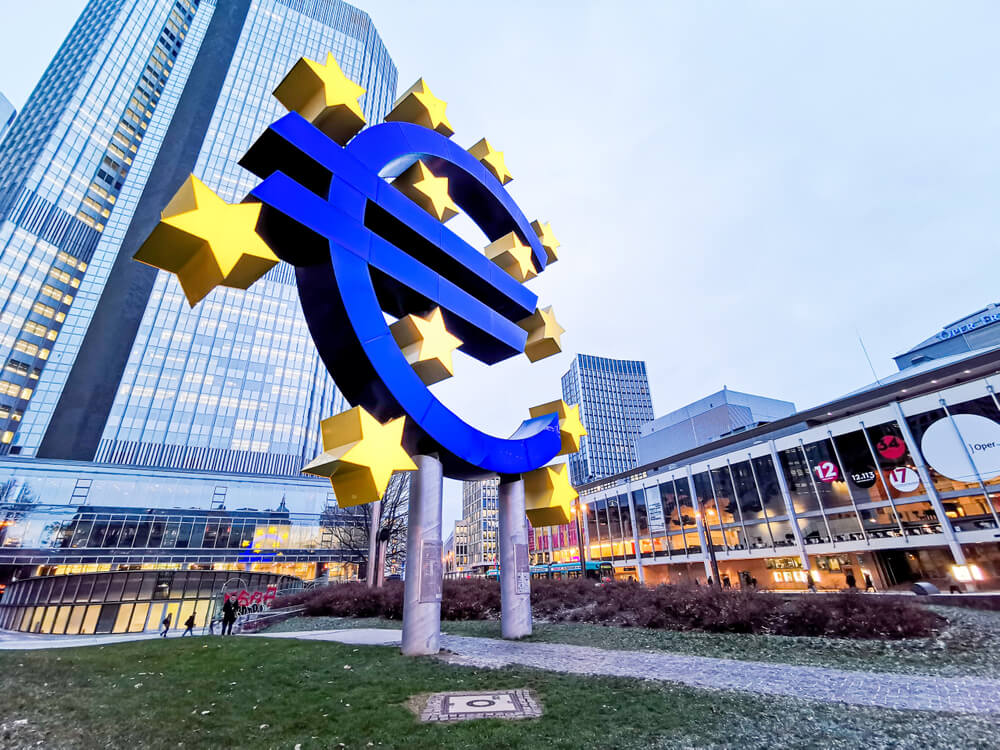 Should Europe finally get its geopolitical act together, the euro could play a much larger role in global finance
Imagine if the US could pass laws or wage war only with the unanimous consent of California, Mississippi, and Texas.
As I argue in my recent book Our Dollar, Your Problem, should Europe finally get its geopolitical act together, the euro could play a much larger role in global finance.
Japan is another wildcard. No one knows how far the Bank of Japan will go in raising interest rates or how quickly the unwinding of the yen carry trade – whereby investors borrow in yen to invest in higher-yielding assets, fueling the surge in global prices – will unfold.
One potential stabilizing factor is the likely depreciation of the dollar, which remains substantially overvalued despite modest declines against some of America’s main trading partners in 2025.
A weaker dollar tends to support global stability by making dollar-priced exports cheaper relative to domestic alternatives.
Still, there’s a high likelihood that investors will wake up on New Year’s Day to a far more volatile global economy than they experienced in 2025.
And when that realization suddenly hits, don’t be surprised if the instability feeds on itself.
Kenneth Rogoff, a former chief economist of the International Monetary Fund, is Professor of Economics and Public Policy at Harvard University and the recipient of the 2011 Deutsche Bank Prize in Financial Economic.
