A young Russian scientist is dead. Nearly 200 people were placed under observation or quarantine. And at the center of the story is an institute that studies one of humanity’s oldest killers: plague.
We still do not know exactly what happened at Russia’s Irkutsk Anti-Plague Research Institute.
Moscow says the 28-year-old laboratory worker died of pneumonia of unknown origin and denies any link to the pathogens she worked with. Other reports have raised the possibility of accidental laboratory exposure.
But the incident should make us uncomfortable for a larger reason. It is a reminder that more than half a century after the world prohibited biological weapons, mankind continues to live alongside technologies capable of killing on an almost unimaginable scale – and we are now adding artificial intelligence to the equation. It is a dangerous convergence of incredible risks.
Perhaps this proves to be exactly what Moscow says it is: an unfortunate death unrelated to the pathogens being studied inside the institute.
But Russia and the USSR have a history of concealing biological and chemical weapons testing, documented by their own defectors like Ken Alibek (who reported on the USSR’s continuation of its bio-weapons programs decades after signing a treaty on the same in 1972).
Why, more than half a century after the world agreed to prohibit biological weapons, are countries like Russia still maintaining extraordinarily sophisticated capabilities involving some of mankind’s most dangerous pathogens?
Why doesn’t it get the attention it deserves till it results in disaster? And why are we adding yet another potentially civilization-changing technology – artificial intelligence – to an already terrifying arsenal of ways human beings have invented to destroy one another?
Russia’s history gives us reason to ask, and both its and China’s incidents and revelations should give us all pause.
The combined threat of biological, nuclear, and potential AI weapons systems is a triple threat that should worry both our allies and our adversaries. There are no easy solutions, however.
The history of the Soviet biological-weapons program
To understand the Irkutsk incident and why it matters, it helps to know some of the history of the Soviet biological-weapons program.
This was not a minor Cold War experiment; their effort was enormous. Even after Moscow signed the 1972 Biological Weapons Convention, the USSR continued a clandestine offensive program involving the military, intelligence agencies, ministries, and the sprawling Biopreparat network.
At its height, the Soviet bio-weapons bureaucracy encompassed dozens of research, development, and production facilities.
Specialists worked with deadly agents including anthrax, plague, tularemia, and other pathogens.
In 1979, an accidental release of anthrax spores from a military biological facility at Sverdlovsk killed scores of people
We know what secrecy around such programs can produce. In 1979, an accidental release of anthrax spores from a military biological facility at Sverdlovsk – not unlike the recent incident – killed scores of people.
Moscow denied for years that the accident had anything to do with biological weapons.
The Soviet Union disappeared. The concern over bioweapons did not, nor – as we have seen with Ukraine – has aggression ended with the USSR. Putin has taken Soviet and Cold War brinksmanship to a new level.
The U.S. State Department’s 2024 arms-control compliance report was unusually explicit about Russian BW: Washington assesses that the Soviet program was “absorbed, not dismantled” by the Russian Federation and that it “has continued and evolved.”
The report also points to the modernization of Soviet-era biological infrastructure and says Russia has never provided adequate evidence that prohibited elements of its inherited program were destroyed or converted to peaceful purposes.
That does not mean the Irkutsk institute is a biological-weapons installation, nor does the current death establish that a weaponized pathogen escaped.
Those are very different claims, and we should resist making them without evidence.
BW have a much higher “kill rate” than nuclear weapons
What it does mean is that opacity matters.
It matters especially because biological weapons possess a characteristic nuclear weapons do not: properly designed pathogens can multiply themselves.
I took an awareness and training course once as a young CIA officer to better understand these threats, and was astounded to learn that BW have a much higher “kill rate” than even nuclear weapons.
A nuclear weapon destroys what lies within its blast and thermal effects, with radiation and – in a wider nuclear exchange – potential climatic consequences extending much farther. A contagious biological agent can move from victim to victim, cross borders invisibly, mutate, overwhelm medical systems, and potentially continue spreading long after the state that released it has lost control.
Plague itself illustrates the danger. Pneumonic plague is treatable with antibiotics when diagnosed quickly. Still, the WHO says untreated pneumonic plague can be fatal within 18 to 24 hours and can spread from person to person through the air.
That combination – lethality, transmissibility, and invisibility – is what has always made biological warfare uniquely horrifying
That combination – lethality, transmissibility, and invisibility – is what has always made biological warfare uniquely horrifying.
There is another grim military attraction. Biological weapons can kill human beings while leaving roads, factories, ports, energy systems and much of an adversary’s physical infrastructure intact.
For an aggressor interested not simply in destruction but conquest, coercion, or strategic paralysis, that distinction matters.
Which brings us to nuclear weapons.
Nuclear deterrence
For eight decades, nuclear deterrence has rested on one of history’s strangest bargains: civilization preserves itself by convincing adversaries that attempts to destroy it will result in their own destruction. So far, it has worked.
But “so far” is doing a great deal of work in that sentence. Putin has repeatedly threatened to use nuclear weapons whenever the Ukraine War turns in a direction that does not go his way.
Too often, Europe and NATO have worried more about what Putin threatens to do than about the consequences he should face for escalation. This leads to more confrontation rather than effective deterrence.
One 2022 study estimated that a full-scale U.S.-Russian nuclear war could ultimately lead to famine severe enough to kill more than five billion people
A major U.S.-Russian nuclear exchange would not simply mean horrifying casualties in Moscow, Washington, and other targeted cities.
The “nuclear winter” scientific model suggests it could dramatically reduce global temperatures and agricultural production.
One 2022 study estimated that a full-scale U.S.-Russian nuclear war could ultimately lead to famine severe enough to kill more than five billion people. This is not new, but the convergence with AI and other threats is.
Now add AI to the equation, and it represents more than warfare in any traditional sense. It is civilization gambling with extinction.
Enter the age of artificial intelligence
AI is different from nuclear and biological weapons because it is not inherently a weapon. It may produce extraordinary advances in medicine, science, productivity, and human welfare.
But increasingly capable AI can also accelerate cyberattacks, offer tempting solutions for autonomous weapons like drones, and even, potentially, affect military decision-making.
The danger is not just some science-fiction machines suddenly deciding to exterminate humanity. The more immediate danger may be us.
Imagine an international crisis in which AI-generated intelligence falsely indicates an incoming attack
Imagine an international crisis in which AI-generated intelligence falsely indicates an incoming attack.
Or autonomous systems respond to one another at machine speed. Or generative biological tools make expertise once limited to sophisticated state laboratories increasingly accessible or tailored to specific countries, food chains, or cities.
The problem is no longer any single weapon. It is convergence.
And history should make us humble about our ability to control what we create.
COVID-19 should reinforce that humility. The precise origin of SARS-CoV-2 remains unresolved. The WHO concluded in 2025 that the weight of available scientific evidence favors zoonotic spillover, while also stating that a laboratory incident could not be excluded because China had not provided all the information requested about Wuhan laboratories.
The CIA separately assessed, with low confidence (as was later released publicly in the U.S.), that a research-related origin was more likely than a natural one.
Whatever ultimately caused COVID, the lesson is the same: pathogens do not respect borders, secrecy makes crises more dangerous, and governments cannot assume that events occurring inside their own laboratories will remain their own problem.
Deterrence has to be credible, not rhetorical
So what should we do?
The answer cannot be unilateral disarmament or wishful thinking. The United States and NATO face adversaries that are expanding their military capabilities, violating agreements, and demonstrating through Russia’s war against Ukraine that military force remains central to statecraft.
Deterrence, therefore, has to be credible, not rhetorical. Weak deterrence, as we have shown in Europe in response to recent Russian hybrid attacks, invites miscalculation.
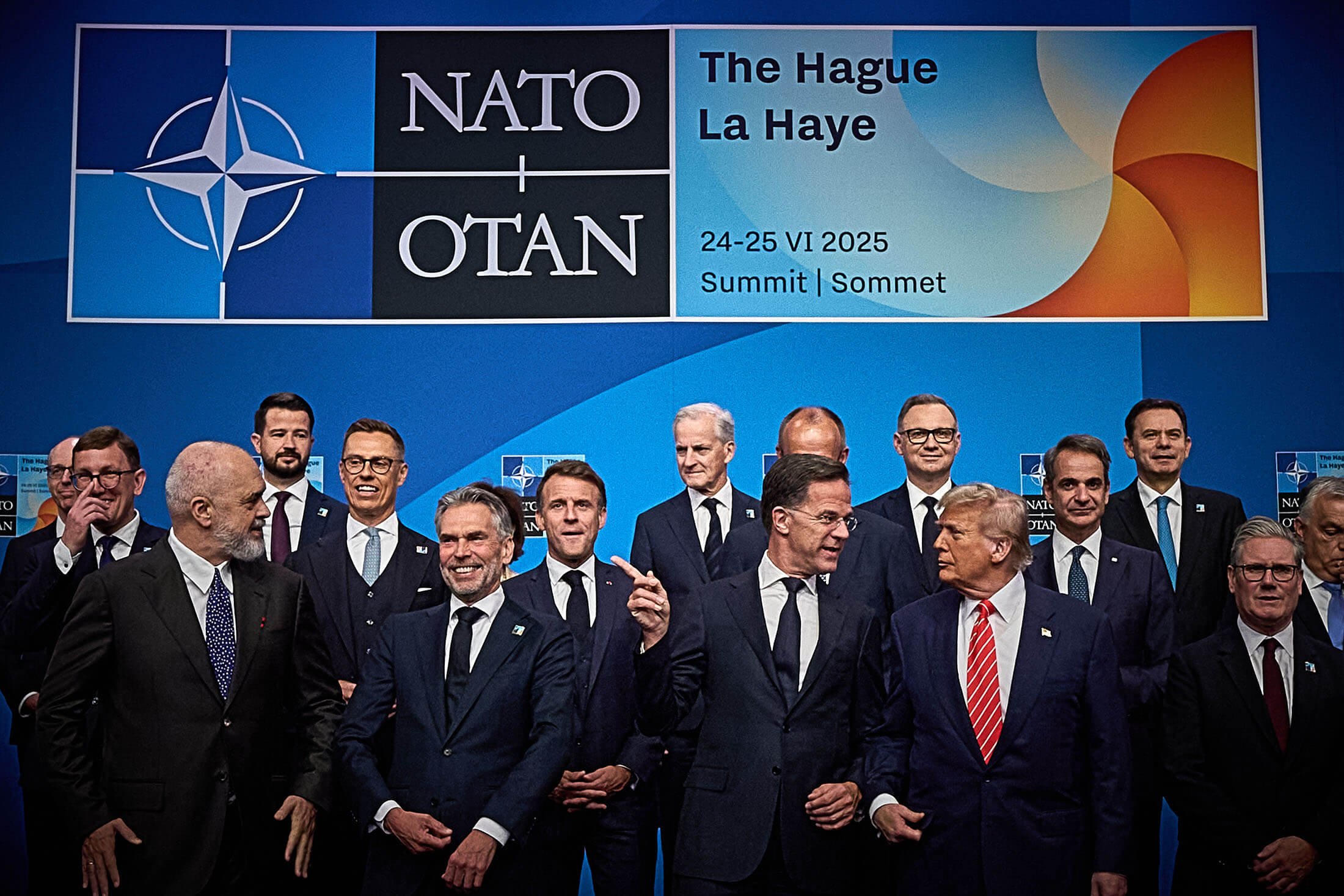 Weak deterrence, as we have shown in Europe in response to recent Russian hybrid attacks, invites miscalculation
Strong deterrence is intended to prevent the war whose consequences we fear. Strength and restraint are not opposites.
The West should combine stronger conventional deterrence with renewed pressure for transparency and verification surrounding biological programs, serious crisis-communication mechanisms among nuclear powers, and international guardrails on the military applications of advanced AI.
Above all, the multiple – and increasingly convergent – wars already underway should remind us of something strategists sometimes forget: conflicts are easier to start than to contain.
The twentieth century taught us how to split the atom and weaponize disease.
The twenty-first is teaching us to build machines with AI, capable of amplifying almost every instrument of human power, including the most destructive ones.
Our problem is no longer whether mankind is clever enough to create technologies capable of changing civilization. We plainly are. The question is whether we will be wise enough to keep them from ending it.
Sean Wiswesser is a former CIA Senior Operations Officer and an expert on Russian Intelligence, Espionage, and Defense Issues.
