In March 2023, three banks – US-based Silicon Valley Bank and Signature Bank, as well as the British subsidiary of Silicon Valley Bank – lost between a fifth and almost a third of their deposits in just one day.
The Financial Stability Board (FSB) found that these outflows were two to three times faster than the worst one-day outflows in previous banking crises it analysed.
Its new report, published on 9 October, highlights serious shortcomings in countries’ preparations to provide emergency funding to systemically important banks in the event of their failure.
Of the 19 assessed financial systems, four fully meet the international standard for public financing of bank rehabilitation, five mostly meet it, eight have serious deficiencies and two do not meet it.
The United States, United Kingdom, Japan and Hong Kong are fully compliant. Among the systems with serious deficiencies is the Banking Union of the European Union, which includes the banking system of the eurozone, as well as those of Switzerland and China, along with Australia, Brazil, Indonesia, Saudi Arabia and Turkey. The lowest scores were given to India and Argentina.
The FSB examined whether states had established, in advance, a way to make available, at short notice, the funds needed to keep a large bank on the verge of collapse operating.
Such an intervention is led by competent bank resolution authorities, which decide how losses will be distributed among shareholders and creditors, and whether the business will be taken over by another bank.
The report did not address the financial condition of individual banks. The issue of providing dollars and other foreign currencies remained outside its scope, although the FSB warns that this is where serious problems can arise.
A state can therefore have an elaborate plan for safeguarding key banking services but at the same time lack a solution for how to provide the bank in crisis, urgently, with dollars or other currencies needed to meet its obligations to clients and creditors.
The basic standard was adopted in 2011, so the current gaps reflect 15 years of partial implementation.
The highest-rated systems have achieved compliance in a variety of ways. HM Treasury has committed in advance to cover possible losses of the central bank on such lending, Japan allows financing with state guarantees of up to 35 trillion yen (about 221 billion US dollars), and Hong Kong has long practised making payments to the bank on the same working day.
Readiness therefore includes both legal authorisation and a tested procedure by which the money reaches the bank.
Paying out deposits requires immediate liquidity
US Silicon Valley Bank, a bank closely linked to technology companies, lost more than $40 billion in deposits on 9 March 2023.
According to a follow-up report from the US central bank, management expected requests for a further $100 billion the next day.
Such speed leaves very little time to find a buyer, assess the assets the bank can pledge, or approve a government guarantee.
Writing down the value of shares and converting part of the debt into equity can cover the bank’s losses, but this does not provide the cash needed to pay deposits and meet day-to-day payment obligations.
In times of crisis, other banks often refuse to lend, so pre-arranged public financing can enable the business to continue while recovery is under way
In times of crisis, other banks often refuse to lend, so pre-arranged public financing can enable the business to continue while recovery is under way.
At the same time, it must be clear how the borrowed funds will be repaid and who will bear any losses.
Another option is to sell the bank to a financially strong buyer. This is exactly what happened in March 2023, when HSBC bought the British subsidiary of Silicon Valley Bank for one pound over a weekend.
By Monday, customers could use their accounts and deposits as normal, and the British government announced that the transaction did not require taxpayers’ money.
However, such a solution depends on there being a buyer with the necessary funds who is ready to take over the bank’s operations immediately.
When a crisis affects several banks at the same time, finding such a buyer becomes much more difficult.
Swiss law awaits an equity agreement
During the crisis at Credit Suisse, a large Swiss bank that was subsequently taken over by the Swiss group UBS, the Swiss National Bank provided support totalling 168 billion francs in francs, dollars and euros.
Of that amount, 120 billion relied on an emergency decree of the federal government.
This sum comprised 50 billion in additional liquidity assistance and 70 billion in federally guaranteed loans.
More than two-thirds of the intervention therefore required an extraordinary legal basis.
State-guaranteed loans and additional aid were repaid by the end of 2023, and the remaining 38 billion in regular emergency aid was repaid in the first half of 2024. Successful repayment protected public funds.
The scale of the intervention shows how much risk the state had to assume to enable the takeover of the bank and prevent any interruption to its operations.
The government submitted a permanent law on state liquidity support to parliament in September 2023.
Until regulations are adopted, Switzerland could once again have to rely on emergency powers in the event of another major banking crisis, as in 2023
In February 2025, the upper house committee unanimously proposed postponing the debate until the government submits a broader package of rules for systemically important banks, including new rules on resolution and capital, which was then expected by the end of 2026.
The committee linked the conditions for state aid to the capital that the bank must provide in advance, because this determines how much public finances would be exposed in the next crisis.
On 23 September 2026, the upper house of the Swiss parliament adopted a proposal requiring the parent bank in Switzerland to provide its own capital amounting to 90 per cent of the value of its investments in the banks it owns abroad.
The government had requested 100 per cent coverage, while the majority of the parliamentary committee had proposed less stringent conditions.
The proposal now needs to be considered by the lower house of parliament. Separately, the debate on the law governing emergency financial aid to banks has been postponed until the last quarter of 2026.
Until these regulations are adopted, Switzerland could once again have to rely on emergency powers in the event of another major banking crisis, as in 2023.
The European fund awaits ratification from Rome
The European Banking Union has a Single Resolution Fund, financed by the banks. At the end of 2025, it contained more than 81 billion euros.
The FSB credits the European system with strong operational readiness and clear loss-recovery rules, while noting a serious lack of capacity to increase funding for a major intervention. Authorities can act quickly, but the money at their disposal is limited.
Agreed credit support from the European Stability Mechanism (ESM), the eurozone’s joint financial institution, depends on ratification of the amended treaty.
Italy is the only member that has not ratified it, following the decision of the lower house of the Italian parliament in December 2023 to refuse ratification. Bulgaria joined the mechanism in June 2026 as its 21st member and accepted the amended treaty on entry.
Additional protection, agreed for the entire banking union, therefore depends on the decision of a single country.
Pedro Machado, a member of the Supervisory Board of the European Central Bank, warned on 1 October that even this support would not cover all needs in a severe crisis.
A special European mechanism for loans to banks during rehabilitation would require a state guarantee, which does not exist at the European level
A special European mechanism for loans to banks during rehabilitation would require a state guarantee, which does not exist at the European level.
While joint risk coverage remains incomplete, responsibility for emergency financing rests largely with national central banks and their governments.
This also makes it difficult to transfer money between banks that operate in different countries but belong to the same banking group.
Machado cites the European Central Bank’s assessment that, owing to national regulations, around 230 billion euros in assets that can be quickly converted into cash are effectively kept in subsidiary banks abroad.
Regulators require each of these banks to hold sufficient funds for its own needs, so the parent bank cannot freely use them when another bank in the same group urgently needs money.
States insist on this because there is no clear agreement on who would bear the costs if their bank needed financial support.
The bill for failed banks was passed on to their competitors
The United States received the highest rating from the FSB because it has a legal mechanism that allows the state, in the event of the failure of a large financial company, to provide money urgently through a loan from the Treasury and later recover any losses from the financial sector.
However, during the banking crisis in March 2023, that mechanism was not used.
Instead, after the collapse of Silicon Valley Bank and Signature Bank, US authorities invoked special powers that allowed them to protect all deposits, including amounts above the legally insured limit.
In practice, therefore, a different solution was applied from the one on which the FSB’s highest rating is based.
The US Federal Deposit Insurance Corporation (FDIC) decided to recover the cost of this intervention from the big banks.
It was initially estimated at 16.3 billion dollars and by the end of September 2025 had risen to about 16.7 billion.
The largest share of the costs is borne by banks with large volumes of uninsured deposits
A special contribution was calculated according to the amount of uninsured deposits held by each banking group, with the first five billion dollars excluded from the calculation.
Banks whose total assets were less than five billion dollars were completely exempt from payment.
By the end of September 2025, 12.7 billion dollars had been raised. If the total amount collected exceeds the actual cost, the surplus will be returned to the banks through a reduction in future regular contributions. If the money is insufficient, an additional charge will follow.
In this way, the largest share of the costs is borne by banks with large volumes of uninsured deposits.
These banks were particularly exposed to the risk of the March 2023 panic spreading to their clients, who could withdraw large sums of money as soon as they began to doubt the safety of their deposits.
Dollars remain outside the readiness rating
During the Credit Suisse crisis in 2023, Switzerland needed a large amount of dollars to support the bank.
The Swiss National Bank announced that it had provided part of this money through a special programme of the US central bank (FIMA), which allows foreign central banks to borrow dollars temporarily by providing US government bonds as collateral.
During the weeks of the Credit Suisse crisis, foreign central banks obtained a record total of $60 billion in this way.
This case showed how much a bailout for a large bank can depend on access to dollars provided by the US central bank.
The US Federal Reserve has standing agreements on mutual currency exchange with the central banks of Canada, the United Kingdom, Japan and Switzerland, as well as with the European Central Bank.
These agreements allow the central banks concerned to obtain dollars quickly in a crisis and make them available to their banks.
During the pandemic, in March 2020, the Federal Reserve temporarily expanded this facility to nine additional countries, including Australia, Brazil, South Korea, Mexico and Singapore.
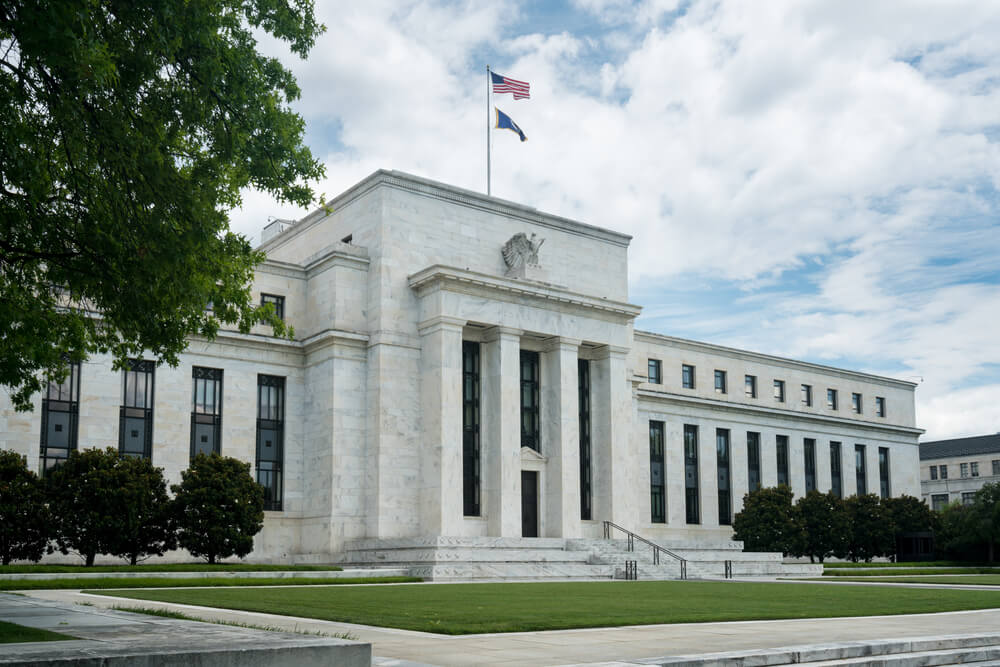 Among the ten banking systems that the FSB found to have serious deficiencies, only the eurozone and Switzerland have standing agreements with the Federal Reserve
China, India, Indonesia, Saudi Arabia, Turkey and Argentina were not included in that expansion either.
Their central banks therefore have to rely more on their own foreign-exchange reserves and other sources of dollars, including the ability to borrow against US government bonds, if they have access to the FIMA programme.
Among the ten banking systems that the FSB found to have serious deficiencies, only the eurozone and Switzerland have standing agreements with the Federal Reserve.
Concerns arose in Europe in 2025 over whether the US central bank would continue to provide such support under Donald Trump’s administration.
In November, European officials discussed the possibility of central banks outside the US pooling their dollar reserves so that, in the event of a crisis, they could collectively support banks.
However, initial estimates indicated that even the funds collected in this way would not be sufficient to replace the Fed’s support during a major international banking crisis.
The US central bank has announced no changes to existing agreements, and its assurances that support remains available have eased concerns among European officials.
The next rescue will probably rely on an emergency regulation again
By the time of the next FSB review, none of the three most important problems is likely to be resolved.
The Swiss parliament has tied a permanent state guarantee to a broader package of rules for large banks, so the law cannot realistically be expected before 2027.
Additional protection for the European fund depends on Italy
Additional protection for the European fund depends on Italy, where no majority is currently expected to be ready to ratify the agreement before the parliamentary elections in 2027.
Access to dollars in a crisis for most countries still depends on decisions made in Washington.
The next major bank to run into trouble is therefore likely to be bailed out again through emergency regulation and a sale to a larger competitor, as with Credit Suisse in 2023.
Each such sale creates an even bigger bank, and the Swiss dispute over UBS’s capital shows how difficult it is subsequently to agree who should bear the risk of its eventual collapse.
