By threatening Moldova with the destabilisation of Transnistria and Gagauzia, the Kremlin continues to exert diplomatic and political pressure on Chisinau in an attempt to obstruct the country’s European integration.
Igor Grosu, Speaker of the Parliament of Moldova, explained to MPs why the authorities have so far refrained from expelling Russian Ambassador Oleg Ozerov, despite repeated violations of Moldovan airspace by Russian drones.
In his view, an overly drastic move by the authorities in Chisinau could give Moscow grounds to launch provocations aimed at destabilising the country and seriously complicating its European integration process.
Grosu acknowledged the indignation of MPs and citizens over the continued presence of the Russian ambassador in the capital, while urging his colleagues and the wider public to carefully consider the potential consequences of every major political decision.
According to Grosu, if the Russian ambassador were expelled, the Kremlin would likely exploit existing tensions in Transnistria and Gagauzia to destabilise Moldova and obstruct its integration into the European Union.
Russian drones have repeatedly violated Moldovan airspace during large-scale Russian attacks on Ukraine’s border and port infrastructure.
In response, Chisinau has lodged diplomatic protests with Moscow and, with the support of its European partners, has been working to strengthen its air threat detection capabilities and modernise its air defence systems.
The latest major incident occurred on 17 November, when seven drones violated Moldovan airspace and flew over the central part of Chisinau.
According to the Moldovan Ministry of Defence, five drones crashed on the country's territory, a possible crash was reported in the case of a sixth, while the seventh disappeared from radar near the city of Leova.
On 18 November, Moldova’s Ministry of Foreign Affairs handed Russian Ambassador Oleg Ozerov a note of protest, condemning the violation of the country's sovereignty and the resulting threats to the lives and security of its citizens.
In response, the Russian diplomat claimed that the Russian origin of the drones had allegedly not been established, effectively evading Moscow’s responsibility for this and previous incidents.
Vulnerable areas
Violations of Moldovan airspace by Russian drones are taking place against the backdrop of Russia’s hybrid warfare campaign aimed at destabilising the country and derailing its European integration course.
Gagauzia and Transnistria are particularly vulnerable areas, as significant pro-Russian political influence persists in both regions, which Moscow uses as instruments of pressure on Chisinau.
Transnistria remains outside the control of Moldova’s central government, has a pro-Russian administration and continues to host a Russian military contingent. The Autonomous Territorial Unit of Gagauzia, meanwhile, is characterised by the presence of influential pro-Russian forces that exploit discontent among parts of the local population with the central authorities to promote Eurosceptic sentiment.
The strategic objective of this pressure is to weaken Moldova’s pro-European government and impede the country’s accession to the European Union
Moscow is seeking to draw Moldova back into its sphere of influence by financing political forces under its control, conducting disinformation campaigns and exerting energy pressure.
Igor Grosu’s warning about possible Russian provocations in Transnistria and Gagauzia indicates that the Kremlin retains the capacity to use regions under its control or politically aligned with Moscow as instruments of internal destabilisation in Moldova.
By maintaining the conflict potential of these territories, Russia creates additional obstacles for the central government and increases the risk of political and security crises.
The strategic objective of this pressure is to weaken Moldova’s pro-European government and impede the country’s accession to the European Union.
Causing a crisis on the EU's eastern flank
A possible escalation in Transnistria and Gagauzia poses risks not only to Moldova’s territorial integrity but also to the security of neighbouring Romania, an EU and NATO member.
The geographical proximity of these regions to Romania means that any deliberately provoked crisis could become an additional source of instability on the eastern flank of the European Union.
In this way, Moscow could establish another zone of controlled instability near the EU’s borders, using it to pressure Chisinau, obstruct Moldova’s European integration and divert Western attention from supporting Ukraine.
Coordinated information operations are designed to portray Moldova’s pro-European government as incapable of maintaining control of the situation in the country
Potential Kremlin provocations in Transnistria and Gagauzia could be accompanied by coordinated information operations designed to portray Moldova’s pro-European government as incapable of maintaining control of the situation in the country.
Combining information warfare with political or security provocations could heighten social tensions, create the perception of a systemic crisis and encourage the mobilisation of pro-Russian forces.
The Kremlin’s hybrid warfare strategy
By using Moldovan airspace to route drones during attacks on Ukraine, Russia not only creates additional threats to Moldova’s civilian population and infrastructure but also tests the effectiveness of its air surveillance and air defence systems.
Such flights enable Moscow to assess the response time of the Moldovan authorities, intensify psychological pressure on the population and fuel public dissatisfaction with the actions of the central government.
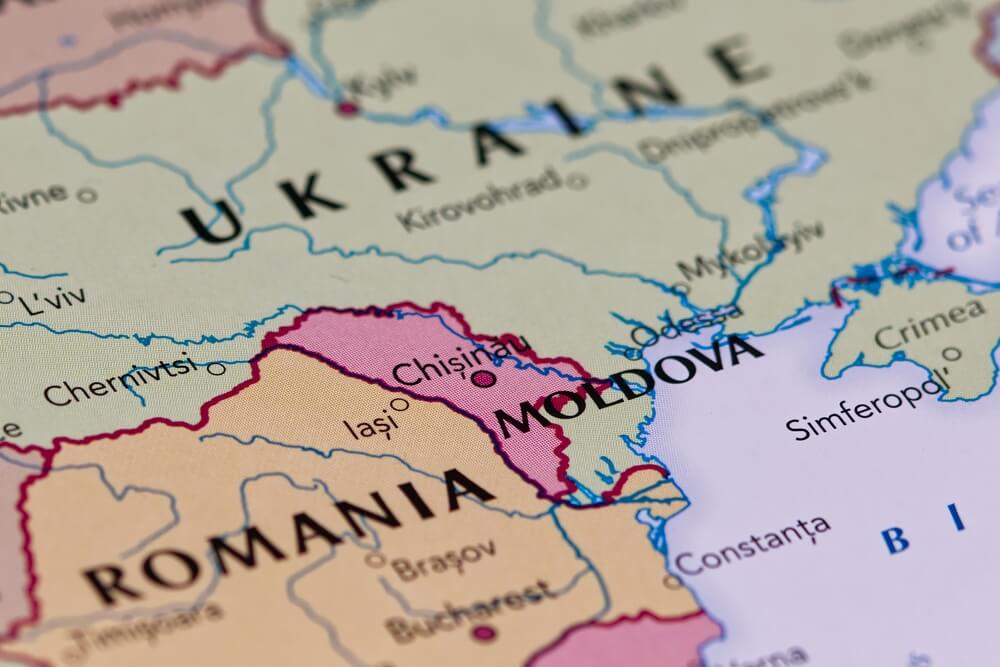 Systematic violations of Moldovan airspace by Russian drones contribute to the normalisation of such incidents across the region
This tactic allows the Kremlin simultaneously to complicate the security environment around Ukraine, test the resilience of Europe’s eastern flank and demonstrate the vulnerability of states that lack sufficient capabilities to counter Russian aerial threats.
Systematic violations of Moldovan airspace by Russian drones contribute to the normalisation of such incidents across the region.
Failing to respond adequately to these actions could create conditions for Russia to continue using airspace provocations against neighbouring countries, increasing the risk of accidents, civilian casualties and uncontrolled escalation near the borders of the EU and NATO.
This tactic is part of the Kremlin’s hybrid warfare strategy, aimed at maintaining an atmosphere of persistent uncertainty and instability along Europe’s eastern flank.
Oleksandr Levchenko, a former Ukrainian diplomat, is a professor at the State University (Kyiv) and a member of the Academy of Geopolitics and Geostrategy (Kyiv).
