On 7 November, Russia announced who would represent it in negotiations with the US and Ukraine on ending the war, scheduled for 10 and 11 November in Abu Dhabi. The delegation is led by Vladimir Putin’s adviser Vladimir Medinsky and includes senior diplomats and military officials.
The American delegation is expected to include Trump’s special envoy Steve Witkoff and Jared Kushner, the president’s son-in-law and adviser.
Just a day before those talks begin, G7 foreign ministers will gather in Paris to discuss support for Ukraine, the war in the Middle East, and the energy crisis.
On that same day, Russian missiles and drones again struck Kyiv and its surroundings, injuring civilians and damaging energy infrastructure.
The timing of these two meetings raises the question of how far the G7 can genuinely influence the end of the war.
The European allies are providing money, weapons and a significant share of the future costs of Ukraine’s reconstruction, while the terms for ending the war will be negotiated by Kyiv, Washington and Moscow in direct talks.
European officials met American negotiators in Brussels in the preceding days, but they will not be at the table in Abu Dhabi, and it is crucial how many of their security and financial demands are included in any eventual agreement.
Who will determine the terms of future peace?
Talks in Abu Dhabi have resumed after a nine-month pause. The last round took place in February, before the start of the American-Israeli war against Iran. Putin agreed to restart negotiations after meeting Witkoff in St Petersburg in October.
This new round is beginning as both sides continue their attacks, with all the key questions still unresolved, from how much Ukrainian territory Russia would retain to who would guarantee Ukraine’s security after the war.
On 4 and 5 November in Brussels, American representatives met partners from France, Germany, Britain, the European Union and NATO to discuss security guarantees – that is, the allies’ obligations to help Ukraine if it is attacked again – as well as the reconstruction and future financing of the country.
Kremlin spokesman Dmitry Peskov said that European countries would at some point have to take part in talks on the continent’s security
Ukrainian President Volodymyr Zelensky insists that these obligations be set out in writing and that they precisely define who responds to a new Russian attack, how, and within what timeframe.
German Chancellor Friedrich Merz insists that Russia first demonstrate its readiness for a genuine ceasefire and that European countries take part in shaping a lasting solution.
For European governments, any such provision comes at a price. If the agreement envisages new deliveries of air defences, the presence of foreign troops in Ukraine or multi-year funding for the Ukrainian military, it will be necessary to know who sends troops and weapons, who pays and who decides when the obligation is triggered.
Kremlin spokesman Dmitry Peskov said on 6 November that European countries would at some point have to take part in talks on the continent’s security. At the same time, he accused them of still not having decided who would speak on their behalf.
Moscow thus shifted the blame for Europe’s absence from the negotiating table onto the Europeans themselves, even though they would have to implement and pay for any future agreement.
The diesel deal revealed the cost of divergence
The clearest proof that Washington can change its policy towards Moscow without consulting allies came on 9 October. That day, after a telephone conversation with Putin, Donald Trump announced an agreement on deliveries of Russian diesel to American and global markets.
The US Department of the Treasury immediately issued a licence allowing the sale, transport and import of Russian diesel, including imports into the US, until 7 April 2027. This softened the sanctions that had been imposed to curb Moscow’s revenue from energy sales, which it uses to fund the war.
Trump promoted the deal as a way to lower fuel prices ahead of the 3 November congressional elections. On 15 and 16 October, at the summit of EU leaders, the European Council formally expressed regret over the temporary US easing of sanctions on Russian diesel and called for further restrictions on the revenues of the Russian oil industry.
Washington did not make that relief conditional on a ceasefire, the withdrawal of Russian forces or any other verifiable concession from Moscow.
Despite Trump's attempt to ease dissatisfaction with fuel prices, the Democrats won majorities in both houses of Congress
As of 6 November, no shipments of Russian diesel to the US had been confirmed, and two tankers that had originally listed US ports as their destinations had changed course.
The legality of the import is also disputed, as the law passed by Congress in April 2022 prohibits the import of Russian energy products into the US.
Lawmakers from both parties argue that the Treasury Department's temporary licence cannot circumvent the ban, while the administration maintains that the permit is lawful.
That uncertainty has consequences even without any delivery, as banks, insurers and port operators must assess the risk of a deal that the executive branch allows but lawmakers challenge.
Despite Trump's attempt to ease dissatisfaction with fuel prices, the Democrats won majorities in both houses of Congress.
When they take office in January, they will be able to request documentation on the deal, launch investigations and seek to limit similar decisions through legislation.
Overriding a presidential veto requires a two-thirds vote in both houses, but even without that, the new majority could increase the political and legal risks for any company using the licence.
Oil reserves alleviate the crisis but do not solve it
The war waged by the US and Israel against Iran, which began in March, has seriously disrupted navigation through the Strait of Hormuz, through which a large share of Persian Gulf oil and gas is normally exported. The rise in diesel prices has affected transport and the economies of G7 members.
On 2 October, the group’s leaders agreed to accelerate, over four months, the release of the remaining 100 million barrels of crude oil and refined products from the strategic reserves that states maintain in case of supply interruptions. They also agreed to coordinate refinery maintenance so that simultaneous closures would not further cut diesel production.
On 15 October, the International Energy Agency announced that more than 320 million barrels had been released since March, and that about 100 million remained to be delivered. A faster release of those stocks can only temporarily slow the rise in prices.
Tehran is demanding an end to the American naval blockade of Iranian ports and an easing of sanctions before it permits its reopening
The safety of vessels and regular navigation through Hormuz depend on military and diplomatic decisions that G7 members cannot take without an agreement with Iran.
In June, the G7 endorsed a US–Iran memorandum intended to extend the ceasefire, reopen the Strait of Hormuz and allow further negotiations on Iran's nuclear programme.
The memorandum did not halt the conflict, and on 2 November US forces again struck Iranian positions on Qeshm Island.
In the June document, G7 leaders also backed a Franco-British initiative to protect merchant ships and verify mine clearance.
France and Britain thereby proposed a concrete role in securing the strait, but Tehran is demanding an end to the American naval blockade of Iranian ports and an easing of sanctions before it permits its reopening. Qatar’s proposals to continue negotiations have not yet produced an agreement.
European money demands European influence
On 5 November, the European Commission disbursed €4.36 billion (about $4.9 billion) to Ukraine from a loan programme totalling €90 billion (about $100 billion). Of that sum, €3.7 billion is intended to fund the state and public services, and €658 million to purchase military equipment.
In June, G7 leaders pledged to provide Ukraine with additional air defence systems and interceptor missiles to shoot down Russian missiles and drones.
That commitment has become more urgent with the onset of winter, as Russian strikes on power stations and transmission lines leave cities without electricity or heating.
On 9 November, a conference will be held in Paris on repairing the protective shield over the destroyed reactor at Chernobyl, which was damaged by a Russian drone in February 2025.
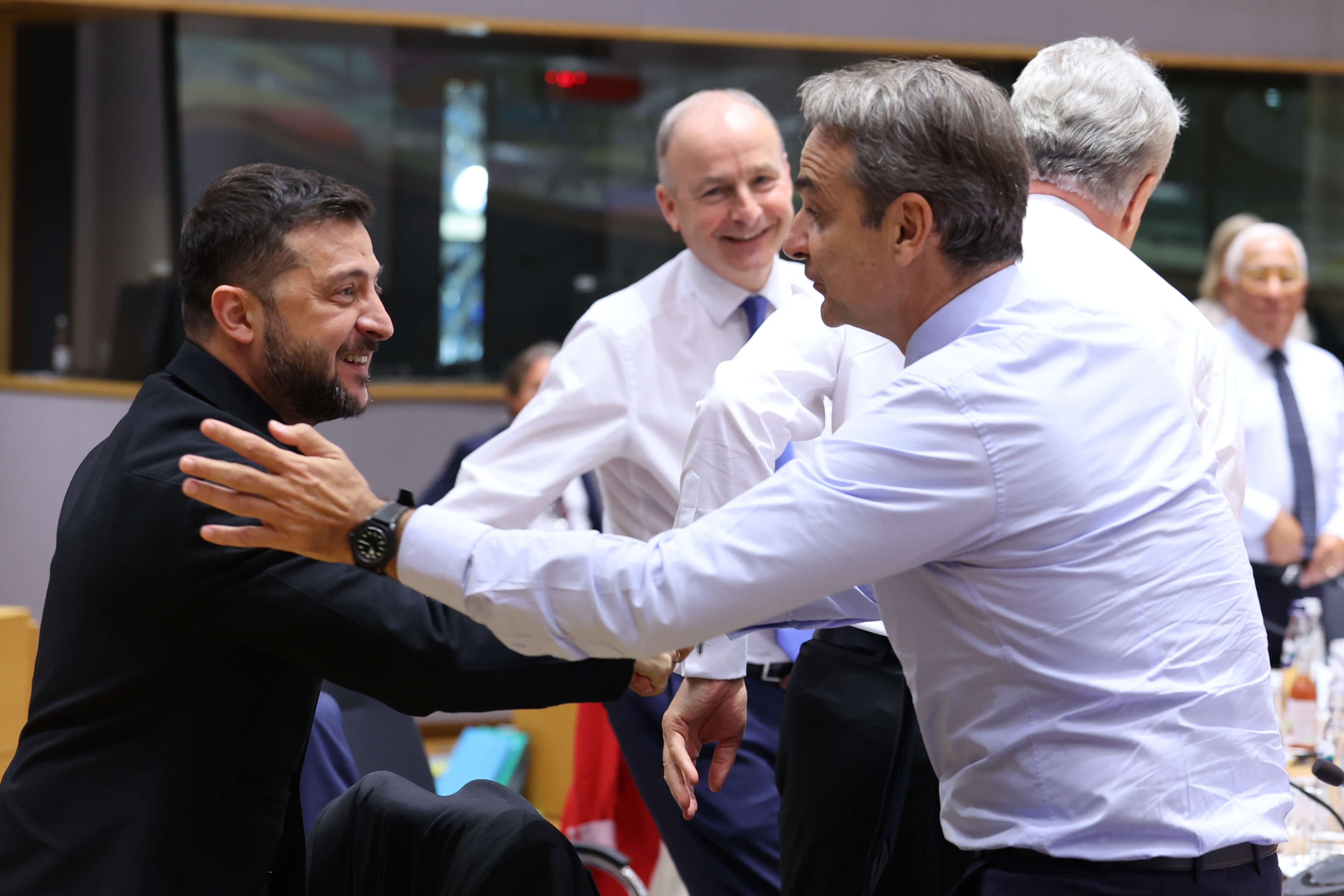 European governments could link long-term funding for Ukraine’s defence to written security guarantees and clear rules for the automatic reimposition of sanctions if Russia violates any eventual agreement
The G7 has pledged €260 million (about $290 million), while the European Bank for Reconstruction and Development estimates that at least €500 million will be needed.
Financial aid can be precisely measured, but security guarantees require agreement on who should respond, and how, if peace is broken.
Allies also diverge on international law. On 9 October, the same day it permitted trade in Russian diesel, Washington imposed sanctions on the International Criminal Court in The Hague, which prosecutes war crimes and crimes against humanity, as an institution.
In 2023, the Court issued an arrest warrant for Vladimir Putin. The other six G7 members are states parties to the Rome Statute, the Court’s founding treaty, and the sanctions severely disrupt its operations, because its work depends on international banking and technical services.
European governments could link long-term funding for Ukraine’s defence to written security guarantees and clear rules for the automatic reimposition of sanctions if Russia violates any eventual agreement.
Such a common position would need to be agreed before talks conclude, as commitments are far harder to amend once finalised.
The G7 is highly likely to confirm financial support for Ukraine and adopt measures to ease the energy crisis in Paris, while the terms of any future settlement are negotiated in Abu Dhabi.
An agreement to halt attacks on energy infrastructure or to improve maritime security in the Black Sea appears more attainable than a comprehensive peace, as it covers a narrower range of disputed issues.
On 11 October, Trump announced that Russia and Ukraine had agreed to stop attacks on energy infrastructure, but Zelensky soon stated that Russian strikes were continuing. Any new partial agreement will have to set out verification mechanisms and consequences for non-compliance.
Russia would benefit most if it secured economic concessions in negotiations without binding obligations on halting attacks or providing security guarantees.
Kyiv would then face a higher risk of renewed conflict, while European governments would bear the long-term costs of an agreement whose primary terms they did not shape.
The G7’s real impact will ultimately be judged by what is agreed in Abu Dhabi, particularly the guarantees, sanctions and obligations that European nations commit to funding and implementing.
