On 7 August, Saudi Arabia, Türkiye and Pakistan signed a joint defence agreement in Mecca, whose most important provision is that an armed attack on any one of the three states will be considered an attack on all.
The document was signed by Saudi Crown Prince and Prime Minister Mohammed bin Salman, Turkish President Recep Tayyip Erdoğan and Pakistani Prime Minister Shehbaz Sharif. This formulation immediately invited comparisons with NATO.
Since September last year, Saudi Arabia has expanded the formal framework of its defence strategy three times.
On 17 September, Riyadh signed a Strategic Mutual Defence Agreement with Pakistan, on 18 November a separate Strategic Defence Agreement with the United States, and now it has also brought Türkiye into this joint defence framework.
In less than eleven months, three overlapping security relationships have been established.
Saudi defence remains closely tied to US military technology, training and political support. Last November, after the signing of the US-Saudi agreement, the White House even emphasised that the Kingdom is the United States’ main strategic partner.
Mecca added a new layer to that relationship. Riyadh is now strengthening its defences through multiple parallel partnerships.
America remains at the centre of the system
For decades, Saudi security policy has been built around American power, and the United States remains the Kingdom's key military partner today.
In May 2025, Washington and Riyadh announced a military co-operation and sales package worth nearly $142 billion, covering equipment and services for aviation, air and missile defence, maritime and land security, and communications systems. In November, the Strategic Defence Agreement was added, together with new plans for future deliveries of F-35s and US tanks.
That is why Riyadh preserves American support and, at the same time, builds backup lines that reduce the cost of any potential American hesitation.
The conflict that began with the US-Israeli attacks on Iran on 28 February has brought Iranian missile fire on the Gulf states, new strikes on energy infrastructure and severe disruption to maritime traffic.
The American pillar remains the most important
The Saudi economy depends on energy exports and major development projects that require a predictable security environment. For such a country, waiting for a political decision in Washington becomes an unacceptable risk.
The Mecca Agreement therefore adds another line of defence. The American pillar remains the most important, but alongside it there are now partners who can act more quickly, at lower political cost and on the basis of their own interests in the region.
Pakistan has already moved from paper to practice
The most important evidence of the real military substance of this policy comes from the Saudi–Pakistani relationship. Mohammed bin Salman and Shehbaz Sharif signed the Strategic Mutual Defence Agreement on 17 September 2025.
Its central provision already contained the same logic that has now been extended to the tripartite agreement: aggression against one country is considered aggression against both.
By spring, that framework had acquired military substance. On 11 April, the Saudi Ministry of Defence confirmed the arrival of Pakistani fighter and support aircraft at King Abdulaziz Base.
By May, according to information from multiple security and government sources, the Pakistani presence comprised approximately 8,000 personnel, around 16 fighter jets, mostly JF-17s, two squadrons of drones, and the HQ-9 air defence system.
The force is described as combat-ready and intended to support Saudi Arabia in the event of further attacks.
Saudi officials have categorically denied linking the new deal to nuclear ambitions or an arms race
This changes the weight of the Mecca Agreement. Pakistan has already shown that it can rapidly deploy manpower, aviation and air defence assets to the Kingdom. At the same time, Islamabad maintains contacts with Tehran and has played an important mediating role during this year's war.
The Saudi calculation thus gains an additional dimension: a partner capable of providing military assistance simultaneously has channels to the state from which the greatest immediate regional risk originates.
The nuclear issue hangs over every discussion of Pakistan, but the publicly available content of the Mecca Agreement provides no basis for the claim that Saudi or Turkish territory has been placed under Pakistan's nuclear umbrella.
Saudi officials have categorically denied linking the new deal to nuclear ambitions or an arms race. Such ambiguity may in itself contribute to deterrence, but it would be premature to turn it into a formal, unpublished guarantee.
Türkiye changes the scope of the agreement
Türkiye’s involvement expands the agreement beyond the traditional Saudi–Pakistani relationship. Ankara has NATO’s second-largest military, a substantial domestic defence industry and a growing range of unmanned systems, missiles, warships and other platforms.
Saudi Arabia is already a major buyer of Turkish drones, and Ankara and Islamabad have been deepening military cooperation for years.
At the same time, Türkiye is preserving and further strengthening its Western defence ties. Just one month before the signing in Mecca, at the NATO summit in Ankara, Türkiye and Great Britain signed a new Security and Defence Partnership.
The document expands cooperation in deterrence, the defence industry, technology, cyber security and hybrid threats, and explicitly confirms Türkiye’s commitment to NATO.
Ankara and Riyadh are therefore increasingly adopting a similar approach. The existing alliance remains the foundation, while regional partners and bilateral arrangements are added around it.
On 17 April, after the worst phase of the Iran crisis, Erdoğan said that the events demonstrated the need for a new regional security system based on firmer foundations.
Saudi Arabia seeks greater protection for critical infrastructure
At that time, he specifically mentioned the close cooperation of the foreign ministers of Türkiye, Saudi Arabia, Pakistan and Egypt. That group is already working in the R-4 format. In Mecca, three of those states went a step further.
The interests of the three signatories differ, but each gains something concrete from the agreement. Saudi Arabia seeks greater protection for critical infrastructure and the freedom to activate a politically and militarily prepared partner in a crisis.
Pakistan gains deeper access to one of the most important Gulf states and space for its expanding defence industry, which has been intensively seeking new markets in recent months.
Türkiye secures another major channel for exports and joint production, as well as greater influence in a part of the region where its interests are increasingly intertwined with Saudi Arabia’s.
The basis of the agreement is practical and rests on money, production, manpower, technology and access to areas in which each of the partners possesses something that the other two do not to the same extent.
The limits of the Mecca Agreement
The collective defence clause is politically powerful, but its military scope is not yet clear. The public announcement does not specify a joint command, standing forces, aid activation rules, consultation procedures, logistical obligations or advance plans for the defence of each member.
This is why the comparison with NATO so far says more about the language of the agreement than about its actual military structure.
The biggest operational challenge will be air and anti-missile defence. The threats that have hit the Gulf most this year have come in the form of missiles and drones.
Effective joint defence requires shared radar imagery, secure communications, agreed command procedures and the ability of the forces of all three countries to operate in the same operational space.
The Trump administration is asking partners to shoulder more of the cost and responsibility for regional security
This is where political will meets technical and security constraints. Saudi Arabia continues to base key parts of its forces on US equipment and communications systems.
Türkiye belongs to the NATO system and at the same time is expanding its domestic industry. Pakistan also uses Chinese platforms, including the JF-17 and HQ-9, which are deployed in Saudi Arabia.
If the three countries attempt to link these systems into a single operational entity, the issue of protecting American and NATO technology will become much more concrete than political announcements from Mecca.
It is reasonable to expect that Washington will carefully control how US systems interface with Chinese equipment and with structures not led by the United States.
For Washington, there is an uncomfortable consequence of its own burden-sharing policy. The Trump administration is asking partners to shoulder more of the cost and responsibility for regional security. Saudi Arabia is doing just that.
The more of those capabilities it builds with Pakistan and Türkiye, the less any regional decision will depend on American command, American consent, and American deployment of forces.
The real test comes after the signature
The most likely development will be a gradual expansion of practical military co-operation. The three countries have different relationships with Iran, Israel, the United States, China and other regional powers, so the joint system will grow where their interests and operational needs genuinely align.
The real test will be whether Mecca is followed by permanent joint military planning, regular consultations between chiefs of the general staff, pre-prepared plans for the deployment of forces, integration of air and anti-missile defences, and joint industrial projects.
Each of these steps would increase the cost of attacking one member and reduce the time it would take for the others to provide assistance.
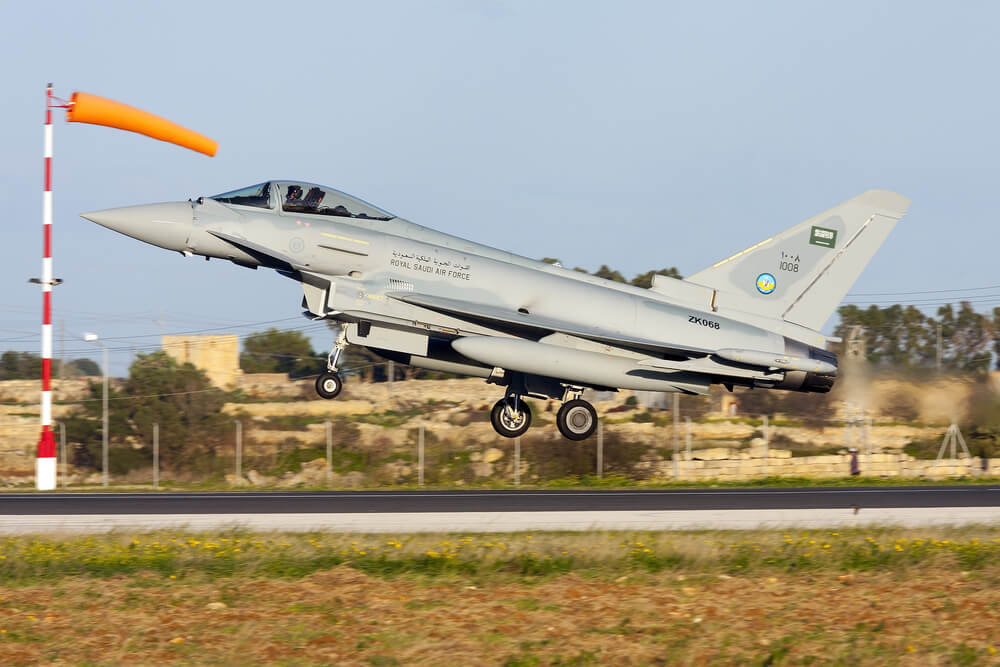 Washington will remain a major Saudi partner but will no longer enjoy the same degree of exclusivity over the Kingdom’s security - Royal Saudi Air Force
Given the nature of the threats that have already affected the Gulf this year, the most likely first significant step will be in air and missile defence.
Next steps are likely to include joint exercises, a more permanent presence of liaison officers, and pre-agreed procedures for rapid deployment of forces, while also shortening the time between detection of an attack and the decision to assist.
Land formations can remain national. Missiles and drones require faster and more intensive coordination, and this is where it will become clear how ready the three governments are to turn a political clause into an operational obligation.
In the process, Saudi Arabia is likely to treat its relationship with the US as a technological and strategic pillar, use Pakistan as its most rapidly available military reserve, and rely on Türkiye as a source of regional military weight and industrial capability.
Such an arrangement gives Riyadh more options without forcing it to choose a single major power or alliance.
The Mecca Agreement should therefore be judged by what happens after the signing ceremony. If genuine integration of planning, air defence, logistics and the defence industry begins in the coming months, Saudi Arabia will gain something it has not had for decades: a security system in which American protection remains central, but is no longer the only option available.
The change will be far more significant than another regional pact. Washington will remain a major Saudi partner but will no longer enjoy the same degree of exclusivity over the Kingdom’s security.
