The events that marked the beginning of 2026 in Yemen indicate a change with long-term consequences for the war and the regional balance.
The front line between the Houthi movement and the internationally recognised government no longer solely defines the conflict. A key development is now occurring within the camp that formally represents the government.
The formation of Yemen’s new government in early February follows a serious internal conflict among anti-Houthi forces and the political collapse of the southern separatist project, which for years was one of the most significant factors on the ground.
Yemen's Presidential Leadership Council (PLC), a collective body that assumed executive powers in 2022, announced a new government with 35 ministers. The head of government is Shaya Mohsen al-Zindani, who also remains the minister of foreign affairs.
This decision was made while fighting was ongoing in the south between forces associated with the internationally recognised government and formations of the Southern Transitional Council (STC), a political-military structure that advocated the restoration of an independent southern Yemeni state.
The conflicts ended with the withdrawal of separatist forces from key cities and their political dissolution, altering the internal balance of power within the anti-Houthi bloc.
In these conflicts, the long-standing dispute between Saudi Arabia and the United Arab Emirates (UAE)—two states that were formal allies in the coalition against the Houthis but supported different political and security structures in the south—became prominent.
Saudi Arabia supported the internationally recognised government and forces linked to its institutions, while the UAE maintained strong ties with southern separatist organisations, including the STC.
The latest conflicts have shown that this rivalry now extends beyond politics to battles on the ground. Accusations that arose during these events, including claims that some separatist leaders were evacuated from the country with UAE support, further highlighted the depth of the rift between the former partners.
When political reorganisation isn’t enough
The formation of a new government represents an attempt to consolidate power after these upheavals. However, political reorganisation alone does not resolve the fundamental problem of the Yemeni state, which lies in the fragmentation of security structures and parallel chains of command.
In many regions, military and police formations were created during the war with financial and logistical support from various external actors, resulting in a system where formal institutions often lack real control over territory.
Therefore, the political decision to form a government is meaningful only if accompanied by the integration of these formations into a unified command structure and stable financing of state functions.
This is precisely where Saudi Arabia’s new strategy becomes evident. During the earlier stages of the war, Riyadh focused primarily on opposing the Houthis militarily and maintaining a coalition of various Yemeni factions.
Saudi policy now relies on a combination of political influence, budgetary support, and infrastructure projects to stabilise basic public services
Recent events indicate a shift to a different model, in which the priority is to restore the minimum functionality of the state apparatus in territories outside Houthi control. Saudi policy now relies on a combination of political influence, budgetary support, and infrastructure projects to stabilise basic public services.
Within this framework, at the beginning of the year, Saudi Arabia presented a development package worth approximately 1.9 billion Saudi riyals (about 500 million US dollars) through the Saudi Program for the Development and Reconstruction of Yemen (SDRPY).
The programme includes dozens of projects in the energy, transport, health, and education sectors, as well as fuel delivery for the operation of power plants across the country.
The aim of these projects is not only to rebuild infrastructure but also to stabilise the functioning of institutions that are unable to perform their basic tasks without external financial support.
Humanitarian access amid political uncertainty
Meanwhile, the north of the country remains under Houthi control, and the humanitarian situation continues to be extremely difficult. Restrictions on the movement of humanitarian personnel and logistical obstacles significantly hinder the delivery of aid.
The resumption of humanitarian flights by the United Nations Humanitarian Air Service (UNHAS) to Sanaa in early February temporarily improved international organisations' access to the population in Houthi-controlled areas, but these arrangements depend on political decisions that can change rapidly.
At the same time, assessments by international organisations show that millions of people remain in a state of acute food insecurity, which further complicates political processes.
Changes in the south of the country and the formation of a new government do not mean that the war in Yemen has entered its final phase. On the contrary, the current situation shows that the conflict is evolving.
The most important factor is the relationship between Saudi Arabia and the UAE, whose rivalry may again affect political processes in the southern regions
Disputes between former allies within the anti-Houthi bloc have revealed that the political structure of that camp is unstable and cannot function as a unified system without strong external patronage.
Therefore, Saudi Arabia is now seeking to establish a framework in which state institutions, even if only to a limited extent, once again become the central mechanism for managing the territory and the security sector.
The success of this approach depends on several factors. The first is the new government's ability to take control of financial flows and ensure regular salary payments to civil servants and security forces.
The next factor is the integration of local armed groups into a unified command system, which requires political agreements that are often difficult and protracted.
Perhaps the most important factor is the relationship between Saudi Arabia and the UAE, whose rivalry may again affect political processes in the southern regions, especially if various factions once more rely on external patrons.
One country, two systems
For the international community, the key challenge remains that political stabilisation of territories under government control does not resolve the fundamental issue of the country's division.
As long as the north remains firmly under Houthi control, Yemen will function as a state with two political and security systems, and any attempt at a lasting political solution will require negotiations between these structures.
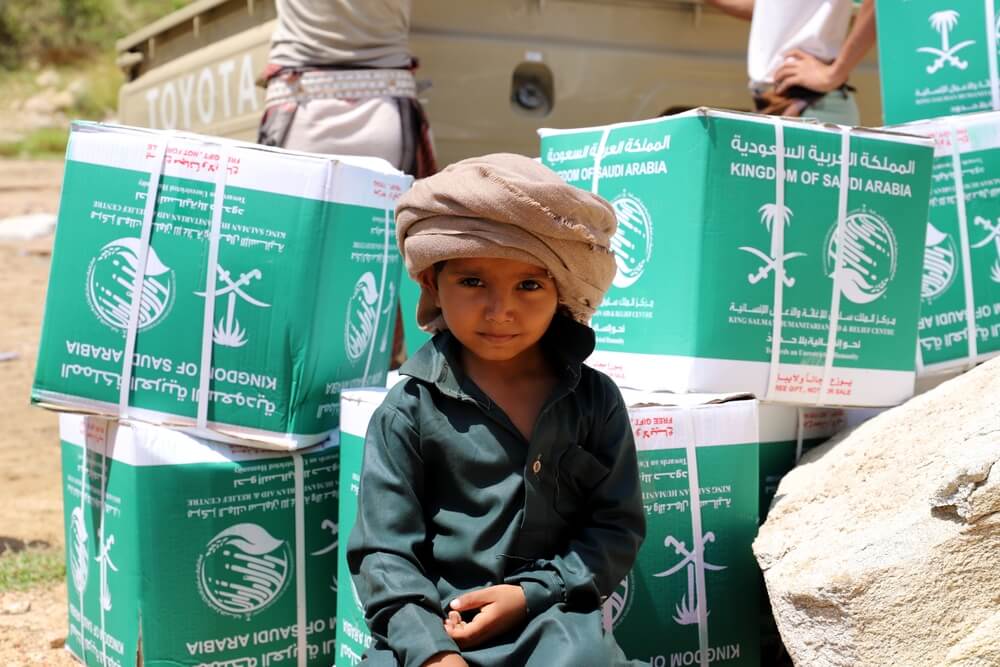 The humanitarian situation continues to limit political options, as the prolonged economic crisis reduces the ability of local governments to finance basic functions independently
Meanwhile, the humanitarian situation continues to limit political options, as the prolonged economic crisis reduces the ability of local governments to finance basic functions independently.
The beginning of 2026 thus marks a moment when a new configuration of the conflict may emerge.
Saudi Arabia is seeking to stabilise government-controlled territories through political reorganisations and economic projects, while the Houthis maintain control over the north and much of the population.
Conflicts between former allies in the south have shown that the war no longer depends solely on the military balance between the two main sides but also on the ability of external actors to maintain political cohesion within the blocs they support.
The new Yemeni government represents an attempt to institutionalise this process and translate the divided political landscape into a structure that can function as a central authority.
Whether this attempt will succeed depends on whether the institutions formed by political decision gain real control over finances, the security sector, and local administrations.
Without this, political changes will remain formal, while real power will continue to depend on the balance among local groups and the influence of regional powers that play a key role in the Yemeni war.
