The presidential elections in Portugal concluded yesterday, in the second round of voting, with a clear and numerically convincing result. However, the political significance of this vote cannot be measured solely by percentages.
António José Seguro, the candidate of the Socialist Party (PS – Partido Socialista), won about two-thirds of the vote in the second round and became the president of the country with a five-year mandate, while the far-right candidate André Ventura secured about a third of the vote, the highest result ever achieved by that political bloc in a presidential race.
Formally, the elections brought stability. Portugal gained a president who, during the campaign, insisted on institutional cooperation and political stability, and in his initial statements, he emphasised that he would pursue a policy of "loyal institutional cooperation" with the existing government.
However, the political significance of these elections lies not only in who won but also in the structure of the electorate revealed by the results.
When losing still changes the system
For decades, Portugal was considered one of the few Western European countries where the extreme right failed to build a stable political base. That perception is now outdated.
Ventura, despite his defeat, consolidated his political position as leader of the Chega party, which has already become the second-largest opposition force in parliament.
His result of about one-third of the votes shows that political protest has become a stable electoral bloc.
This represents a fundamental change in the political system. European political analyses often assume that the extreme right only becomes a systemic factor when it enters government or wins the presidency.
Portugal’s elections demonstrate a different model. A party can lose elections while becoming a permanent political constant, which changes the behaviour of all other actors.
To understand the depth of this change, it is necessary to consider the institutional framework of the Portuguese political system.
Portugal has experienced several election cycles in a short period and a prolonged phase of political instability
Portugal is a parliamentary republic where the president does not have day-to-day executive power but holds key constitutional instruments.
The president can veto legislation, dissolve parliament and call snap elections, appoint a prime minister and formally confirm the government, as well as act as commander-in-chief of the armed forces.
This combination of powers makes the president a politically relevant actor even when not leading the executive branch.
This is why the election of the president in Portugal is more than a ceremonial function. When the country has a significantly fragmented parliament and minority governments, the presidential institution becomes a key mechanism for stabilising the system.
In recent years, Portugal has experienced several election cycles in a short period and a prolonged phase of political instability, which has given the presidential elections additional weight.
It is in this context that the campaign should be viewed. Seguro ran a campaign based on institutional continuity and stability, while Ventura campaigned with anti-establishment and anti-immigration messages that politically differentiated him from traditional parties.
During the campaign, Ventura continued the rhetoric that has become central to his party's political discourse, including hard-line positions on migration and identity politics that remain a core mobilising framework for his electorate.
From an episodic phenomenon to a stable political actor
The result of the election shows that two political dynamics have become permanent. The first is that Portugal’s political centre can still win elections when faced with a clearly defined, populist opponent.
The second, more important in the long term, is that the extreme right is no longer an episodic political phenomenon but a stable political actor that shapes the political agenda even when it remains outside the institutions of executive power.
In this respect, Portugal differs less and less from the wider European pattern. In many European Union countries, the political centre retains institutional dominance but is forced to shape political topics, especially migration, security and social policy, in the context of the constant growth of radical or populist parties.
This does not mean that these parties necessarily come to power, but it does mean that they become a permanent factor in political decision-making.
Another important element of the election is political mobilisation against Ventura. Much of the political centre, including part of the centre-right, implicitly supported Seguro to prevent a Chega candidate from winning the presidency.
Presidential elections have become a key indicator of political balance, rather than merely the election of a symbolic figure
Several European countries have already witnessed this pattern of political mobilisation, which often results in a short-term stabilising effect.
In the long term, however, such mobilisation may further reinforce the narrative of populist movements: that the political establishment functions as a unified bloc defending itself against political competition.
The political system of Portugal is now entering a phase where election results no longer guarantee the stability of the political space.
Seguro received a strong mandate and an institutional position that allows him to act as a stabilising factor, but the political system, in which the extreme right opposition has the stable support of about one-third of the electorate, is no longer a system with traditional two-bloc balances.
This has direct consequences for parliamentary politics. Although the president does not hold day-to-day executive power, his decision to call an election or block legislation can have a decisive political effect during a parliamentary crisis.
This is precisely why presidential elections have become a key indicator of political balance, rather than merely the election of a symbolic figure.
A European political model, not an isolated national event
For European politics, the Portuguese elections have broader significance. They demonstrate that the political centre can still win elections, but it is increasingly difficult to restore the political structure to its state before the rise of populist movements.
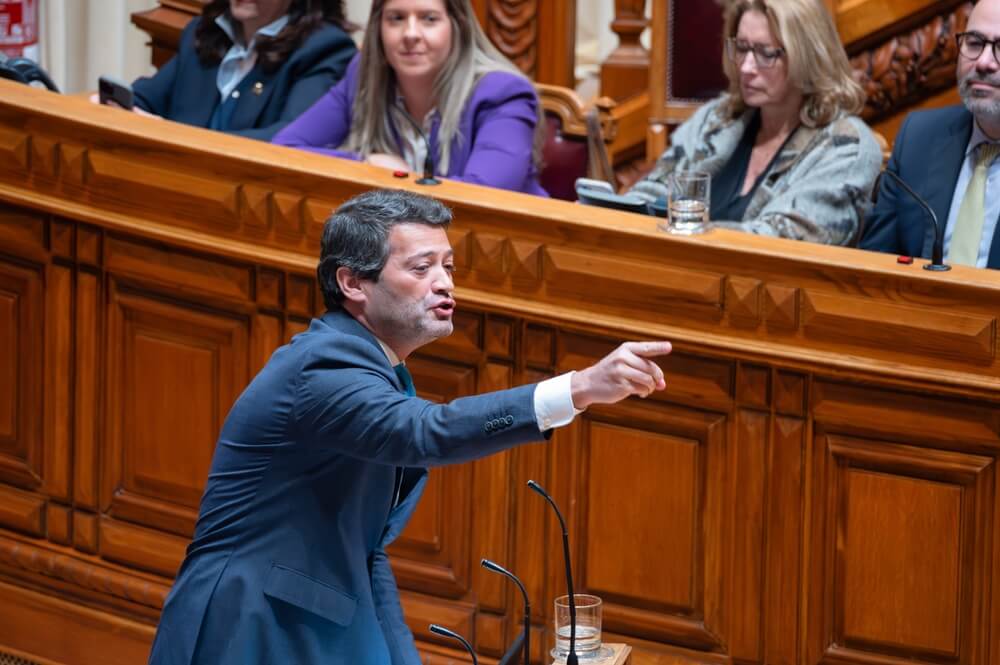 The political centre can still win elections, but it is increasingly difficult to restore the political structure to its state before the rise of populist movements - André Ventura
The political system is entering a phase where electoral victory no longer guarantees political dominance but only control over institutions in a permanently divided political landscape.
Therefore, the elections in Portugal cannot be viewed as an isolated national event. They represent another example of a European political model in which the political centre survives, but within a constantly shifting political environment.
In this model, political stability depends not only on who wins the elections, but also on whether institutions can function in a system where opposition anti-system parties have a stable and long-term political base.
With these elections, Portugal has confirmed this political reality. The centre won, but the political system is now different from a decade ago. In European politics today, this has become the rule rather than the exception.
